

Album Review: +3 by Samba Jean-Baptiste
The most writerly alt-R&B record of the year is a one-man operation that sounds like it was recorded on the other side of a broken voicemail.
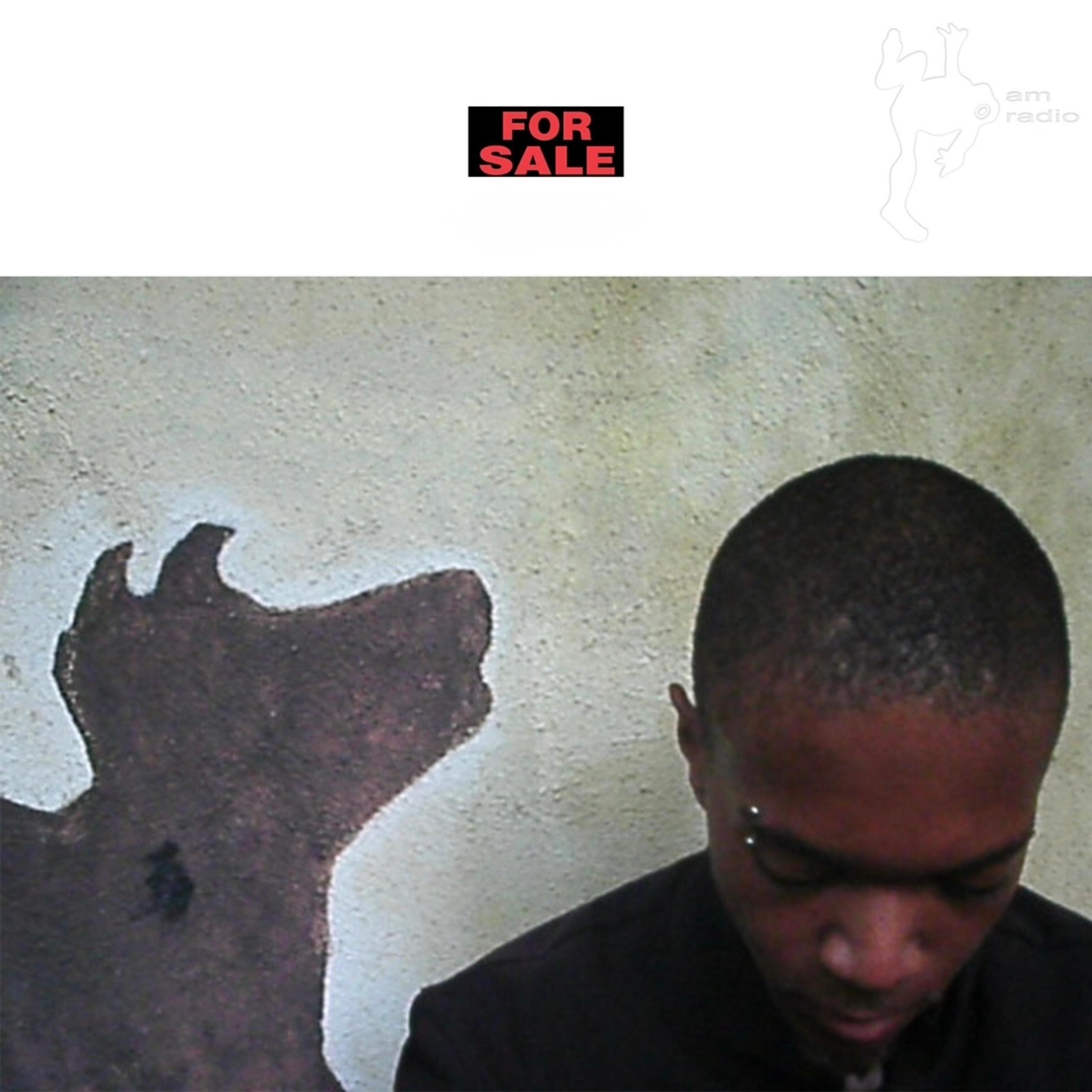
Someone leaves a voicemail near the end of “Peppermint.” It is the voice of the person Samba has been singing to, trying to be casual and failing: “Hey, call me back, maybe, good talk. Uh, good to talk to you, I mean not talk to you, but you know.” The song ends on her. Samba Jean-Baptiste does not answer. The whole back half of the track is him singing to her over a pillowy programmed loop about waking up hot, running laps in his head to stay awake, offering her a private prayer he already knows has expired. Then Bung comes in with a bassline that feels closer than the vocal, and the song flips: “I could break down on my own, but it’s you and me on the phone for hours.” Then the voicemail. Then the cut.
Samba has been releasing records on his Bandcamp since 2022, and +3 is the fourth. Pandora was him alone on a piano. Cardinal was him alone with a guitar. Access Delight, his EP last year, was the first to work in alternative-R&B. On this one, he plays every instrument, writes every lyric, mixes every track, and the solo setup sounds like a choice. The name is Haitian. A French phrase, “Tout va bien se passer,” circles back in a handful of choruses. The album runs seventeen cuts plus skits. None of those facts are the album; the voicemail on “Peppermint” is.
The overture, “Peripheral Pulse,” runs half-sung aphorisms over a slow bass loop. Samba crushes a wrist and holds a breath; he hugs tomorrows worth while watching everyone fall on purpose. The first line is “I’ve been taking all this stuff,” and a few tracks later, on “Object 9,” he lands the word suicide inside the question “where is our Superman?” and leaves it alone. “Nothing 2 Tell” splices Perfect and Honest into the hook, so the line “the only thing that’s holding me back” keeps arriving with two-word edits stamped on top of it. On “Twisted Angel,” Samba flicks a joint into the grass, watches it burn, and thinks of a woman he has not felt for in weeks. Nobody in the room checks on him.
A French phrase, “Tout va bien se passer” (everything’s going to be alright), recurs at the top of “Forced Perspective,” inside a parenthesis on “Fatale,” at the open of “By the Wind,” and once more near the top of “Twisted Angel.” “Forced Perspective” sends Samba four hours down the road toward a coast he never names, the phrase repeating until it functions like weather. “Fatale” puts the phrase in the margin while he cruises with peace signs out the window in ripped jeans, a two-five beat underneath. LeStage does something not exactly like either. She answers the phrase with a verse running the other way, kicking down doors she has already opened, spinning in place, thinking about nothing at all. Then she looks him dead in the eye and sings, “Your my favorite waste of time.” Samba lets her sing it twice.
Chloë LeStage features on “Pressure & Light” and “By the Wind,” but her biggest contribution to the record arrives on “Statues & Symbols.” Samba opens the song gasping a run of two-word couplets (old days, daylight, road rage), one per breath. LeStage takes the hook, a chorus built around keeping her eyes wide open, and on it she sings the album’s sharpest political line:
“Black blood leads to fame
But the news don’t say my babies name.”
She sings the line inside a hook about staying wide-eyed, so the baby the news will not name and the child she is watching over wind up in the same breath. Later, she returns to “I could play your game twice” five times running. On the outro she gives up the confrontation: if she is honest, the wings she grew will not fly, and the person she is singing to keeps her on it anyway.
Samba’s writing cracks on “Scene 1.” He pitches the track as an uptown seven-train monologue on being witnessed and loved through. “A home startled into bright air” arrives early, and shortly after it, the couplet “you want compliments go find some, you want confidence go buy some” sharpens the frame. Then the piece loses the thread halfway. Izzy Goldbow’s breathy feature is mixed so deep she reads as reverb, not a second voice. “Marseille Miserere” is a sit-still meditation on stained denim and tea on the stove, one that hangs on a single line about taking pictures of food when you could be praying, and the line cannot hold the song up. “Grey Sky Lunacy” opens on a monologue from a dead-eyed man spliced into a dispatcher’s call, then wanders through pushups and tuna fish and never returns to the scene. The phrasebook that animates the sung tracks, blurred lines and missing piece and +3, cannot stretch across the spoken ones, and a certain room starts to close around Samba.
The nineteenth song of seventeen, counting the skits, is “Twisted Angel.” Bass and shaker and almost nothing else move under the vocal. Samba waits at a bus stop in a coat, in wind, wishing someone would collect him like a phone call. A memory turns into a freestyle. A whole face goes into the snow just to watch it melt. The touring schedule is loud enough that Samba cannot be bothered to answer his cell. Samba’s outro loops on two lines in tandem: “They show me love, they show me love, no press hit me up, just stay checking for myself.” The song, and the record, end on the shrug.
Great (★★★★☆)
Favorite Track(s): “Peppermint,” “By the Wind,” “Twisted Angel”