

Album Review: 97 Bad Boy by Rico Love
The man who wrote Usher’s “Throwback” and Beyoncé’s “Sweet Dreams” steps out for an album that wants one woman. The rap detail he folds into the seduction keeps it from dissolving into pure mood.
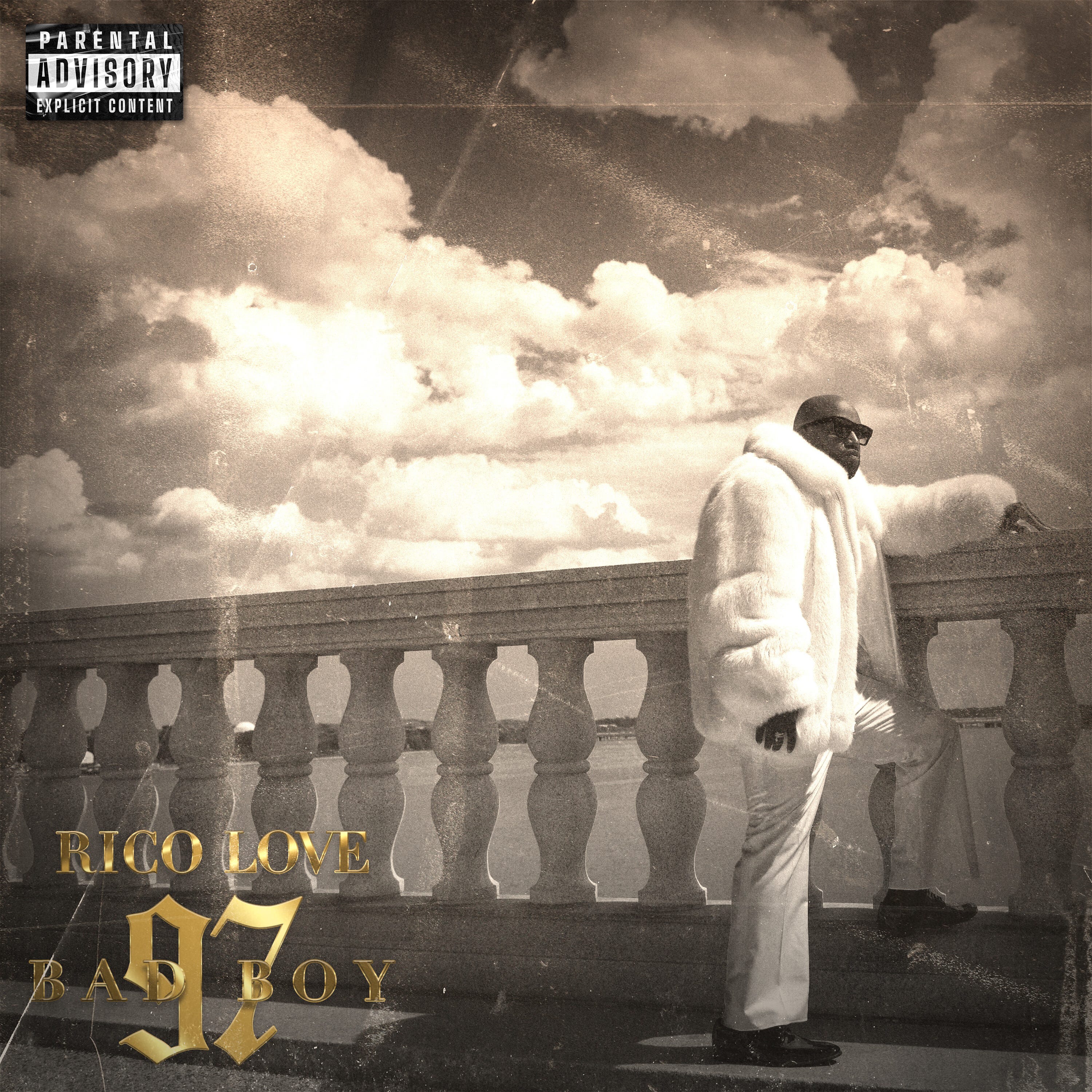
Being a writer is R&B/rap’s most thankless job (due to not getting recognition, nor royalties and points); for over two decades, Rico Love was very good at it, giving Usher “Throwback” and Beyoncé “Sweet Dreams,” writing “Motivation” for Kelly Rowland and “Just a Dream” for Nelly, letting the famous voices seize the moment while he collected the publishing. 97 Bad Boy sounds like what happens when the writer-at-large steps out of the shadows and into the spotlight; it has the limited appeal of a topic explored only as far as the title, with no B-sides and only one supporting guest whose role is to flesh out sound, not steal a verse. Rico sings and raps almost the entire record, and he keeps the attention solely on himself as he desires a woman and expects her to stay.
Rico comes alive on tracks where he seems to recall that he also can spit bars; “Not Again,” the album opener, drops him mid-debate with his own hunger for sustenance, wondering if his craving is love or just a different drug, an argument his verse continues without resolving. A woman is three months pregnant; he believed her when she told him that she couldn’t get pregnant and now must sort out how to explain another baby in a house that already houses two. He follows two bars later by recounting his entire career path, from his days as a small-town cocaine dealer to the wealth a ghostwriting career eventually yielded, a lyrical compression possible only with a rapper’s intuition; “Now it’s draw four, the color’s red, reverse, bae” weaves heartbreak into a UNO hand. When his mother materializes with a warning that he should avoid lust if he is to avoid ruin, she’s stating a truth he already comprehends and has no intention of heeding.
Q Parker, on the hook, is unburdened by the need to impress, stating what Rico can only imply as “I just hate being alone, and I still call people, to just go ahead and break their hearts.” Rico commands a woman on “Tell ‘Em,” “Tell ‘em who you belong to.” This possession is framed not as control, but as utter certainty of connection; he needs the words declared aloud. He reiterates this inside their home, the one into which he has introduced her to his parents, and where his child begins to identify her as Mommy. Later on, he’s comparing her to his rib and pleading why can’t you forgive me.
Rico kicks off “Nobody Else,” already consumed by jealousy before he even questions where she went. He knows not to be toxic, but he’s working hard on it, even while singing it on a love song about what’s bothering him—in the process making it both part of and apart from the romance. He’s already at his worst by verse two: he’ll pay her rent, any damages; if he ever thinks someone else got in, he’s tearing the place apart. Q Parker co-sings Rico’s hook on the track, the threat concealed by the usual 112 warm group harmony.
The music all stays in the same dim room, held down by the same fat low end, measured drums, and close vocals. What makes one different from another is how hard each one’s groove hits or doesn’t; in their quiet room, they rarely change scenery. “Be Quiet” is a shorter, harder pulse than the ambient burners nearby, good for a story about sexual prudence in bed. On “Body Kisses,” the pocket remains immutably shaped throughout for this most relaxed track about nothing but touch. “I Know” moves a little more underneath it so that its back end doesn’t drift into easy ballad territory. “Take It Away” sits back in the atmospherics, Rico’s complaint about sex being a deprivation, his body still twitching each time he feels he loses something.
These tracks keep their feet firm on the floor in that cozy room. There’s also the money track: “80 Thousand,” the Patek flex in the dim light. Rico is unapologetic; it is the one time where he drops his gentleman approach for some vulgar talk about women’s worth and gun lyrics with his sexual boasting, the one song that doesn’t seem designed to get someone into bed—or at least not so subtly as every other song on the record—with a Patek and a strap. “Up In This Room” doesn’t expand into the club that, once, was the outside; the party is over, and the clothes are off. Somewhere around the middle, Rico briefly abandons the wooing to state what he is actually pursuing: “ Somebody gotta start singing love songs again,” he croons, nodding to the ancient slow ones he’s been trying to recall, the slow jams conceived for investing quality minutes. Hooking up with Q Parker functions on a similar impulse, a co-founder of 112 bringing that particular brand of Bad Boy heritage (it’s still fuck Diddy), this music constantly tries to recuperate. By the time his second verse kicks in, he’s moving on a stuffed dance floor, instructing the DJ to put a slow-jam on, tiptoeing into a woman, and assuring her an evening beyond her comprehension.
Solid (★★★½☆)
Favorite Track(s): “Not Again,” “Mine Too,” “I Know”