

Album Review: A Rush to Nowhere by Arima Ederra
On her second album, Arima Ederra turns the clock into a conversation partner and keeps asking it questions it cannot answer. It holds still long enough to say real things about real people.
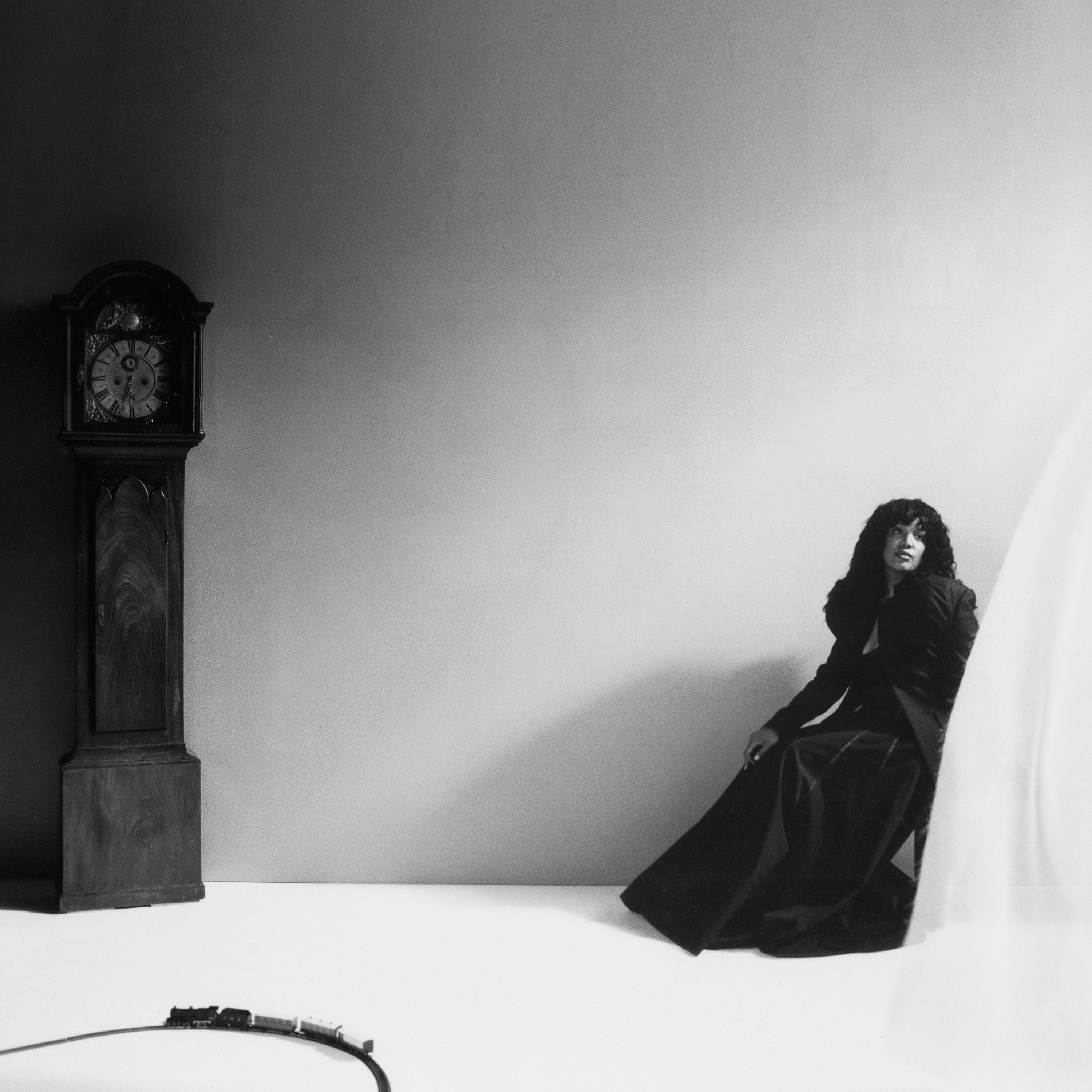
Ten years passed between the first recordings and the first album. In 2010, in a Las Vegas that had very little infrastructure for a young Ethiopian-American woman writing poetry and half-singing it, Genet, the firstborn daughter of refugees who had settled there after leaving Atlanta, started an open mic night called Social Sundays. She was still figuring out whether the thing she did counted as singing or belonged to another category entirely. Her father, a prominent figure in the local Ethiopian community, was sick, and the expected path (school, composure, keeping it together for the family) fell apart under the weight of that.
She flipped a coin, moved to Los Angeles, landed in Leimert Park, and found the collaborators who would shape everything after: Noname, who brought her on the Telefone tour; Mereba, who’d keep showing up for years; Jon Bap; and Teo Halm, the producer she has now worked with for over a decade. The name she chose, Arima Ederra, means soul beautiful. Her 2012 debut EP, Earth to Arima, got pulled from streaming. Temporary Fixes arrived in 2016 to a FADER endorsement. Then silence, and more silence, and then An Orange Colored Day in 2022, eleven tracks shaped over four years, an album NPR called a weightless form of R&B. Now, four years later, A Rush to Nowhere picks up where that record’s quietest moments left off, except the questions are louder and the person asking them sounds less willing to wait for answers.
The album keeps circling the same anxious thought. She’s running and doesn’t know why. On “In This Life,” she puts it flat, “You either fall or you fly while you’re trying,” and then spends the rest of the track admitting she can’t tell which one she’s doing. The closing refrain lands on a mantra, “don’t chase time, it’s always on your side,” but it never quite believes its own advice, because two entries earlier she was sprinting and three entries later she’ll be sprinting again. “Took the Long Way Home” is the album’s smallest and most convincing answer to that panic. The whole thing is one decision. She went the long way, got a little more day, a second chance, a little more space, a little more breath. There’s nothing else to it. She needed more of herself before she got where she was going, so she took the longer route.
Fast forward to “Second Time,” which sharpens that same worry into a direct accusation aimed at one particular person. “If you’re always searching for tomorrow, we never meet today,” she sings of being guilty of the same habit. On “Holding On,” the record’s closer, she admits the clock is running out, “not so much time to change,” and follows it with a borrowed image. Even water, which holds memory, still knows when to move. The album’s relationship to the passing hours is not philosophical. It’s the feeling of being thirty-something and noticing that years have started to go faster, and not having a theory about it, just the panic.
Half the material on A Rush to Nowhere amounts to requests for a rewind button. “First Time” puts a particular night on the table. It was cold, the fires were lit, they were by the ocean, and she wants to go back to before she met them so she can hold their hand and feel their breath for the first occasion again. The middle section sits inside that memory and doesn’t leave. “Wish I could live you twice,” she says on the way out, using “live” as a transitive verb for a person, which is a strange and correct way to describe wanting to re-experience somebody. “Wrapped Inside Your Love” slows the album down to a near-halt with a simpler version of the same plea (“I wish that we stayed”). “Air & Everywhere” pushes the plea away from romance and toward a harder target. She sees the world and wonders why.
“The nicest ones live up high
Kindness gets used up dry.”
The record changes pitch when she starts talking to people who hurt her. “Heard What You Said” is the angriest entry on the album, though it never raises its voice. A person said words that shook her in the core, but she couldn’t believe them. The door that opened can never be closed. “Did I ever know you?” she asks, and then answers her own question: “You froze me in time while you cling to the past/And you missed how I’ve changed/So you could never know who I am.” While it’s not a break-up track, it’s what you write after a confidant revealed how little they understood you, and you realized the gap was always there.
As “I Wanna Know” goes, it picks up a different grudge. She’s done carrying somebody else’s shame, and she’s done explaining. “I’m standing taller without your shame on my shoulders,” she sings in the opening verse, and the hook turns into a series of questions that aren’t really questions: what makes you think I’d be the silent one? What makes you think I wouldn’t be the one to stay at the door? The second half crumbles into grief, “what can I, what can I do?,” biting her tongue, giving chances, wanting answers that never come. And then there’s “Shine,” the track the album needed and the one that costs the most. A friend died. The second verse drops the pretense entirely: “God, I just want my friend back.” She says she’s running out of shoulders, running out of days, and begs them not to die so afraid. She wants to see them grow old, wants to see them shine.
Scattered across several tracks, a self-portrait assembles itself in pieces. “Gemini Eyes” is the most direct version. She’s set fires and run away, said goodbye and come back, held a newborn and stared death in the face, and she can’t be just one thing. “I’m both boulder and butterfly,” she sings, and the closing line, “I’m made of many,” doesn’t apologize for the contradiction. The opener, “In This Business of Feeling,” establishes her terms before any of the stories begin. She’s in the business of knowing, growing, feeling, loving, not lying, not fighting. The refrain asks anyone listening to hold your neighbor, to stop pretending you don’t notice when the world has quit feeling, to let go of hate that was never yours. It’s a mission statement delivered without a suit and tie.
“Heads or Tails” is where everything on the album meets without announcing itself. She remembers being held and asks what was made out of her. A butterfly caught on her knee reminded her to take a night for herself. She wants to hold hands even in dreams, shadow dance by the soccer park, and hear a voice in a little desert breeze. “Are you still whole?” she asks. “You’re all I know.” A Rush to Nowhere says real things in plain language and commits to every one of them, and the handful of tracks that coast on sweetness alone keep it from the kind of total devastation its best moments reach. But the majority of the records belong to a writer who lost named people and real chances and won’t round the edges off to make it easier to hear.
Great (★★★★☆)
Favorite Track(s): “Shine,” “Heard What You Said,” “First Time”