

Album Review: ADL by Yeat
The double album promises life on one side and love on the other, but mostly Yeat just talks about his money twice.
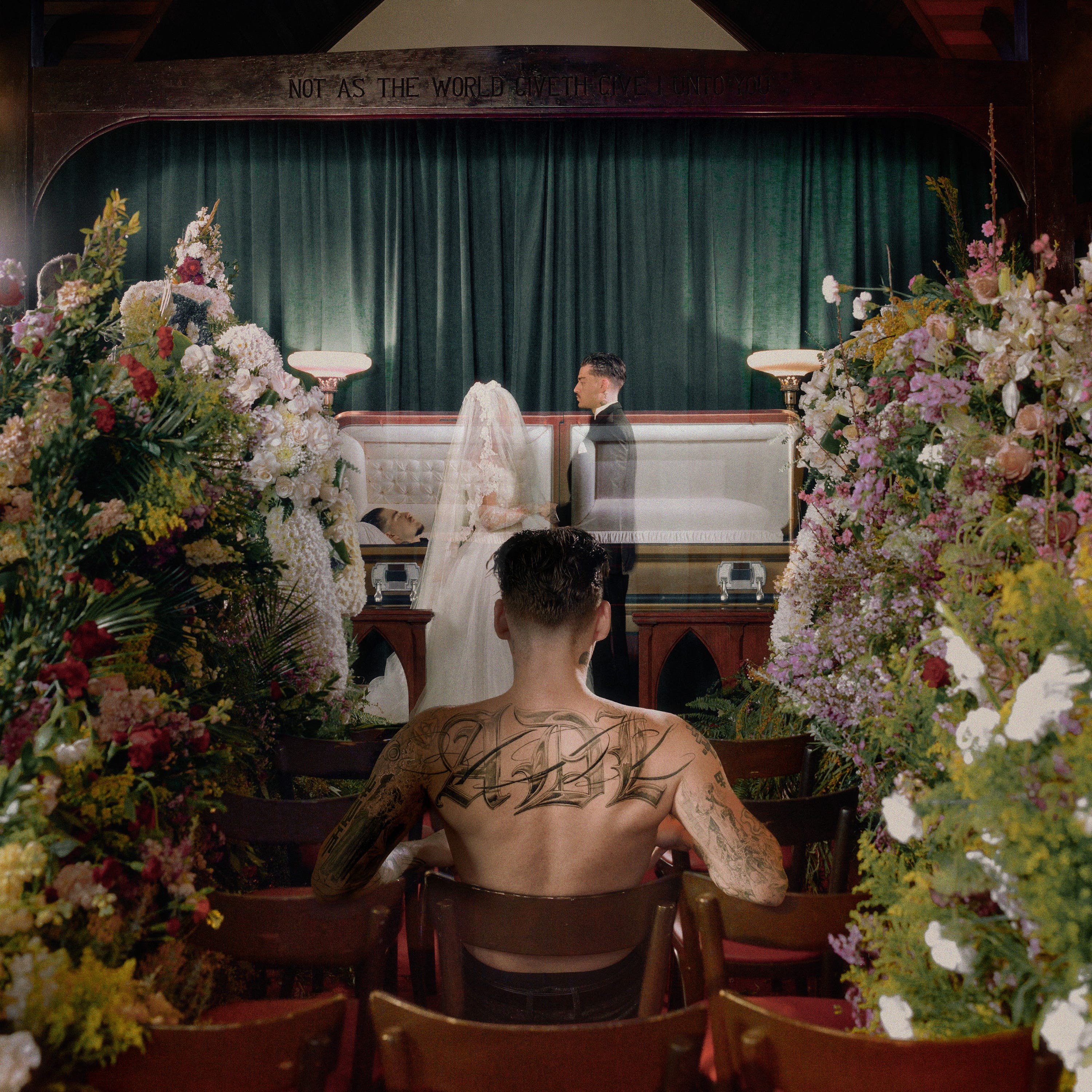
The lenticular cover art for ADL shows Yeat watching his own funeral on one side and his own wedding on the other. Two discs split the album along that axis—A Dangerous Lyfe for the excess and the cost, A Dangerous Love for the relationships and the vulnerability. Yeat told Zane Lowe he was “done with the slop.” The album runs twenty-one songs, and the slop won at least fifteen of them.
“Purpose General” starts with a spoken intro about opportunity meeting change, and then Yeat raps about Dover Street Market, mafia dinner tables, and dismissing chart numbers. The next verse brags on paying the lease on a woman. “What I Want” is blunter. He recites his sales figures like a quarterly earnings call, predicting his next record goes to 140,000, and the only person who can top him is “the other me.” “Tallër” repeats its chorus twice with nearly identical bars underneath. “Griddlë,” featuring Don Toliver, calls a woman a McGriddle and serves her like a sandwich, and that is the whole cut. Most of Disc 1 shares a problem. Yeat fills the space with the same dozen nouns shuffled into slightly different configurations, and the Auto-Tune coating makes everything smear together. When he says “I just do the fuck I want, when the fuck I want” five times in a row on “What I Want,” he means it literally. He wants to do one thing forever.
On “NO MORE GHOSTS,” Kid Cudi raps about walking in hell, tired of bleeding, sifting through thoughts, mama saying keep your head strong, done talking about ghosts. It sounds like an actual person accounting for actual damage, and its plainness stings next to everything around it. Joji turns “Back Home” into something close to a plea:
“Through the storm, I don’t wanna wait
Please don’t you let me run away.”
And Yeat, for once, drops the bragging to meet him there. “Sometimes it’s too hard to stay, and I just gotta go home.” These are the only spots where feeling precedes formula. Elton John’s “Someone Saved My Life Tonight” gets sampled on “Lose Control,” but the butterfly-and-fly passage mostly floats behind another verse about popping pills and fucking new women weekly. It’s a prop.
Yeat co-produced “Went Wrong” alongside three other beatmakers, and the track sounds loose, restless, not quite finished.
“How can I see sound and feel these noises?
Moved into my house and just destroyed it
Came inside and ripped up all your posters
And this summer was one of the coldest.” — 070 Shake
Those four lines say more about what a breakup did to him than any ten-bar run on Disc 1. The outro asks God for a witness, asks her to come back. On “Up from Here,” the third verse gets biographical:
“I was geeked out my body for years, it was hard to reach family at times
All the drugs that still fuck with my body, they definitely still fuck with my mind.”
He is twenty-six years old and describing chemical dependency as something that happened to his skeleton—and the line would mean more if the tracks surrounding it weren’t both inventory lists.
Shlohmo and Sapjer built the beat for “Dangerous House,” and the queasy, slow-drip menace of it gives Yeat a room to be uneasy in. Dylan Brady’s production on “Let King Tonka Talk” has the fidgety, overdriven energy you’d expect from a 100 gecs collaborator, but Yeat spends the whole joint on extended graphic sex bars, and Kylie Jenner shows up for sixteen lines about money and discretion—the beat deserved a different vocalist. BNYX® produced at least nine of these cuts, and across most of them, the production does what Yeat’s vocals do. It pushes forward without changing direction.
“Naked,” on Disc 2, is just the chorus on loop for the entire runtime. “2Planës” has one good couplet, and it’s from a vocal sample:
“What is life if you can’t live your dreams
A life of boredom ain’t no life for me.”
That’s stuffed inside three minutes of listing assets. “My Time” features a Swizz Beatz ad-lib and Yeat listing his daily drug intake—molly every day paired with shrooms, jumping out of planes—and you cannot tell whether he thinks this is fun or whether he knows it isn’t. That confusion might be interesting if the track stayed inside it for more than a bar, but it just repeats “go through with it” until the phrase loses shape. The album asks two questions on its cover. What does a dangerous life cost, and what does a dangerous love feel like? It keeps answering with Rolls-Royces and Percocets until the few songs that try something different can barely breathe.
Subpar (★★☆☆☆)
Favorite Track(s): “NO MORE GHOSTS,” “Back Home”