

Album Review: After All by GiddyGang & Vuyo
An Oslo hip-hop band and a South African-Norwegian rapper pool grief, guilt, and busted relationships into a record that knows what it cost them.
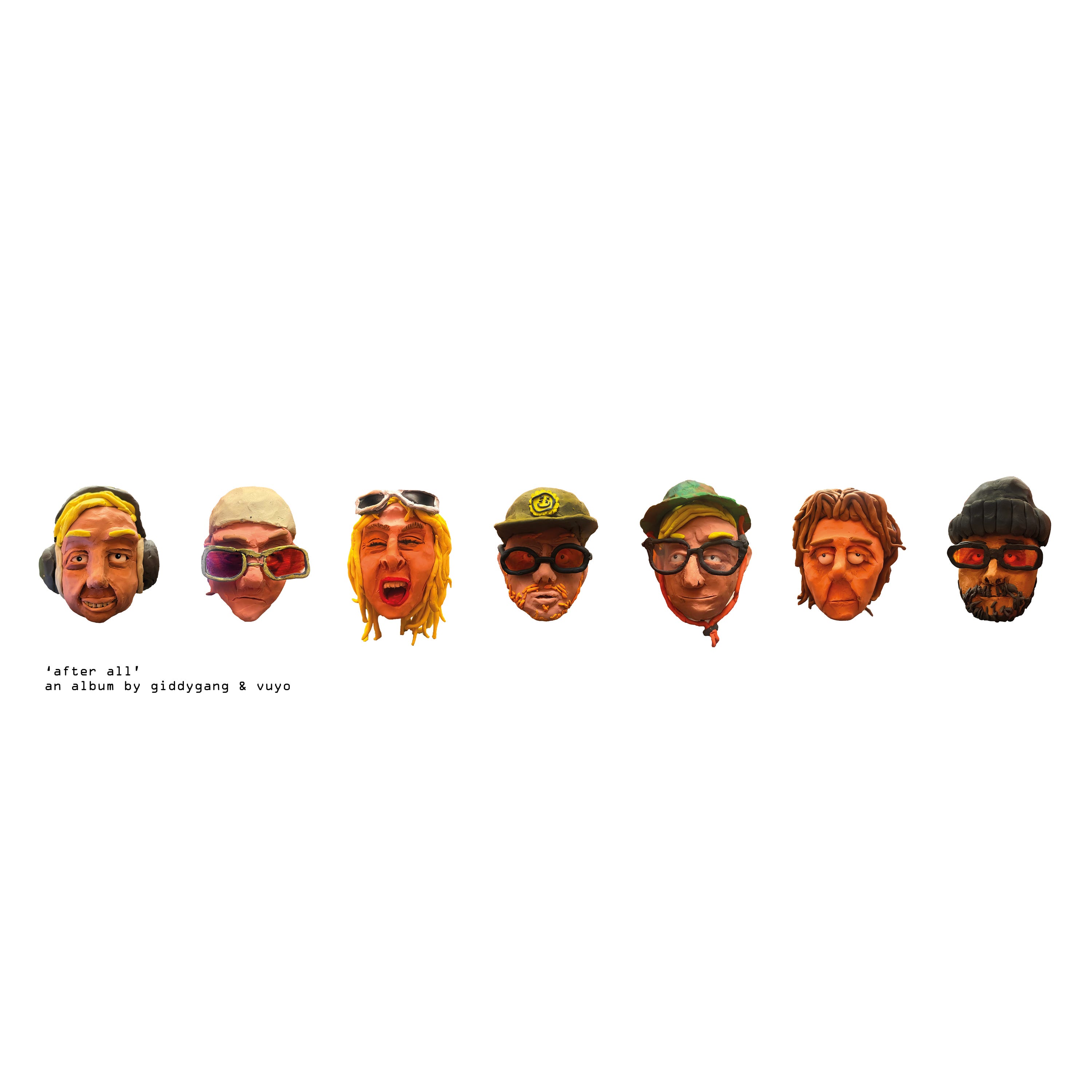
Vuyo was born in a Zimbabwean hospital to a father who stood alongside Nelson Mandela in the anti-apartheid movement and a mother who fought for Namibian liberation. Death threats chased them to Oslo when he was a teenager. He grew up shuttling between South Africa, Zambia, and Norway, absorbing Fela Kuti and Hugh Masekela through his father’s record collection, and eventually fell in with GiddyGang, a six-piece Oslo collective built around the engaged couple Sarah Vestrheim and Sigmund Vestrheim, with Bård Kristian Kylland on keys, Kevin Andersen on guitar, Martin Stapnes on bass, and Sigurd Drågen on trombone. Their 2024 debut together, Destiny/Sacrifice, got favorable Norwegian press and co-signs from Robert Glasper and DJ Jazzy Jeff. After All is their second full-length, and it spends almost none of its thirty-six minutes on small talk.
The record’s heaviest cargo is a loss Vuyo never dramatizes. His sister, South African visual artist Lunga Ntila, died in August 2022 at twenty-seven. On “Running Away,” he mentions her once, plainly. He and Xander are planning holidays, and Lunga never got to hear about it. “I guess this is healing for us,” he says, and then he’s already somewhere else, talking about egos, about whether there are Beatles in them, about Yoko-ing some Onos. His feet hurt, his knees hurt. The shroom trip was ages ago. The designer clothes don’t help with the homelessness. Grief doesn’t get its own spotlight here. It shares a bar with bravado, weed, and sore joints, and that’s what makes it stick. On “Superhero,” the losses multiply. The friendship with Mark has gone quiet since Ali passed. Friends for decades suddenly drifted apart. Vuyo’s shadow boxing with himself at home, writing poetry when he should be stacking wealth. Sarah Vestrheim sings the chorus about rising again, looking to the sky, and it keeps the song from sinking under its own sadness without pretending the sadness isn’t there.
“Survivor’s Guilt” is the LP’s centerpiece and its most fearless cut. Vuyo opens with three almost identical sentences: couldn’t move home because of self-apartheid, barely met his sister because of apartheid, hardly met his brother because of apartheid. Then he swerves into his dog dying, a completely different archive, and a publicist telling him his pain is his to sell. The specifics after that are startling. Vuyo paid a woman’s bail, and the night she got arrested, she showed him pictures of another man’s son. She was sleeping with the homie, couldn’t leave the kid alone. On holidays, he was cosplaying a kid from the township, flashing his white privilege, buying a hundred ounces. He names Mahosini, he names Ngaba. The second stanza strips things even further. His father lost his innocence through genocide, and Vuyo grew up on Easy Street. The homies never died in front of him; he only saw them cry. His birthright and his siblings’ birthright were never the same, and decades later, he’s still trying to close that gap. Junior told him, “You’re just lucky,” simple as that. Sarah grabs that line and repeats it on the bridge until it hardens into something Vuyo will carry for the rest of his life.
J’Von’s guest spot on “Dreamin’” runs the same thread from a different angle, wishing someone were deleted so everyone could grieve them as a genius, then slamming into a Palestinian kid who can’t eat while people tell him he needs Jesus. It’s the record’s sharpest moment of moral fury, and it earns its anger because J’Von has already been specific about his own guilt — about watching bread divide him from his brother.
The romantic damage on After All is just as unsparing. On the title track, Vuyo calls himself Icarus, says he came for the lust, knew she was a problem and added himself to it anyway. The safe space she gave him? Disrespected. Now he’s scrolling her timeline from a Hyatt, unable to sleep, and she’s informed him they’re better off as friends. Mac Ayres opens the song asking if she wants it back, and closes it with the bleakest question on After All. In his words: Take away my vices and what remains? Just another soul searcher saying shit don’t change. Braxton Cook’s saxophone gives the track a warmth that the lyrics actively resist, and the tension between those two registers is part of why it hits so hard. “Peace” goes even further. Vuyo demolishes a healthy relationship and admits it without flinching. Netflix and chilling with messed-up women, telling Nikki he’s tired of living life, feeling nothing, hollow when he cries.
“Say hello to the narcissist
Left her at the hotel room like a misogynist
Take a look at my family portrait
Easy to see who the imposter is.”
A house in Chabo, he says, would mean more to him than a Grammy, and you believe him because the whole passage has been too ugly to be calculated.
Sarah Vestrheim carries more of this LP than most people will notice on a first pass. She isn’t decoration or a hook machine. On “Head Over Heels,” her domestic details (toothbrushes left over, sleeping in ripped rock band tees, self-tan on the sheets, weird irrational fears) build the relationship as daily texture, the actual mess of being with somebody. Her second part on the same song shifts to long-distance calls in the middle of the night, catching up before the next flight, knowing the layover’s tight. On “Heavenly,” she gets a full turn at the mic.
“Can you see the walls closing in, feel the goosebumps on your skin?
The only way to fail is to never begin
Put it all on paper, don’t think.”
It’s the most direct statement of creative philosophy on the record, and it comes from her, not Vuyo. “You & I” has Vuyo at his most playful, spotting her in the elevator, speaking at the bus stop, living on the twelfth floor listening to old Pac, saying he needs a Ravenclaw and not a Hufflepuff. Sarah singing about swimming in the eternity reflected in someone’s eyes gives the song room to be tender without going soft. On “Answers,” she compares catching feelings to catching colds, needing that special medicine, and asks for a constant among the ebbs and flows. These are small, grounded performances, and they give After All a second voice that keeps Vuyo’s confessions from becoming a monologue.
GiddyGang’s production stays out of the way and still manages to be distinctive. The trombone and keys give these songs a jazz-soul warmth that separates them from the typical rapper-plus-producer setup, and the band clearly knows when to push and when to thin out. “Sunshine” finds Vuyo naming depression outright, calling it something you must conquer, and then admitting that music has become a numbers game where you can put out a whole project based off TikTok fame. He applauds rappers who are worse than him, but they whisper in his ear asking who’s the better MC. He shouts out Ivan Ave by name, tells people not to pit them against each other. The second half of the song is the simplest and most convincing plea on After All. Never let your ego get between you and your people, make sure everybody eats, jealousy has killed more than equality has. It takes a village.
On “Heavenly,” it details Vuyo at the crossroads of homeless and sipping Cristal, claiming if you heard it in a bar you can be sure he lived it. The LP could use one more song at the level of “Survivor’s Guilt” or “Peace” due to the shortness of the project, but these are minor costs in a set that mostly refuses to waste a lyric. Thirty-six minutes turns out to be the right length for material this dense. Any longer and the confessions might start to blur; at this runtime, every admission gets its own air.
Great (★★★★☆)
Favorite Track(s): “After All,” “Survivors Guilt,” “Peace”