

Album Review: Atomic Justice by AJ Suede
After a week of tabs and an ego death, AJ Suede kept the psychic powers and cut twelve tracks of cold, self-made Seattle rap.
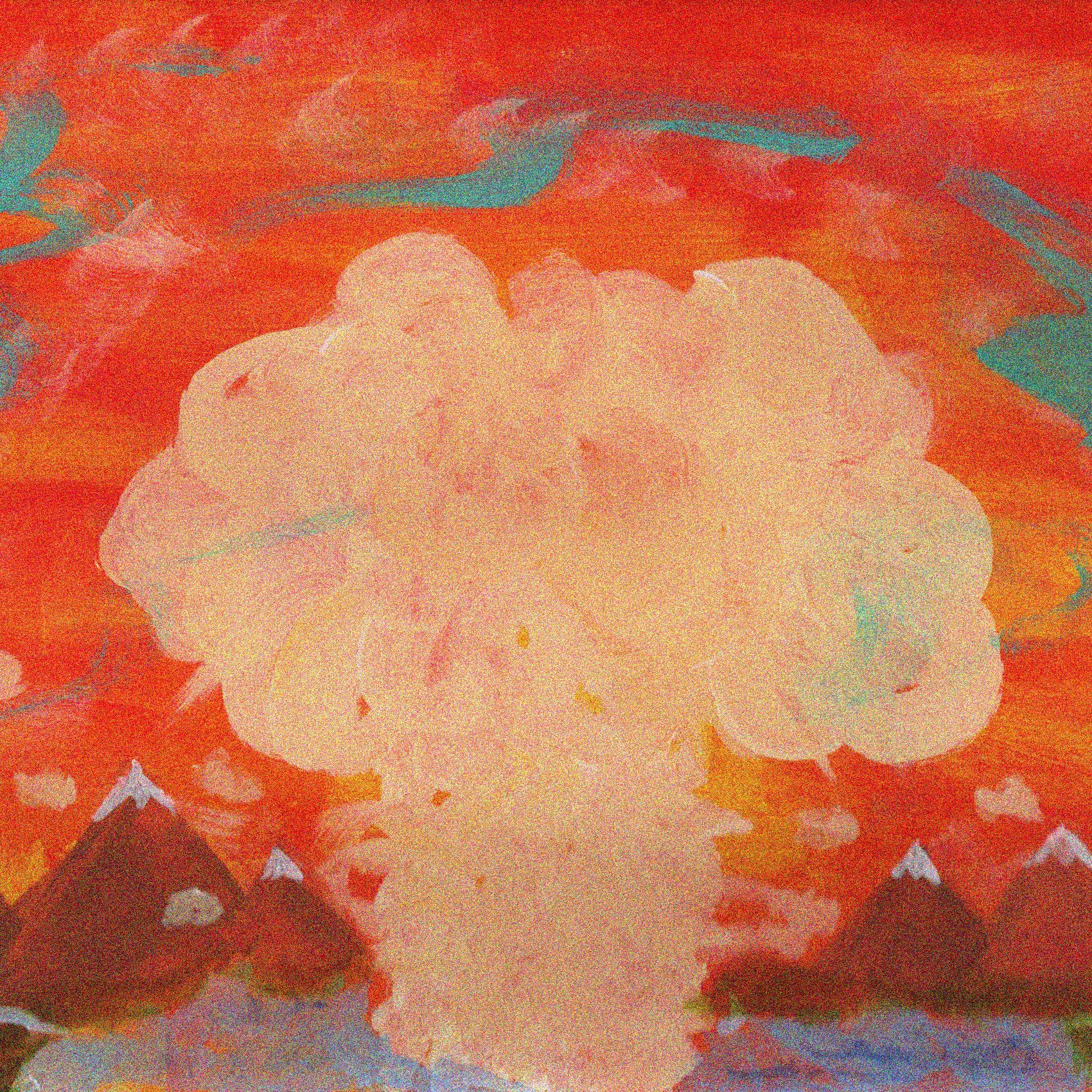
A Seattle-based operation conducted out of a single small room, Knowhatimean consists entirely of the work of the same man. AJ Suede wrote, chopped, rapped, mixed, and mastered these beats and signed his name using the moniker Suede God. With Atomic Justice, he raps in short blocks of thought-units more like statements than a performance, a man minding his own business at company headquarters.
His thoughts go outside with “Billed Gates.” It’s a verse using one rhyme sound throughout and listing everything he disapproves of in the industry: jokers think they’re philosophers now, extras think they’re going for Oscars, and “Nowadays the critics friends with studios they review.” Not carried by the cast of Expendables 2, not carried by any record label, he closes the verse with the description of his job—directing, producing, and writing the screenplay for his movies. “Strawng” is a dojo version of the creed. The loop is very thin and dry, and his voice makes most of the movement: “Return to form means you left it in the first place/But I’ve been doin’ katas in my gi since the first grade.” Nothing rusty, nothing broken, nothing to affirm in his craft he considers himself the best of. With “Sin Tax,” it’s as if it’s written in case law. If you’re autonomous, it means you can ignore everything, including trends; and all that’s heard from behind him is kick, snare, loop, and his voice, with nothing added to make a hook to call the song his get-back song.
He thinks the ‘80s must have felt something like this, with Uncle Sam as the plug. “Able to be Kane” is how he takes that feeling and applies it to the present: “Terabytes of muscle memory/The new cocaine is RAM,” a star with bars instead of stars and stripes, protecting the legal monuments to keep the textbooks from being erased once history repeats itself. The loop used for sampling hits harder than in any surrounding song, and he adds quick line returns to it, regretting the pre-pandemic prices of chicken wings and wondering why the hateful comments only come from people with scripture in their bios. “Thrilla Bark” connects the same resentment to the power grid and makes it enough to recharge a Tesla, stored due to economic policies that kept us underwater, a kid raised on meritocracy receiving pay-to-win instead. “Wrawng” is the anger expressed the most directly and minimally, a verse consisting of pure Monday-to-Monday declarations set on a minimal pocket, though he keeps the vow worth keeping in it: “Pressure won’t force me to kneel/But pressure might force you to steal.”
The media itself is roasted by name in “Tego Cal”—no soul there and not enough magnesium, “Scrolling past the slop generated/Born without talent, you’re related.” The loop he raps on is filtered, and sounds buried in it, a foggy pocket with some empty spaces, and the targets he picks in those spaces include podcast lobbyists and creative players in the Twittersphere constructing egos, rappers who get dismissed as Mickey Mouse and Bugs Bunny before giving a salute to his African Tainos spread across the whole Caribbean. The psychedelics were long gone according to “Gol D. Rajah”; a week of tabs washed down with shroom tea until ego death made further use of the tools unnecessary; psychic powers were kept to unlock doors. Still a cook by profession there, every rap is just a dish served fast, with a short loop, steady pattern, no preparation.
Figerson raps about a knife the way some rappers do about a chain. His verse on “Ghost Dawg” keeps the knife in hand the whole time, loyal to the game and constantly renewing the vows, harvesting energy, ever-present in every universe of the underground, telling you to wrap your art in something durable. The loop in the background behind the two is dark, with ghostly fragments floating around in it, and Suede responds with Kurosawa films playing in the background, koi fish tattoos done in long-needle traditional style, and a sun salutation performed on the roof just like Ghost Dog, keeping the Bushido code.
Phiik raps with elbows in “Lifting Gravity,” syllable-heavy, mad cow rapids, and mission failure, rappers who didn’t like the grind in the indie scene. The part that belongs to Suede is more relaxed but loaded as well, referees fixing all games you could have bet on, “There’s nothing like a hit of dopamine/To spend your bread on.” Mary Sue wins with “A$AP Baki.” Suede starts puzzled about anyone trying every drug there is but still being afraid to smoke the weed, then confesses the reverse for himself—afraid to take speed, whether street or prescribed. Her response is cold. Her weapon is her words—blunt and clubbing until they hear her voice, raising a better vantage every time she gets a floor, asking what your substance of choice is and if you want to remain important, closing with ears cut off and worn like neck ornaments.
One admission cuts through all the title reign talks on “Rolling Cutter”: “I tried to let the music talk/But it’s not enough these days.” The drum pocket that supports it works harder than all nearby songs, repeating the phrase and returning to the vocal part while he unifies the belts, whips rappers like Wu-Tang, and scams them like Johnny Dang. After the belt talk comes the neighborhood library, Nas as some scripture in his hood, Juelz and Lil Wayne shelved together with him, a memory of running down numbers on the avenue. The title defense and the church service share the same drum pattern, and he sounds equally comfortable with both.
Great (★★★★☆)
Favorite Track(s): “Ghost Dawg,” “Able to be Kane,” “A$AP Baki”