

Album Review: Beard by Syd
Four years after Broken Hearts Club, Syd co-produced a set of love songs about liquor, holsters, and borrowed hoodies.
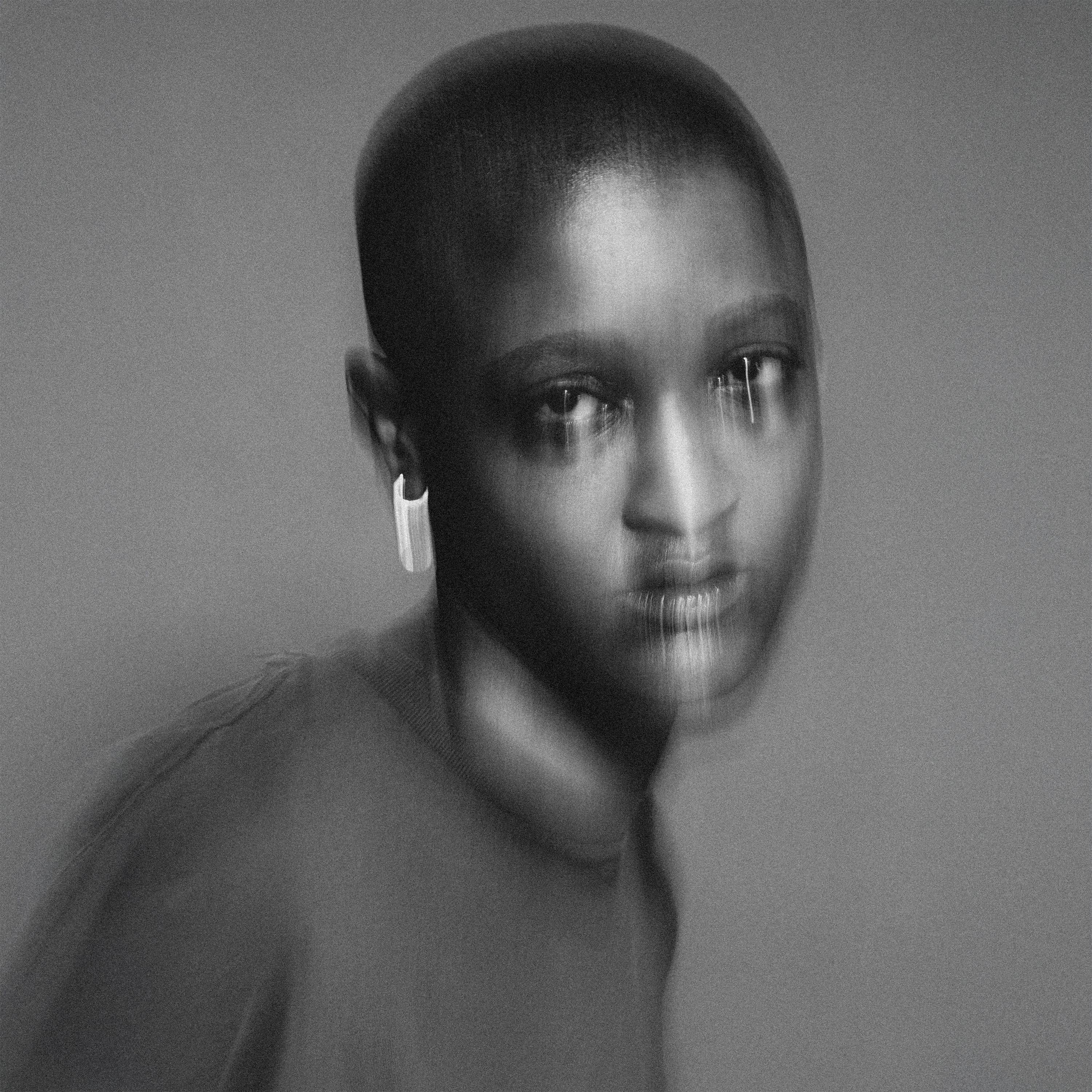
Circus posters sold the bearded lady as a cautionary tale: the woman who lost touch with her inner policeman and wound up on stage with a tent and a ticket price. Syd examined the peach fuzz above her lip, that thing “society has always taught me to hate,” and allowed it to grow. Into a career spanning two decades and featuring Odd Future sessions as a teenage engineer, fronting the Internet, and a Grammy for co-writing Beyoncé’s “Plastic Off the Sofa,” Syd unveiled her new LP, Beard, not so much a spectacle in her case, but an anomaly and an outlier. Hard to compare.” She calls it “a snapshot of what my life looks like right now,” and that shot is domestic: a home, with the wardrobe of another woman, a holster at her waist, and Hennessy with no mixer on the shopping list. Her seduction begins behind closed doors, at the thresholds, at the moment when the coat hangs at the door.
The snapshots in the opening “Walls” are framed in quick, short-phrase vocals, above soft keyboards and a rounded synth bassline. She keeps breathing between each line while she begs the guarded woman to “Come on over, let me give you lovin’.” It becomes more literal on “Closet,” when she makes room for someone that she otherwise would throw out: “Want my space/Not today/I feel the opposite,” while CUBE responds in his verse, hoping that a few hoodies go missing and there will be more reason to visit. She plays that same slow game at an even slower temperature on “Water,” stripping to reveal that coat, acknowledging that she may just watch and then promising to be a cool sea for a woman who can’t tell up from down. Then, she takes responsibility for her own trouble on “Jasmin 17”: “I’m a threat, I’m inconsistent/How you make it look easy to love.”
The most surprising pledge she makes comes complete with a gun. Over deep synth bass and a drum pocket that remains behind the vocal, she plays armed bodyguard on “My Love,” keeping an eye on men surrounding her girl and offering security detail: “Holster at my waist/Just to keep them off you.” The promises ascend from a safe place to stay to first degree love, “If I go down I’d smile in my cell all day/‘Cause you’d know I love you, babe,” and she sings the most extreme vows with the same ease as the sweet ones, slow jamming to the long-standing R&B tradition of loving someone (despite the production being Bossa Nova-inspired) with such conviction that it amounts to a crime.
On “Always Be Mine,” she has spent months chasing her demons just to get any kind of kick, hoping that the bottles don’t make any fuss, and toasts the denial straight up: “Feelin’ better than I should right now/Rather grab another drink right now.” Jordan Ward returns her with his verse, a man who cannot stand alone, looks in the mirror in the middle of the song and despises himself, then begs one more drink so he can pour his heart out. She drops the party narrative on “Do Better,” walking through her own ruins, a love transformed from a gift to a weapon, and writes the simplest lyrics about the situation: “Anxious depression/Need intervention.” By “2 Many Days,” the alcohol becomes half a joke and entirely routine, “I done learned my lesson chasin’ more women/I had one too many, still need more liquor,” sung with exhausted calm over soft keyboards and a gentle snare. She ends the song facing towards someone she loves, feeling the urgency inside, despite all of the excuses she can make, and promising to make more time.
Blu June handles the emergency call on “Callin,” dialing 911 for love (ironically borrowing the drum loop from Lil Wayne’s “Mrs. Officer”) while Syd keeps her cool below it, rolling trees on the couch, thinking that her texts have not turned green, so the woman is still receiving them, planning brunch and lemon drops so sweet that they will get someone out of her body. Big Sean provides more precise rhyme placement and syllable density on “GMFU,” hating to see himself in the woman leaving him, and he untangles the whole mess in a single couplet: “It’s sick when the same one that’s breaking your heart/Is the same one that puts it together.” Below him, Syd maintains the hook, “Smoke too much, drink too much, think too much,” the calmest person in her own breakup.
She allows herself a little grace on “Bad Guys,” singing “All bad guys were once good/All good guys have gone where they never should” as a pass for everyone involved. In the bridge she gives the world, heavens, and everything else above it, no matter what it costs her, then acknowledges that it will cost her almost nothing if it is not what the other woman wants, and leaves the question hanging of what they are fighting about in general, over several verses of la-la-la.
James Fauntleroy gives his best performance on “Any Time,” bending melodic lines around the chord progressions as Syd and he describe the same doomed relationship from the other end. Syd knows what her ex is doing and asks her to come do it again; Fauntleroy, tagged on the second verse, compares the woman to roulette and slides right in. “Every time you come over, I come too,” Syd sings, gruff as a text message. And in the bridge, she runs out of patience with her own pattern and tells the truth: “Normally by now, I’d dub it/But I can’t even lie, I love it.” Then both of them take the final choruses together, harmonies moving as interlocking lines over drum hits placed far enough apart to breathe, two adults, fully aware of their choices and going back in.
If drinking or depression is part of your life right now, the SAMHSA National Helpline (1-800-662-4357) is free, confidential, and open 24/7 in the U.S.
Great (★★★★☆)
Favorite tracks: “My Love,” “Always Be Mine,” “Any Time”