

Album Review: Beautiful Tragedy by Ebony Riley
The Detroit singer who lost her mother at nine and walked runways for a decade writes a debut where sex and self-interrogation answer each other.
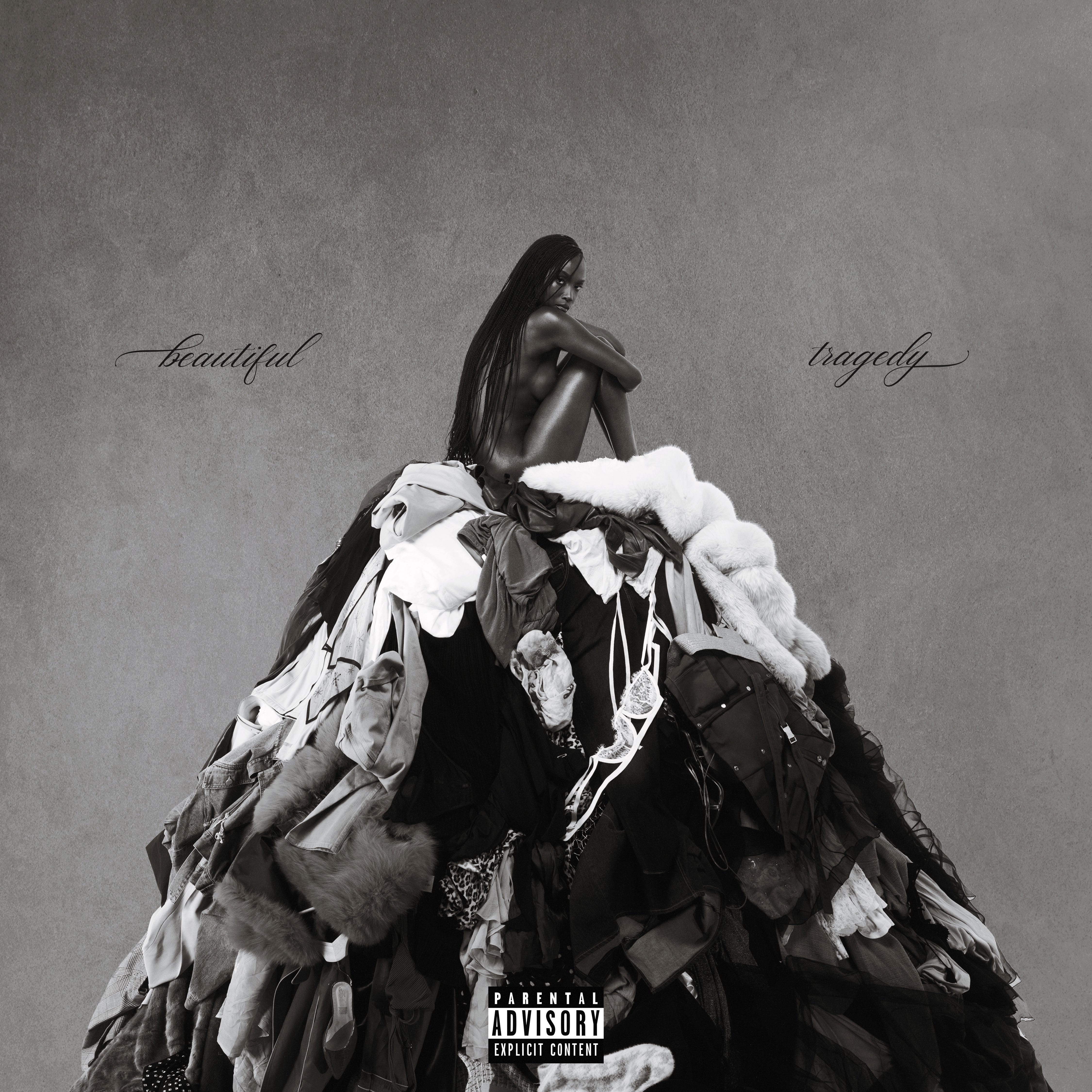
There are individuals who learn to maintain their equilibrium in life from a young age and retain this skill. An example would be Ebony Riley, who joined her church choir at age 7, lost her mother at age 9, went through the State of Michigan’s Department of Human Services, earned her nursing degree, and then started a successful modeling career. When you live your life this way, you learn how to project positive energy into the space around you. Ebony walked the runways for Marc Jacobs and Givenchy and appeared in Beyoncé’s Renaissance marketing campaign for Balmain, but did all of this using only the name “Riley Montana” professionally. However, she had been writing songs since 2015 under her birth name, Ebony Riley, but did not release any of them during that time, as she’d been living a completely different life. In an interview with Billboard in 2023, she reflected upon how the modeling industry never fulfilled her artistic aspirations. During the COVID-19 pandemic, she signed a quiet deal with Interscope Records and released a seven-song EP titled Ebony in early 2023. Her first tour was with Jazmine Sullivan, she performed at the BET Awards, and began to record the music that would eventually be compiled together as Beautiful Tragedy.
The songs are nearly half about sex, and not only do the sexual-themed tracks NOT agree with one another at all, but they also offer completely different experiences. For example, “Otherside” could be categorized as a semi-instructional video. In that song, she identifies herself as “Miss Jackson, nasty,” requests domination while engaged in sexual activity, describes being choked in her sexual activity, offers to allow a friend to participate after having consumed a drink or two, and provides directions regarding the physical path to take between her legs while sex is being performed. In fact, she names different rooms (bathroom, balcony, bedroom floor) that will be utilized during her sexual acts and specifies the sexual position in which she will be engaging during each act. There are no sexual acts or behaviors that take place in this song that are ambiguous in nature.
While “You Better Know,” featuring Skilla Baby, could also contain a sexual theme, its theme or style differs from that of “Otherside,” as do all of the other sexual-themed tracks on the album. Riley says he’s entertainment, she made him wait on purpose, he’d better perform. Skilla Baby’s verse answers her by calling her his “lil’ shit” and asking for the splat. The collision is funny, a little gross, and more direct than most R&B duets try. “Why Pt. 2” drops the confidence completely. Riley wants to know why she’s scared when she’s ready, why she ripped his clothes off and still can’t stop asking “why, why, why, why.” The song repeats the question without answering it. Each of these songs is powered by a different engine (total control, transactional challenge, genuine confusion), and Riley sings all of them like she means all of them.
Separate from the bedroom material, Riley writes about men in the aggregate. “Who Raised Y’all” puts an entire demographic on trial. Ten men sharing one bottle, always at the club, never with their babies, commenting on her posts but too cheap for dinner. She says she kept the receipts from their texts. The anger has gone past disappointment into bemused disgust, and the question the song is built on (“Who raised y’all niggas?”) is one she already knows nobody is going to answer. “Too Grown” pulls the camera closer, Riley addressing one man directly, her voice parental almost. She’s too spiritually grounded for on-and-off games, and she tells him he’s safe with her. “If you ain’t in, tell me now/‘Cause I would rather be without,” she sings. She’s been burned enough to lead with terms and conditions.
Riley’s sharpest writing appears when she turns the accusation inward. “Honest” admits she used to say yes to men she didn’t want, faked it to avoid sleeping alone, ignored her friend who said the man was making everything her fault. “I’d rather be real and rejected/Than fake for acceptance,” she sings, and her voice thins on “rejected,” the declaration costing her something in the middle of singing it. “Sick of Me” starts as an attack (“Oh, you sick of me? Yeah, bitch, I’m sick of you”) and flips at the halfway mark to “Am I my own worst enemy?” She does not land the pivot gracefully and the song is better for it. The shift has the quality of a thought that ambushed her mid-verse, not a structural trick.
Aunty Renee’s voicemail on “Through the Motions” is the only point on the record where another person talks to Riley instead of Riley talking outward. “The Lord didn’t bring you this far just to let you go,” Aunty Renee says, and it has the sound of a message left on a phone that has been ringing unanswered all week. “Healing,” the Fauntleroy-produced track that follows, picks that mood up and stretches it. Riley sings about searching, about finding healing once while staring at someone’s ceiling (“I don’t know how you did it, spiritual feeling”), about how something inside doesn’t feel right. Then “SOS” arrives, and she’s waving a white flag.
“I know that I wanted this
And I’m not sorry, but I hate that I’m stuck here.”
She wanted it, she’s not sorry, and she hates where it left her. That’s a brutal little knot of emotion to put in one couplet, and the Agape Woodlyn and Seige Monstracity production on “SOS” just floats beneath it, giving her nowhere to hide from what she just admitted.
Riley said in YAMS Magazine that the album title came from turning the camera on herself, and the final stretch of Beautiful Tragedy turns it on other people entirely. “Blossom Up” (co-written by RAYE, produced by Mr. Franks and Tommy Brown) is directed at someone suffering in silence. “How you keep your tears so dry?” Riley asks. “The monsters are all in your head.” The reassurance sounds earned, coming from Riley’s particular history with systems that teach you silence as survival. “Bloom,” produced by Shea Taylor, sings directly to young Black girls, and the second verse spells out the exact household. Mama gone. Big sister making sure they eat. A teenage girl filled with rage at a father who couldn’t be a father. A grandmother who called her ungodly. “Bloom” is where Riley’s self-reflection extends past her own face and reaches for girls who grew up inside the same story.

Riley’s voice carries the whole record. She can go full chest on “Only You” and dial it to a conversational half-whisper on “Too Grown,” and both registers sound like decisions, not limitations. The gospel training shows in how she manages volume, and Rance Dopson’s executive production keeps the songs in the same universe without flattening them. Camper’s snap-heavy “Who Raised Y’all” sits next to the Fauntleroy tracks, and neither sounds out of place. The weaker spots are “Only You,” a solid devotion song that doesn’t push her, and the Skilla Baby collaboration, which is more entertaining than it is durable. But the best songs here (“Honest,” “Bloom,” “Otherside,” “Why Pt. 2”) are as good as anything in R&B this year, and Riley’s willingness to put “Bloom” (Black girlhood, absent parents) on the same tracklist as “Otherside” (choking, threesomes) without trying to reconcile them is the album’s strongest argument. She said to YAMS Magazine: “It started off beautiful. Then it got real bad.” That quote describes the relationship. The album describes the woman who outlasted it.
Great (★★★★☆)
Favorite Track(s): “Honest,” “Otherside,” “Bloom”