

Album Review: Boiling Point by Juvenile
The Tiny Desk dragged him out of retirement. At fifty-one, Juvenile sounds like he never left—he just had nobody to call.
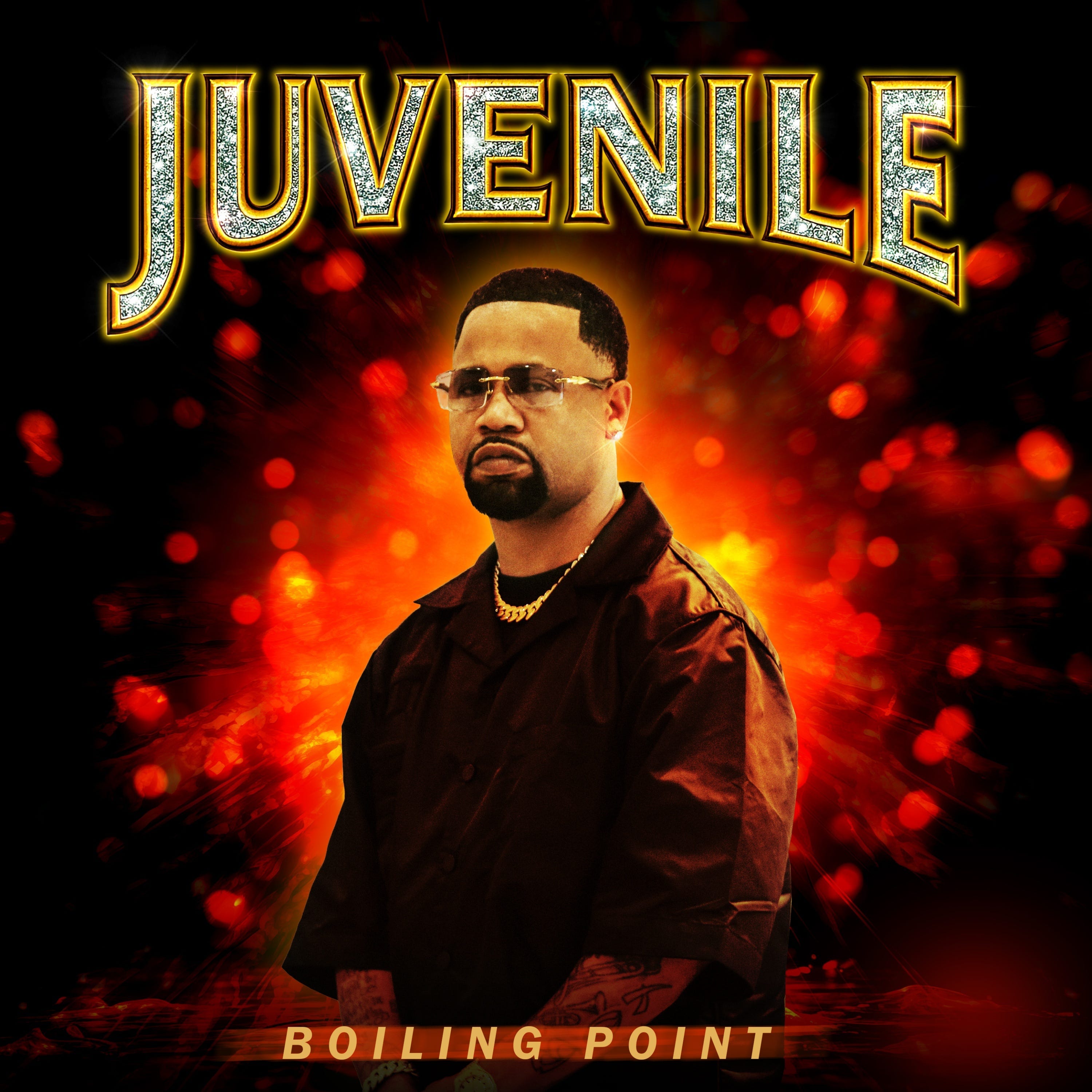
In April 2023, somebody on Twitter asked Juvenile to play a Tiny Desk concert and he replied, “WTF is a Tiny Desk and no!” Black Twitter dragged him for days. He buckled, demanded ten thousand retweets, got them in hours, and two months later flew to D.C. with Mannie Fresh, Trombone Shorty, Jon Batiste (who ditched London for it), and string players from the Louisiana Philharmonic. The audience demanded an encore of “Back That Azz Up,” the first encore in the show’s history. Vulture ranked it the best Tiny Desk of 2024. And Juvenile, whose last solo album (The Fundamentals) came and went in 2014 without much fanfare, whose run from Cocky & Confident through Rejuvenation had been a steady downhill slide, suddenly had people paying attention again. He told Vibe the performance was the whole reason Boiling Point happened: “If I don’t go on Tiny Desk with my dogs, and we didn’t do that shit live, man, this shit wouldn’t be happening.”
B.G. got out of federal prison in September 2023 after eleven years. The government tried to make him submit his lyrics for approval before recording; he fought that in court and won on First Amendment grounds. He put out Freedom of Speech in 2025, toured with Juvenile and Birdman on the Cash Money 30th Anniversary run, and now he’s scattered across Boiling Point on three songs. On “The Reunion,” he raps about popping at people for nothing, riding with switches, and being in and out of prison. His verse on “Juvie Beverly” is looser, more comfortable. He’s hanging on yachts now, replacing women weekly, screaming free all the real ones. Birdman opens the album with a geographic roll call. Magnolia, Claiborne, St. Bernard, Calliope, Hollygrove. He names Soulja Slim (murdered in 2003 before “Slow Motion” charted) and says he started this thirty-five years ago. He’s staking out geography, not really rapping. When the three of them share space, something genuine comes through. Old friends who outlived a lot of other people from those same neighborhoods, glad to be recording together again.
The biggest slice of Boiling Point belongs to women, sex, and bounce, which is exactly where Juvenile built his fortune. “B.B.B.” runs on the same engine that powered “Back That Azz Up”: a commanding bounce rhythm, Juvenile barking questions at a woman who won’t make up her mind—“What you want, a poor nigga?/You want a good fucker or you want a toe licker?/You want a young nigga ridin’ on a four-wheeler/Or you want a grown man who can drop pole in you?” Genesisthegawd flips the perspective on her verse and matches his energy bar for bar; she wants stamina, Chanel, and trips, and she’s specific about it. The Megan Thee Stallion remix, which charted on the Hot 100 (Juvenile’s first entry in twenty years), adds a verse about AARP money and jacuzzis pinker than tusi. Megan told Billboard she heard the original and immediately demanded the instrumental.
Not every sex song tries as hard. On “Pay Me,” it’s Monday pickup, Tuesday drop-off, mall shopping, Bentley rides, and the chorus just says pay me back in pussy. No winking, no cleverness; Juvenile has been making transactional sex music for three decades and he’s good at it the same way a carpenter is good at hanging doors. “Fuego” lets DJ Khaled shout “cántenlo pa’ la calle” over and over while Juvenile chases a Puerto Rican woman he thought was Creole, then pretends to interview her in the second verse. “Hot Boy Summer” has Jacquees singing and Trombone Shorty on the production credit, and the song itself, just does nothing.
Most of Boiling Point is party music, but “Drop the Location” is about losing friends, and it’s the sharpest writing on the whole thing. Juvenile names every kind of betrayal he’s clocked: people who left when things went bad, people too greedy to swallow their pride, someone who applauded when others talked shit about him. “You told me you ain’t said shit, why the feds all in my garbage?” he asks, and then: “Whenever a nigga talk shit ‘bout me, you don’t fight for me, you applaud it/We supposed to be best friends, but we can’t now, you destroyed it.” He references B.G.’s probation as the reason they can’t move like they used to—a small, practical detail that says more than any grand statement could. The hospital simile in the chorus (“Like a hospital when it’s empty, homie, I ain’t got no patience”) is corny on paper but he spits it with enough venom that you buy it.
Swizz Beatz gives Juvenile something aggressive and clanging on “You Mad,” and Juvenile just lists every wrong assumption people made about him, flipping each one with “didn’t you?” for twelve bars at a stretch. Did you think I was broke? Didn’t you. Did you think my watches were fake? Didn’t you. Did you think I wouldn’t slide? Didn’t you. It’s a simple trick, but the accumulation gets to you. The strangest three minutes belong to “Meph Town,” where Juvenile raps as methamphetamine in first person, saying he’s a big fish, he moves through the neighborhood like COVID, laws get made to stop him but he finds more ways. “Stay away from me right now before you relapse” he warns in the second verse, and then: “ain’t no business like the dope business.” It’s an odd and kind of menacing concept that doesn’t quite go far enough, but nothing else on the album sounds like it.
Juvenile and Mannie Fresh trade bars on “He Gone” roasting a man who never did anything, never blew up a zip, never gave Balmain a tip, never walked in a store where they close the door because they know you have money. Dee-1 jumps in and adds the church angle: you went to Catholic school pretending to be a goon, you post pictures at places just for clout, you can’t even quote scriptures. The chorus says tell his mama to take the insurance. It’s the funniest thing on the album by a long stretch, and Mannie Fresh’s production backs the roast with a grin.
London On da Track gives Juvenile a reggae-inflected beat on “Neva Go Broke,” and he uses it to remember selling drugs as a kid to pay bills, his girlfriend dreaming he got killed, and his big homie pulling him aside to say he still had life to live. By the third verse he’s making peace with all of it: “First I wanna say rest in peace to my past/And rest in peace to them presidents on that cash.” His son Young Juve shows up on “Hot of the Hottest,” sounding green but game, talking about trust issues and thriving off negativity while his father mentions a mural of himself in the Magnolia Projects.
Twenty songs is a lot for anybody, and Boiling Point would be tighter at fourteen or fifteen. The interlude is pointless. “WYM (Woah)” with Akeem Ali runs on fumes. “One More” is a drinking song that disappears the second it ends. A few of the guest spots—Birdman’s third or fourth appearance, some of the lesser-known names—add volume without adding much to remember. But when the album locks in, it locks in hard. Juvenile at fifty-one sounds like Juvenile at twenty-five with creakier knees and a longer list of people who owe him money. His voice still has that sandpaper grit, his punchlines still catch you on the absurd side of specific, and he still writes about women and money and enemies like somebody who has been doing all three simultaneously since the Clinton administration. The Tiny Desk yanked him back into the booth. He showed up with enough good songs to justify the trip.
Solid (★★★½☆)
Favorite Track(s): “Drop the Location,” “Neva Go Broke,” “He Gone”