

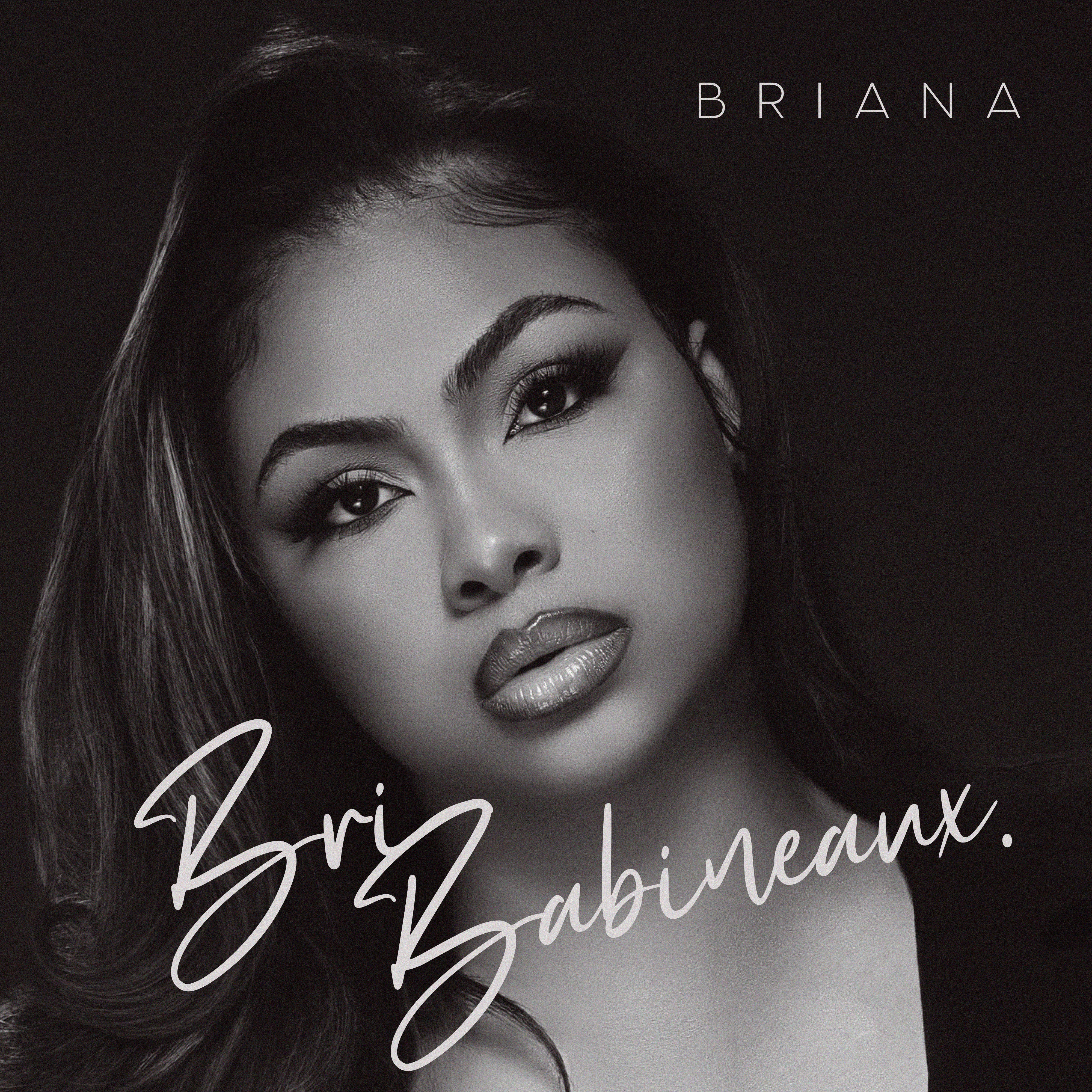
Black women in American gospel have been writing to God in love-song language for a long time. Yolanda Adams sang “Open My Heart” with the same address you’d hear in a quiet-storm slow jam. Mary Mary built a career around the same move. Tasha Cobbs Leonard places a worship anthem next to a piece of R&B phrasing and lets both stand. Bri Babineaux writes inside that lineage from the opening verse of her third album. “When I think about it, I love the way You make, You make me feel,” she sings on “Make Me Feel.” “It’s so amazing, I can’t explain the way You make me feel.” Those couplets would sit comfortably on any R&B record made since 1999. The capitalized “You” is divine. The cadence belongs to a different room. Babineaux’s bet, across ten cuts, is that the address and the room can stay the same and the meaning will still travel.
Before “Grace” arrives, Babineaux talks. “As women, we are already emotional beings/And I think sometimes people forget that/And I can attest to just me being a new mother/And having a new little fresh baby boy.” Then the music starts. The verse describes a fatigue gospel radio rarely makes room for. “Every morning/Gives us a new day, a blank slate.” Babineaux asks for something on the next line. “So go easy on me/‘Cause I had all I can take/Wear my heart out on my sleeve/Give me some grace.” “Grace” begs the listener for mercy where most worship songs would beg God.
The double-meaning of “Love Me, Love Me Not” itself. Babineaux opens to a man. “Sitting down, I’m sitting ‘round, just waiting on it/That love you on when the thrill is gone and it ain’t toxic/Want him to love me and show it a million ways.” A pivot lands, mid-thought, on God. “When I’m feeling lonely, God’s got me/I won’t worry ‘cause it gets better.” One question reaches both addressees. “Do you love me, you love me, you love me or not?/Want a love that’s true/Like my God loves me and you.” Babineaux keeps the man in frame for another eight bars. “If I give my heart, can you handle it?/You say you love me, well, show me all the ways now/Can you cover like my God covers me?” Then the closing turn. “Don’t judge me, I’m only human/And we need love too.”
For “All,” it opens with a confession most worship records do not book studio time for. “Life sucked for a minute/The rain fell every time my face was finally dry/Mornings were a menace/I woke to face the day with heavy heart and eyes.” Then the admission. “If I’m honest, I’m angry, mmm, I’m a little confused/Wish I, I didn’t hurt sometimes following You.” Mainstream gospel keeps anger at God out of the second verse, and Babineaux puts it there. The anger gets parked next to the love and left in place. “If anybody loves me, I know You love me/‘Cause you won’t ever let me fall/You stay with me through it all.” Then surrender. “Take it all/Every goal, every dream, I’ll surrender everything.”
Troy Taylor and Johnta Austin produce “Serve You” so deep inside mainstream R&B that the lyric has to carry a load the cadence is not carrying for it. Babineaux opens with a shout-out. “Troy Taylor, you the GOAT.” The opening lines: “Since I met you, I’ve been noticin’ a change or two/Since I met you, I’ve been feelin’ like the vibe was true/Pain you’ve been soothin’, tears been removin’/We move in new directions with these lessons, I’m your student.” Babineaux never specifies the change, the pain, or the direction. “I just wanna serve you,” she declares, and the production carries the argument the pen didn’t.
Anike’s guest verse on “The Real One” cites scripture by chapter number. “See how it look when you letting God use you/Tell ‘em it’s written in Job 42:2/I lift my praises, oh, so audible, this one for all them prodigals/He’ll take a mess and make a masterpiece, so yeah, it’s possible.” Job 42:2 is where Job answers God, no purpose of yours can be thwarted, and Anike puts the chapter number inside the bar. Babineaux’s verse on the same track was already running. “He took the pain, all the shame and confusion/He put in work, gave me worth and it’s proven.” Anike names the source by digit; Babineaux names the action.
Across “I Will Wait” and “Faithful,” Babineaux works inside the central grammar of traditional gospel ballad. “Sometimes it’s hard to be patient/When the world gets you way down/Every day, I try to stand on my faith/But it seems the answers can’t be found.” Or: “I know You to be faithful/It’s always You and me no matter what.” Both songs are well-made and competent, and both are doing what gospel radio has been doing for two decades.
“Confident” opens the album with Babineaux writing a brag and a brace at once. “Sometimes the noise can be so loud/But I’m always above, I won’t never stay down.” Babineaux dares the listener. “You can blame it on His grace/You can blame it on His favor, you can blame it on my Savior.” Blame all of it on Him. Babineaux pushes the dare on the outro. “Flexin’ on ‘em like Jesus/Miracles in my life, I shine His light, I know you see it.” Babineaux pushes it again eight lines later.
“Now, I am the head, and I’m not the tail
Ain’t gotta play it down, ‘cause He done blessed me well
I’m a believer, but I’m still the boss
I’ve been promoted by the one who came and paid the cost.”
Above Average (★★★☆☆)
Favorite Track(s): “Grace,” “All,” “Love Me, Love Me Not”