

Album Review: Brief Laughs by Wakai & Luke MacKenzie
At a funeral repast, somebody cracks a joke, the room laughs for two seconds, then the grief slides back in. That window is the only relief these twelve tracks allow.
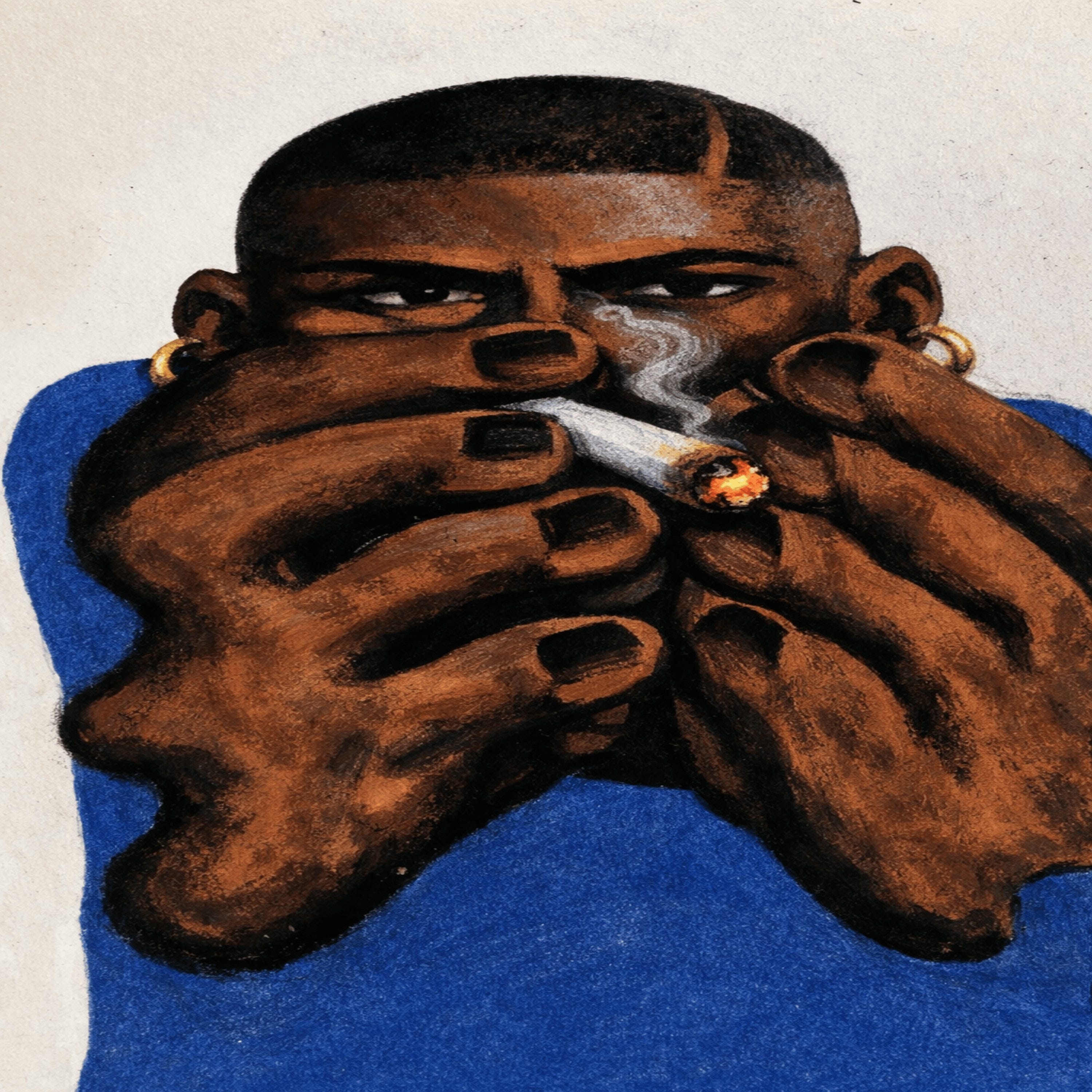
A repast is the meal after the funeral; it is the time when the family sit down to eat, and one relative will recount the deceased person to the assembled company, and for a few seconds, a laugh echoes around the room before the grim mood settles back in. Wakai from Baton Rouge makes the entirety of his album take place in this room. On the title track, the longer verse details the count of the dead in relation to the living is stretched so thin it is nearly non-existent, an acquaintance, with the chance to achieve it, then became numb, three-five of trauma rolled into a blunt, a cornered block with a gun always near ready for the reaper. The twelve tracks laid down with producer Luke McKenzie hold this exact cold temperature with no rise, even when the body count becomes extreme; he is reporting on the funeral like it’s the weather forecast, which he is going to check tomorrow morning. The laugh is momentary, but the sadness remains.
Paranoia eroded into a habit opens the record on “As a Child.” “Anxious I often be from strangers,” then “I notice those gone miss, they get disposed of,” and the running toward sex and drugs seems to come from nowhere but defense, never flexing. On “Felicia” it spells out the name but veers into the story of “an in and out of prison dude” who “people still chose to blast on” who ends up “down in an abandoned window open” and “the cops patrolling,” an instant in time that hands over the title at an oblique angle: “It’s just a chapter a brief blast of a sad moment” where street and death sit on one wall and there is no indication on Wakai’s record where one begins and the other ends; he reports on the toll, doesn’t score it, doesn’t call it loss, doesn’t call it triumph and it would be harder to execute if he did.
Pierce Washington stops by on “558” after a hook of telling someone that “could overdose,” he shifts the loss to the surviving family and “How could it be love if it don’t touch the soul.” Followed by “Share a brief laugh whenever we get in the jam” and the memory of grandmother who “kept the crease” on one hand. On the other the album’s somber refrain continued by Seph Pablo on “Journal Entry 6,” with “Smoke a little trees for my niece/she got baby fever but i can’t really give her that shit neither”; it is a person existing in an affection that they cannot entirely share before the verse continues to tell that you ain’t “never learned shit ’til you bring it back home.” He keeps the same oppressive air from the host with no urge to break from it; a laugh or a glimpse of sunlight from another guest rapper would have blown a hole in the room’s somber interior. Instead, Seph Pablo lets it remain the same.
Fakers and blowhard savior-complex politicians fill the first few bars of “May 11th,” and each is an instance of personal, petty anger, until the verse leaps outside to the babies dying in the bombed cities, the cops who get a raise to kill people. The verse just lands there, not having bridged, since the rapper living through it does not either. Politics reaches you here the way politics reach everyone, somewhere in the middle of complaining. “Riley & Huey” uses the same move via Boondocks imagery. The desire to emulate Huey, the statement that change only comes when we bleed, is paired with boys dying from hanging from trees and mothers screaming after sons “dropped from a disagreement.” Faith and rage become one breath; “I know I’m a sinner and yet I spread peace,” he says, without stopping to balance—and left with an unsupported contradiction, it’s a real moment, not an affectation.
Baton Rouge is under all of this. Having recorded since adolescence, now two albums deep before this one, also having lived a separate, public life as a model and designer (details entirely absent from the verses and more like texture here), and in “6 Feet,” a partner in public housing with bad checks meets parents out of work, while Wakai calls chosen happiness the only drug. He cops to having karma against him, having his mental running out; it all comes to this one line, light is where darkness lives. And if he needs to name who is with him through it, the producer, the “me and Luke” of “Rectify.”
The full story of “A.S.N” Is where it finally goes into detail. “It’s no excuse, you’re not a victim, that’s not what I label it,” he says of the relationship that, because of the fog of abuse, “you hardly shake from” ever did really let go. It goes from every soft landing jumped over to, mid-song, “I wasn’t ready for a child/We reconcile but all scarred.” It’s as if both she and he both get what it’s worth: She is not given blame, and he is not given sainthood. We reconcile, but all scarred is where the song ends; both the reconciliation and the scar tissue left on the table.
At the end of “Rectify,” he’s saying it is just me and Luke, aloof from cradle, listing his one constant before admitting: “I been processing my grief, breaking old routines… I’m just a young nigga looking for somewhere to breathe.” He’s driving, and God is in the passenger seat, and when the question is why is he speeding, there’s no response. The album is a way, in the simplest terms of the hook, of the music you play when you steal a few minutes for yourself from something awful that won’t leave you.
Great (★★★★☆)
Favorite Track(s): “Brief Laughs,” “Journal Entry 6,” “Riley & Huey”