

Album Review: Brilliance of a Falling Moon by dälek
Will Brooks at fifty raps harder and more precisely than ever, turning dälek’s industrial-noise hip-hop into the sharpest political record of the year.
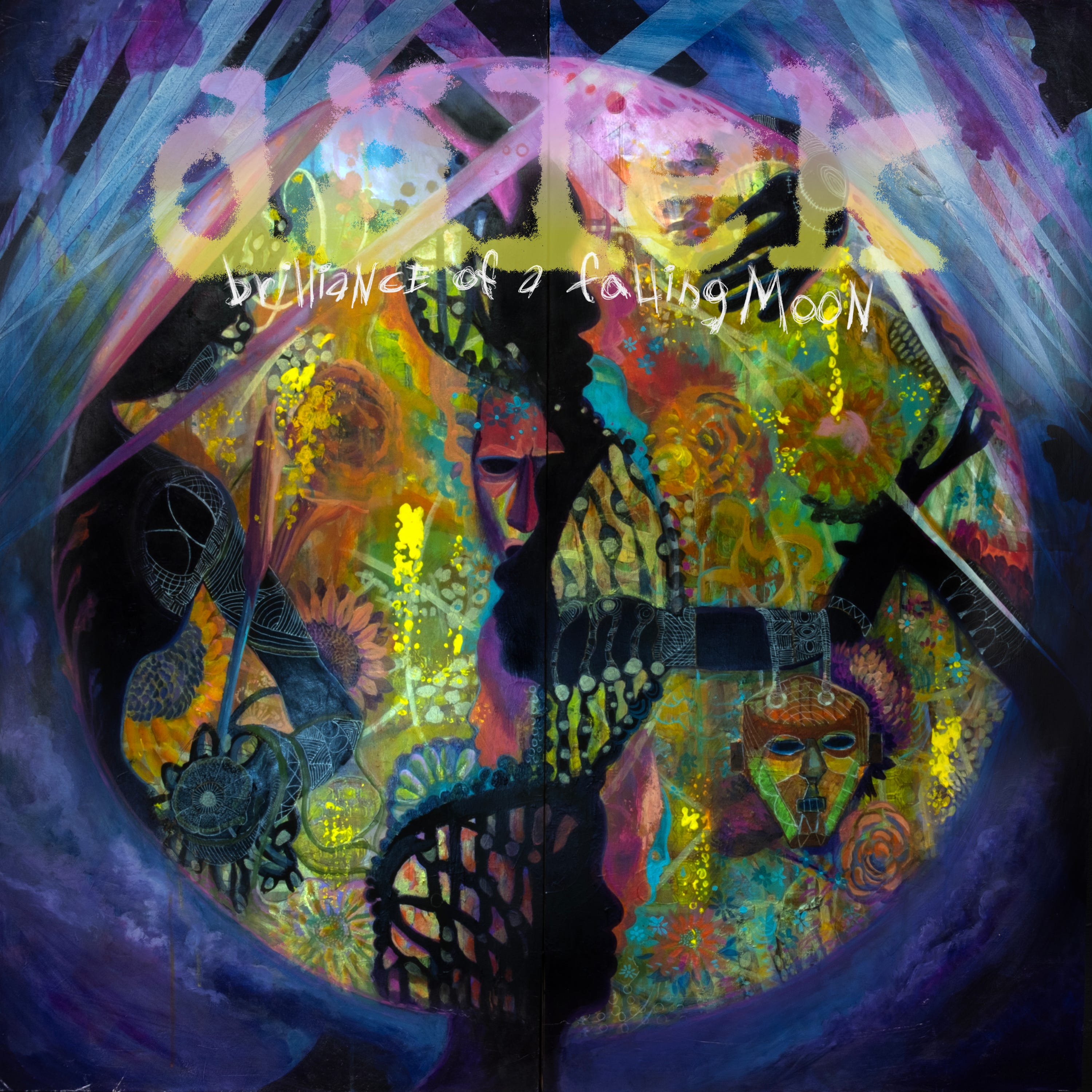
Erik Larson’s In the Garden of Beasts tells the story of an American family in 1933 Berlin, watching a country they thought they understood slide into open fascism while diplomats sent polite cables home. Will Brooks pulled the title of dälek’s tenth album from that book, and the choice is blunt enough to skip allegory entirely. Brilliance of a Falling Moon. is a record made by a man in his fifties who has been saying the same thing since 1998. The state is a violence machine. The class war never paused. Hip-hop is the only form elastic enough to hold all of it. He now finds himself in a country where the parallels he spent decades drawing have collapsed into a single image. He names ICE raids, the demonization of Haitian immigrants, the deportation of Venezuelan migrants to El Salvador’s maximum-security prison, Flint, and compares somebody to Henry Kissinger, and it doesn’t scan as hyperbole.
Brooks and Mike Manteca have been the core of dälek since 2015, when he revived the group after a four-year hiatus that nearly killed it. Their production still runs the voltage it always has. Bomb Squad compression fed through Einstürzende Neubauten’s sheet-metal clatter and My Bloody Valentine’s frequency saturation. But Brilliance of a Falling Moon. strips the layers thinner than usual. Others sounds sparse and overstuffed at the same time, the drums punching through a fog of distortion that thickens and recedes like a tide. The beats across the album refuse to let you settle. They swell without cresting, they cut out where you expect a drop, and the spaces between the noise carry as much pressure as the noise itself.
What the production does for tension, the MC matches with precision. He has never rapped this sharply. On “Better Than,” he stacks multisyllabic phrases at a pace that would trip most rappers half his age. “Regurgitated facts lack the depth of perception we chasing” tumbles out in a single breath and keeps accelerating. On “Normalized Tragedy,” he shifts between clipped, percussive bursts and longer phrases that roll downhill, the cadence itself mimicking the frustration of watching obvious corruption go unchecked. He calls out amateurs aggregating clout through deception, asks who anointed these clowns as kings, and on the way out compares the damage to Kissinger’s body count without flinching. His diction is tighter than anything on Precipice, and his breath control lets him fire compound sentences as single units of meaning instead of chopping them into punchlines.
“I AM A MAN” is structured as a litany, and it could collapse into somewhere else if Brooks didn’t keep shifting what each declaration carries. The first verse opens with a fact that counterparts as a malady:
“I’m a man half-centurion in an art form that devalues my worth in a world thoroughly on fire.”
Then he says he grabs the mic for sanity, not vanity, that his empathetic nature is a rarity, that every syllable holds weight and gravity. Each “I’m a man” statement adds a new dimension, from disdain for religion to radical personal change to tears for tragedies he can’t stop watching, so this builds a composite portrait instead of hammering one note. The second verse gets meaner, his DNA refusing to let him obey crowns, his thoughts pure metal, willing to spill blood protecting his blood. And then he drops the whole apparatus:
“Fuck a mic and a stage, we can do this unplugged.”
The meanest chorus on the album is also the most devoted. “These expressions of love, motherfucker/been prepared to spill blood for my culture” pairs profanity with devotion so tightly they become indistinguishable. In the second verse, he says nobody’s eating; they took away our cooks; the fruits of labor wither on the vine; kids are bitter online. Then he invites death to the function and says she’s bringing drinks. The short verses on “By the Time We Arrive in El Salvador” each present a different angle on the same collapsing country. Brooks references Clyde Francis Taylor, Norman Mailer, and then drops:
“Can’t shake the image of that bastard grandstanding backstage at an underage pageant.”
He connects melanin levels to disappearance rates, says the correlation isn’t random, and links the trail back to Flint. The final verse declares all attempts at silencing the youth will fail, calls the current power structure the last gasps of decrepit translucent males, and then tells you to pay attention to what makes your head nod. Nobody gets reassured, including the audience that agrees with every word.
dälek has been making politically direct music for almost three decades, and Brilliance of a Falling Moon. doesn’t try to reinvent their method. The duo know what they do. The difference is Brooks at fifty-something, with the Meditations series and the Hayward collaboration and ten albums behind him, rapping with more force and more control than he had at thirty. The album’s title borrows from a book about Americans watching Nazism consolidate in real time, and he is not interested in the subtlety of the parallel. He’s interested in the fact that the parallel exists.
Standout (★★★★½)
Favorite Track(s): “Better Than,” “Expressions of Love,” “I AM A MAN,” “For the People”