

Album Review: BULLDAWG by Kenny Mason
Kenny Mason’s third album hones the writing and pushes the drums until the bass distorts.
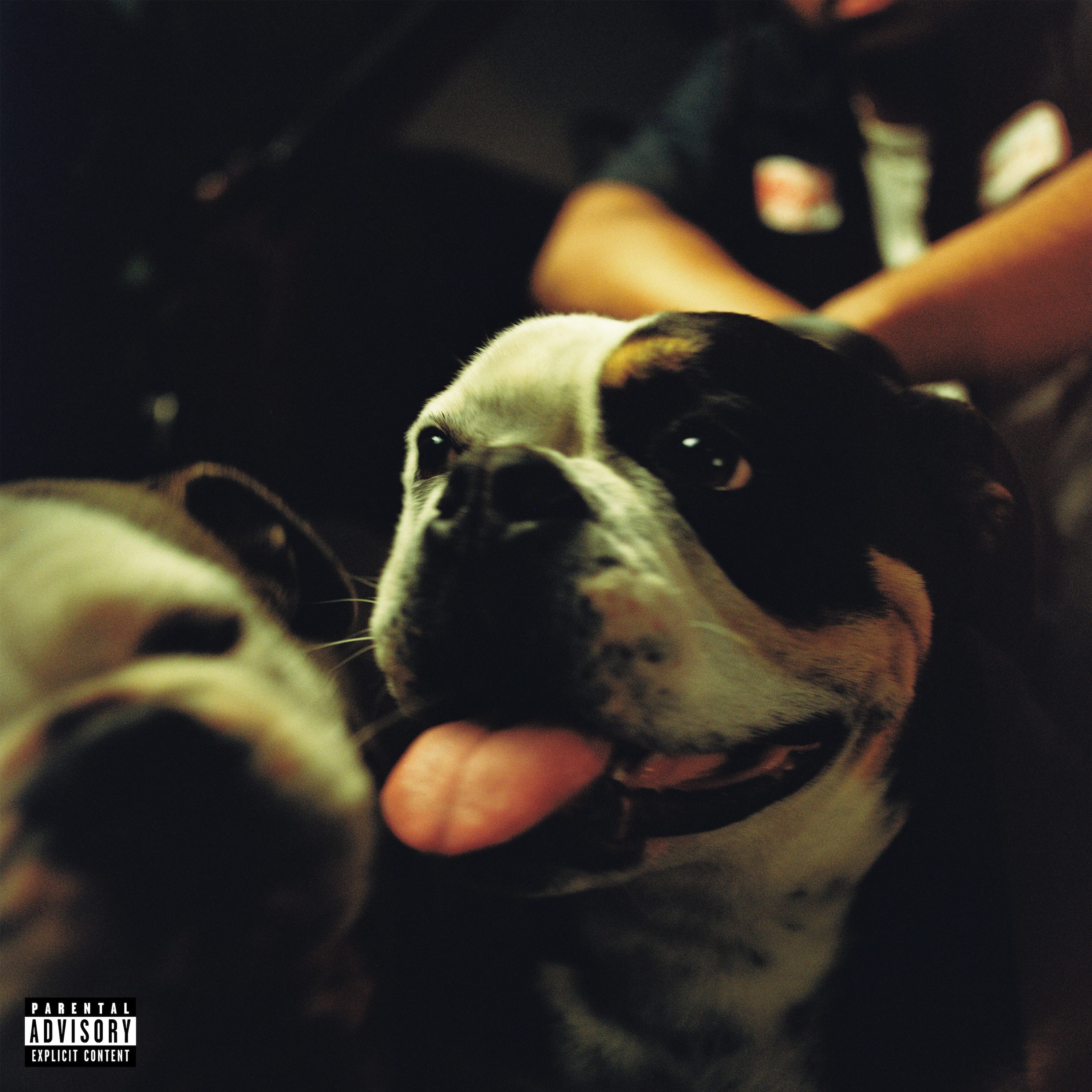
A friend was shaking Kenny Mason awake. Two voices were already disagreeing in the bedroom, one trying to roll over, the other already annoyed. The friend muttered, “This shit crazy, he do this every day,” calling his name on what sounded like the eighth try, before a kick drum slammed against a heavy door and the shouted vocal arrived a beat ahead of the bar. Mason answered from behind the bed sheets. Guitar smeared across the second measure. He had not yet caught up to his own album. That opening of BULLDAWG is the only stretch where Mason loses to one of his own songs. The loss turned out to clarify what his writing needed.
Coupe and DvDx built distorted guitar into a thesis across “BULLKILLER” and “Bounce Wit Me,” openly the two heaviest tracks on the album. Metal kicks ride underneath, loud enough you visibly feel them through the floor. Voice cracking where a label would predictably have asked him to record another take, Mason raps over the noise with no second pass cleaning up the cracks. Julian Cruz, frankly the album’s quiet hero, returned to the slow synth pads from Angelic Hoodrat: Supercut, and on “Street Car” and “Find God” the drums sit at half their volume so the acoustic guitar can breathe. Quiet here is an intentional choice, not an omission. The producers are arguing loud against quiet on purpose, and the argument apparently lands ugly and right.
Mason’s earliest writing took root in West Atlanta’s Pittsburgh neighborhood, where the verses he learned to write still come from. He started raps at twelve and committed to music at fourteen, the year he heard Kid Cudi name that same age as his own commitment in an interview. House 9, the collective he ran with his producer DvDx, was putting out tapes by 2014. In 2019 he broke through with “Hit,” his earliest viral single, and a year later Angelic Hoodrat was released as a debut he carried by himself. A 2022 feature alongside J. Cole bought him another round of Atlanta’s-next pieces (“Stick”), none of which followed him into 2024’s 9. That record predictably drew the lowest reviews of his career, a hyperpop pivot from a label that wanted a crossover. But the Pup Pack singles he released through 2025 were stronger than anything on 9, and Atlantic Music Group offered the deal as the RCA window closed. The mode of trap inflected with rock turns out to be the one Mason can write inside, and BULLDAWG proves it again and again.
The comparisons Mason picks for himself sit somewhere a critic could not put him. He was “Anakin, goddamn it, twin” on “Door Swangin’,” in a verse about Atlanta wages and the neighbors thinking he was slinging dope. Lazarus arrived next on “Whatuwannasay!,” with Mason rapping that he was back to life and back to breathe. The “Citgo” verse turned the comparison cautionary, with AB looming over the bar the way Anakin had loomed once already. These are openly mean comparisons that disappoint anyone hoping for a cleaner self-portrait.
Three minutes of rapping arrive on “Junkyard Freestyle” with no hook to break the fall. Loose hardware clatters underneath while Mason raps “Broke my mind, left a-busin’ a substance,” and moves through “Suicidal and hidin’ it to elude the discussion, Toodaloo I’ma jump” at speaking pitch. The suicide cue arrives without any signal that it should arrive heavier than the bar before it. A direction change comes mid-verse: “Mark my fuckin’ words the martian comin’ to march again.” The planet starts turning in his palm by the next bar before the verse ends on the scrapyard image, Mason watching the planet rotate as he sends it away. Mason refuses a rescue no one is offering. He bets he can hold the album at this altitude—a bet he loses, twice, in the middle.
On the run of getting-paid songs, Mason’s writing turns vicious. He demands “Gimme my cheque” sixteen times across “Citgo.” The outro then counts off four gas grades at a pump: “Eighty-seven, eighty-nine, ninety-three, and Diesel.” That counts, on this record, as the only language Mason seems to trust. On “Door Swangin’” Mason laughs at himself for staying too long at a legitimate gig while scammers in the neighborhood already drove Phantoms. On “Bullkiller” his skill was dominant and they still skipped his nomination, and the following commas-waiting bar compresses an entire grievance into a couplet. Awards have become a payment system, and Mason calls it loud and vicious.
The prayer-writing on this record runs plainer than anything Mason has put on a record before. “Dear angels, can you hear me, are you near me?” he asked on “Test Me,” before the line stretched past the question into a description of his own damage—the room in hell, the feeling he could not shake. When the prayer that Mason had begun on the song, in a request which carried a quiet that the song itself would never grant, curdled a verse later, a revenge cut took its place: five rounds of lion-knocking arrived as the answer the opening prayer had requested permission to give. The next track, “Find God,” argued from the other direction. Did holding a violent friend accountable count as side-switching? Mason answered with a bar that wins the song: asking the devil not to lay in his bed or play with his head. Hyperpop drowned his words on 9 a year ago. With the production at a lower volume this time, Mason rapped his lines plain, openly enough to be heard.
When Paris Texas raps the verses on “Be What I Want,” two arguments enter the record that Mason could not have reached solo. Felix lands the year’s coldest political bar, and his next line twists revolution into a meme without altering his chill. Following Felix, Louie Pastel raps “pen as cold as Aspen,” but he still saves the warmest read of Mason for himself: “Kenny bring the peace, but he no Buddhist.” SMJ enters later as a hook feature. Without these guest verses, BULLDAWG loses an axis Mason could not have built on his own.
Auto-shop puns wear out across “Break Time” fast, popped hoods over fixed engines until nothing is left for the verse coming after. Mason is rapping dull here. On “Here II Stay,” he asks “Who the fuck care about me?” then drops the question without ever returning to it. The catch on “Bounce Wit Me” is real—a sticky two-bar phrase Mason then leans on past where any idea can keep up. None of these is filler in the boring way. Pressure simply leaks. In a record that knew when to stop, this stretch would sit closer to the end. BULLDAWG gave it more room than it earned.
Where does the deal Mason has just signed take him next? Playing a 2039 self on “7eleven,” he stands on “rhyming’s Mount Olympus,” disciples at his hands and feet, before rejecting the scene as a familiar addiction—needing acceptance from people whose acceptance had already arrived. Mason walks away from the scene inside the lyric. Outside it, the deal funding this record hasn’t decided what the next record will be, and Atlantic paid for a rapper not a successor. His writing here cut cleaner than anything on 2024’s 9 or last November’s Angel Eyes. That was the easier test of the deal. The harder one, predictably, comes after.
Great (★★★★☆)
Favorite Track(s): “Junkyard Freestyle,” “Test Me,” “7eleven”
 | A guest post by
|