

Album Review: BULLY by Kanye West
Ye swore the AI vocals were gone. The album still sounds like nobody’s home.
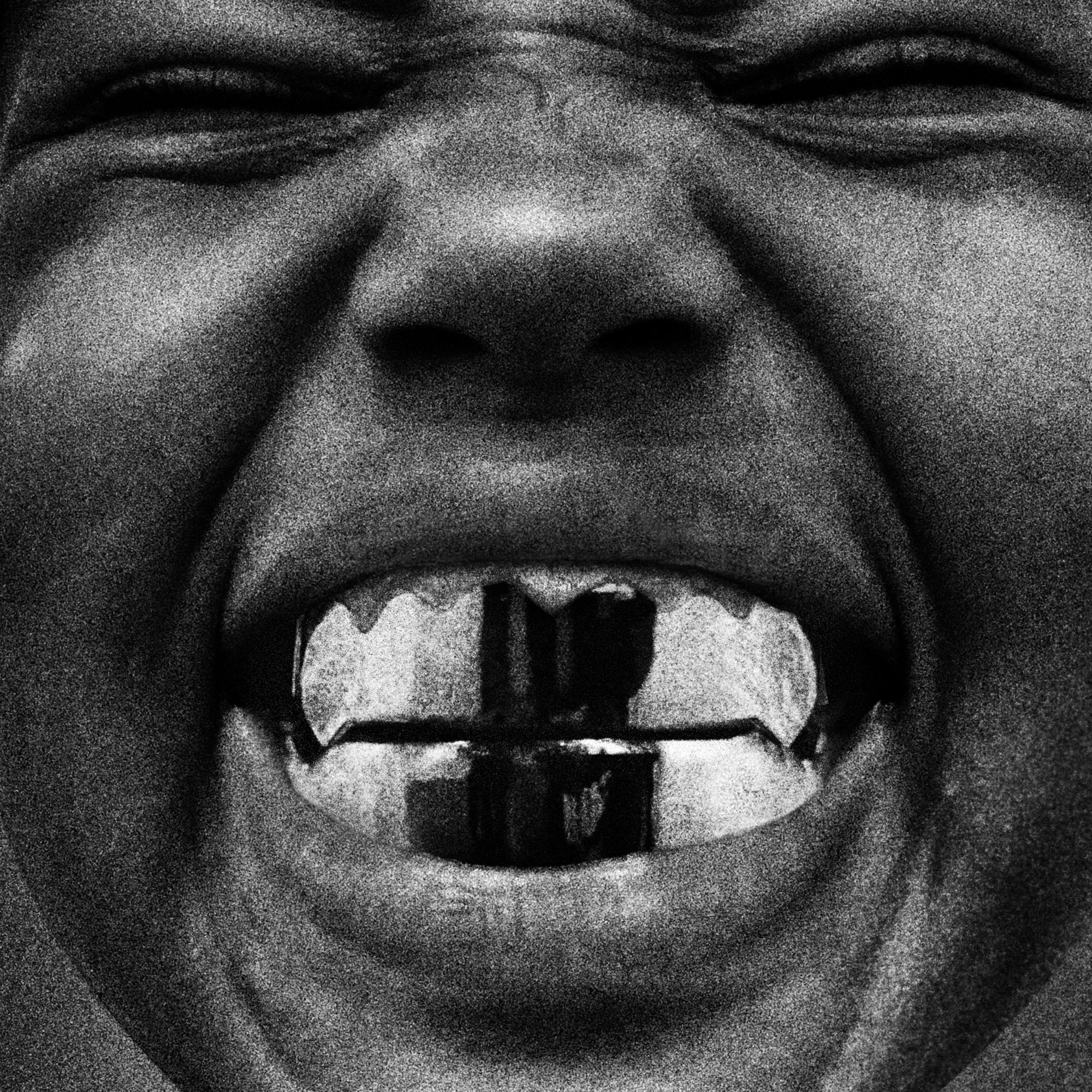
Editor’s note: This review was originally published on Tuesday, covering the physical version of BULLY. In typical Ye fashion, the streaming version arrived days later with additional tracks, coupled with features and a completely rewritten title track. The review has been updated to address both versions.
A man who used to go by Kanye West takes out a full-page newspaper ad to explain, in public, that a brain injury has been driving years of antisemitic tirades and swastika merch and manic implosions. He names the diagnosis (bipolar type 1, stemming from a car wreck twenty-four years ago) and credits his wife and inpatient treatment in Switzerland with pulling him back. The ad ran in the Wall Street Journal, and it read like someone who genuinely needed help had finally gotten it. Then the album came out, and almost none of that weight shows up in the music. BULLY is Ye’s twelfth studio LP and his first solo record since Donda, and it exists in two forms: a physical edition whose vinyl copies shipped with AI deepfake vocals still on “Preacher Man” despite assurances from his team that the fakes had been scrubbed, and a streaming version that appeared days later with new songs, and the title track completely rewritten. Even on the tracks where Ye is apparently singing with his own voice, the Auto-Tune is caked on so thick that the question isn’t whether he used Suno (it’s Audimee)—it’s whether it would matter if he had. Fans who bought the physical paid for AI slop. Fans who waited for the stream got a longer, marginally more populated album that is still mostly empty.
The best stretches of the record belong to other people’s music. On “I Can’t Wait,” the Supremes’ “You Can’t Hurry Love” carries the entire song, Diana Ross’s voice running through the chorus while Ye mumbles about shipping stress to UPS and going “Shaq mode.” The Supremes sample gives the track its patience, its swing, its reason to exist; Ye’s verses are filler between someone else’s hook. “White Lines” opens with Stevie Wonder’s talkbox medley of “Close to You,” and the warmth of that interpolation is so immediate, so complete, that Ye’s own contributions (“Sometimes I belong by myself, yeah/Don’t feel at home by myself”) sound like placeholder lines waiting for a rewrite that never came. “Last Breath” borrows Poncho Sanchez’s “Bésame Mamá,” and the salsa loop does all the heavy lifting; Ye sings in Spanish and English, surrendering and then yanking back control in the end (“But you’ll never control me”), and the bilingual flip is the closest thing here to an actual idea, but even there, the Sanchez record is doing the feeling for him. The streaming version adds Peso Pluma, who sings a full Spanish verse and makes Ye sound like a guest on his own song. The Cortex sample on “Circles” (“Huit Octobre 1971,” the same loop MF DOOM chopped on Mm..Food and Tyler flipped on Bastard) deserves better company than the sixty seconds of content Ye gives it.
The new streaming cuts are supposed to be the correction. They aren’t. “King” leads off the revised tracklist with Duke Edwards chanting “named you the king” while Ye raps two verses of actual bars, and a few of them connect: “Some of my loved ones turned lost ones/The pain was truly blurring my thoughts up” is precise enough to remember, and the Kelly Price/Kevin Costner wordplay has some wit. “Whatever Works” is his sharpest writing on the record, the Arnold Palmer and Arnold Schwarzenegger lines stacked back-to-back with a carelessness that reads as genuine, not labored. But “This A Must” is a nothing song, a Nine Vicious-assisted chant built around “send it up, it’s a must” repeated until the song ends.
With the vintage sampling on “Punch Drunk,” you would think it’ll be an immediate standout, but it has one verse about Sonny Liston and fathers in the penitentiary that gets abandoned the second the chorus kicks back in. “Sisters and Brothers” rides a Jonah Thompson gospel sample and a Loleatta Holloway interlude while Ye rattles off flex bars about mach three and armored cars, and the spiritual and the materialistic crash into each other with no awareness from anyone involved. “Mama’s Favorite” layers Ye’s rapping over a Ty Dolla $ign vocal loop that repeats without variation for the entire song. Travis Scott shows up on “Father” over a Johnnie Frierson gospel sample and a James Brown vocal snippet, and his verse (“I been going hard like a crack syringe/I been breaking bad, now I’m back again”) does exactly as much as you’d expect from 2026 Travis Scott, which is not much.
The streaming version also rewrites the title cut entirely. The physical’s “Bully” was a neurochemical list over an Asha Bhosle sample. The streaming “Bully” features CeeLo Green singing “obey, baby, do what I say” in the chorus, while Ye asks to be told the truth between the lines about kingdoms, catastrophe, and egos needing a repo. Neither version of the title track says anything worth remembering, and the CeeLo rewrite trades vague self-medication for vague megalomania without gaining any ground.
Look at what Ye actually writes when he’s not hiding behind someone else’s melody. “Bully” lists neurochemicals (”serotonin, serotonin/gets me goin’ ‘til the mornin’”) then rattles off a series of disconnected images:
Fifty thousand lunch, twenty bottles drunk
Left without you, love. I’m completely numb
System overdrive, algorithm’s fried
You consume my mind, you got all my time.”
These are words in the shape of feelings, arranged to rhyme. Nothing accumulates. “Highs and Lows” has one verse, and it’s a grab bag of breakup clichés (“toxic love, chemical romance,” “before I break your heart, I’ll have a heart attack”) stitched together without any friction or surprise. The entire track ask not to be let go, and the verse between them is eight bars long. “Damn” is barely more specific: Did I ruin your plans?” repeats, “My feelings are the facts of it” repeats, the track runs out, and you couldn’t tell someone what it was about because it isn’t about anything. Ye said in a press statement that the record is “documentation of internal experience.” Documenting blankness is still blankness.
Two songs barely survive. “Beauty and the Beast” flips the Mad Lads’ “Don’t Have to Shop Around,” and the sample chop is genuinely beautiful. The soul loop has a grain and a glow to it that recalls the 808s & Heartbreak and early-MBDTF sessions when Ye could make a found piece of music feel like it had been waiting its whole life to be part of his song. The vocal melody (“It’s been a long time coming/fresh new tires, I’m still running”) is simple enough to stick, and the outro’s repeated plea, “never put me down,” has a bruised quality that the lyric-dump tracks lack entirely. “All the Love” opens with Fairouz’s Arabic vocal sample (“Fayek Alaya”), and André Troutman’s talkbox picks up the same phrase and bends it into something slippery and warm, and the effect brings back the alien-gospel mood of Yeezus-era interludes. But both songs prove the same uncomfortable point—the production is carrying a man who won’t carry himself. Take the samples away, and there is nothing underneath.
The remainder of the dreck ranges from underdeveloped to borderline empty. “Circles” now features Don Toliver, and still doesn’t add much to the track. The two verses on “Losing Your Mind” are nearly identical (“A beautiful rose is standing at the corner/She is living in and out of tune” appears in both), and the interpolations do more talking than Ye does. On “Mission Control,” a devotional that cycles through “holy, holy art thou, I am free because you were bound” three times with minor wording changes, Tony Williams’ appearance on the final leg barely shifts the temperature. The ad-lib structure on “This One Here” (“Come on, it’s go time” and “lights on, showtime” chanted underneath) makes it sound like a pep rally for a song that hasn’t been written yet. “Preacher Man” raps about being the “only GOAT, the genius one”—which might scan as ironic self-awareness if anything else on these songs suggested Ye knew how thin the material was.
The Wall Street Journal ad was, by any measure, a serious piece of writing, one that named specific incidents, admitted a diagnosis, and credited specific people with saving his life. The record that followed sounds like a man who made the confession and then walked into the studio having already spent his best material on the apology. None of these songs engages with what he described in that letter; the mania, the antisemitism, the institutional wreckage all vanish the second the music starts, replaced by vague proclamations of love and serotonin and God. The crate-digging is occasionally stunning (Asha Bhosle, Fairouz, the Supremes, Stevie Wonder, Cortex), but Ye uses every one of those samples the way you’d use a stock photo. Drop it in, write four bars on top, repeat. BULLY isn’t a disaster or a provocation. It’s a screen saver.
Poor (★½☆☆☆)
Favorite Track(s): “Beauty and the Beast,” “I Can’t Wait”
Who tf writes reviews on illegally obtained vinyl rips 😂😂 Idc how bad Ye music is there he always lives rent free in some people’s heads. Couldn’t even wait 2 days until release to start the hate train, always on his dick