

Album Review: Caribenya by Lido Pimienta
A year after her Gregorian-chant classical album, the Colombian-Canadian artist opens her door to cumbia, dembow, and friends.
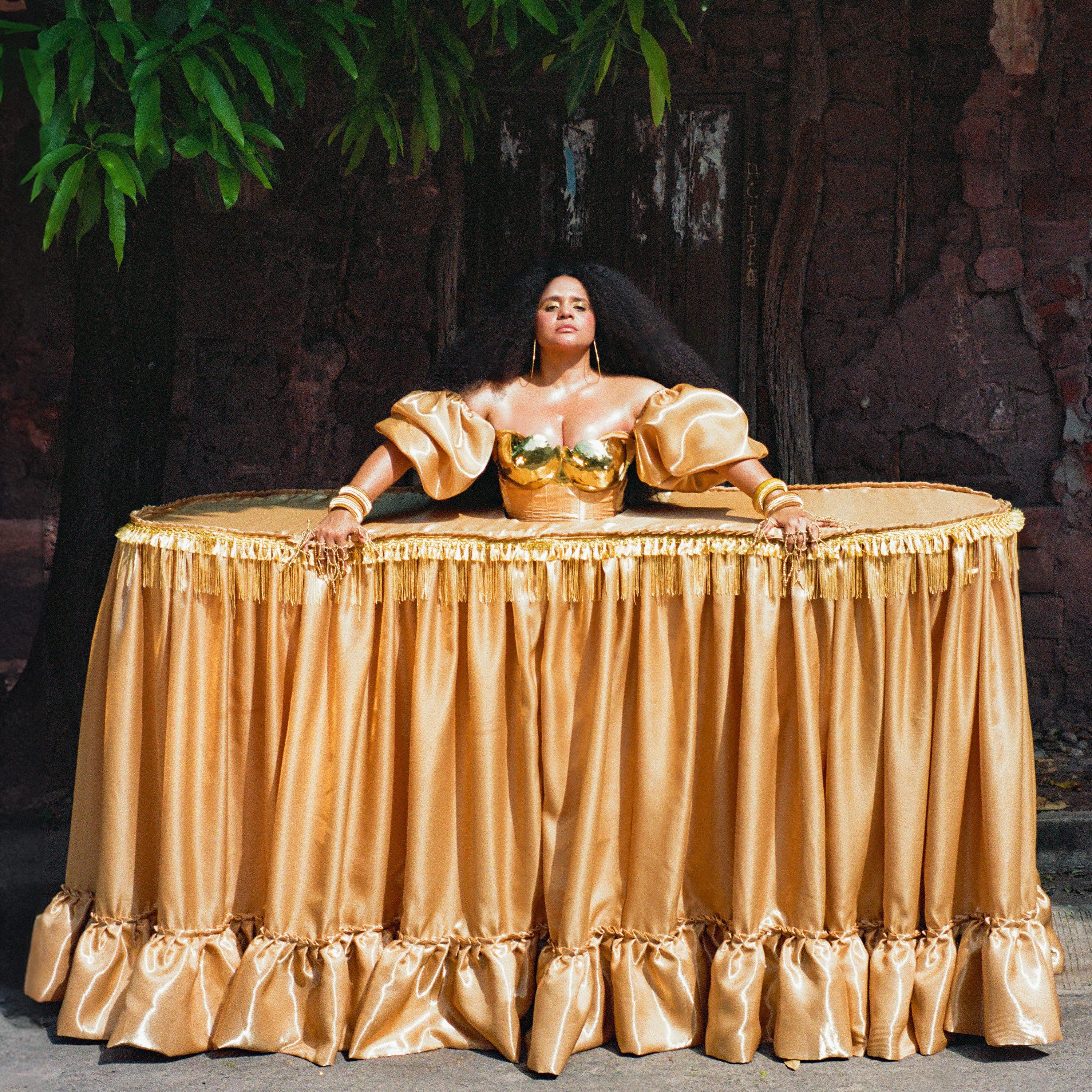
Someone told Lido Pimienta that classical albums are not for her, so she wrote one. Gregorian chant song cycle built out of the ballet score in which she became the first woman of color to compose for the New York City Ballet. This birthed last year’s La Belleza, which the cumbia singer from Barranquilla called impossible one, something only Europeans were supposed to do. Caribenya is what she made after the point was proved, in her Barranquilla-Toronto home, with production of Pedro Canale, aka Chancha Vía Circuito, and guest appearances of such bands as Mexican cumbia band Turbo Sonidero. The title blends “Caribe” into the name of Enya, the Irish recluse, whose music she listens to when writing, and the word contains her invitation: “you can just knock on the door.”
In “Tóxica,” the first one through this opened door will be escorted out of it. She conducts her own investigation, asking who fooled you, who led you astray, who promised you love, answering each question the same way, persona tóxica. Her diagnosis is harsher than mere name-calling: “Rodea’ de mucha gente/Pero vives en la soledad,” surrounded by many people, yet living alone. And then she thanks this person for all those beautiful moments they shared together, pledges to pray for her, reminds her that she never belonged to him and still walks her to the exit, “Vete ya, vete ya de aquí.” The call of a sonidero closes this song: “Súbele, súbele, báilame la cumbia.”
The beach in “Libélula” is her own, as well as everything she discovered there. The sea is Yemayá’s bath, as she says, and she crowns herself “Princesa caribeña,” praising her grandmother and her aunt who raised her for teaching her how to earn everything. Puerto Rican artist Ana Macho is the guest in her song with only one commandment: “Hay, hay, hay que dejarlo ir.” Freedom she wants is small-scale and domestic, easy sleep in her little house, a little honeyed apple, “Si está haciendo mucho frío, libertad me encapucha,” liberty herself putting the hood over her head during the cold period.
Her goodbye present is the song “Talento,” the last one dedicated to her ex (“La última película”), and she keeps her face straight the whole way through it. Some people have talent for singing, dancing, painting, she notes; her talent is fooling and leaving out of plans, his talent is unhappiness and making her suffer from it. She’ll remember him however he wants, she promises, maybe even write about him however he wishes, “Mi eterna víctima.” And in the bridge she acknowledges that it was real love and that it had to end, taking the responsibility he attributes to her without lifting it: “Dices fue mi culpa, pero tengo paz.” You say it was my fault. She has peace and intends to get her happiness back.
A gentle request goes through “Así Nací” that she will accept everything the other one can offer her and preserve “Un recuerdo divino” from every year spent next to him. It is the most gauzy writing here, with all invitations and open palms, vowels doing most of the job. She tightens this open palm into a proverb in “Hoy Por Tí,” “Hoy por ti, mañana por mí,” today for you, tomorrow for me, sung with Nelly Furtado, and directs this solidarity towards the woman she wants to save, “Quisiera salvarme y salvarla a ella.” Her last verse is about the man who insinuated that he could give her everything: “Dar amor real te quedó chiquito,” giving real love did not suit him, and she almost left him, como tonta, until she understood that the safest place is the one with herself.
When it comes to “Marea,” she sets her own terms and names them in the second person, “Págame las uñas,” pay for my nails, take her out, buy shoes for her mama and for her brother who goes to school, el que va al colegio, and the kiss follows. She plays herself smaller when this man comes in, the prettiest one among all the muchachas from the place where, as she casually mentions, nobody is visited, and the trade consists only in occupying and trafficking. And then the bridge stops being flirtatious: “Váyanse de mi playa, váyanse de mi isla bonita/Váyanse de mi casa, váyanse de mi isla bonita.” Leave my beach, leave my house, leave my island. Pimienta mentioned “La Isla Bonita” by Madonna as the earliest example of Anglo pop borrowing an island it never lived on, and now she takes this phrase back and puts it like an eviction notice. “Beaches in Jamaica are not open for Jamaicans but for hotels and white tourists,” she says of the world behind the song.
She answers this eviction order in “No Me Quiero Ir,” standing firm: “Yo no me quiero ir de mi país.” She is not going anywhere from here, from her country; she is coming back to heal her past, confident that it is never too late to fall in love again, and she stamps this vow with a wepa.
Before all that, she appears after a vision of love in “Arrúllame,” a straight road into somebody’s arms, and hides there, “Me escondo dentro de ti como un grande secreto,” hiding inside this person like a big secret. “Vine aquí a que me arrulles,” she says to her, I came here to let you rock me, and the request has only one condition: para siempre. Forever is a tall order for a lullaby. She makes this order anyway, and offers the person holding her a reason to agree, pledging to take the rest of him and plant somewhere he could grow.
Great (★★★★☆)
Favorite Track(s): “Tóxica,” “Libélula,” “Marea”