

Album Review: Clef Notes — Quantum Leap, Vol. 1 by Wyclef Jean
Wyclef Jean narrates a Haiti-to-Brooklyn life with the years thrown deliberately out of order, and plays connective tissue between Rapsody, Lil Wayne, Andra Day, and a gospel choir in a 7-part series.
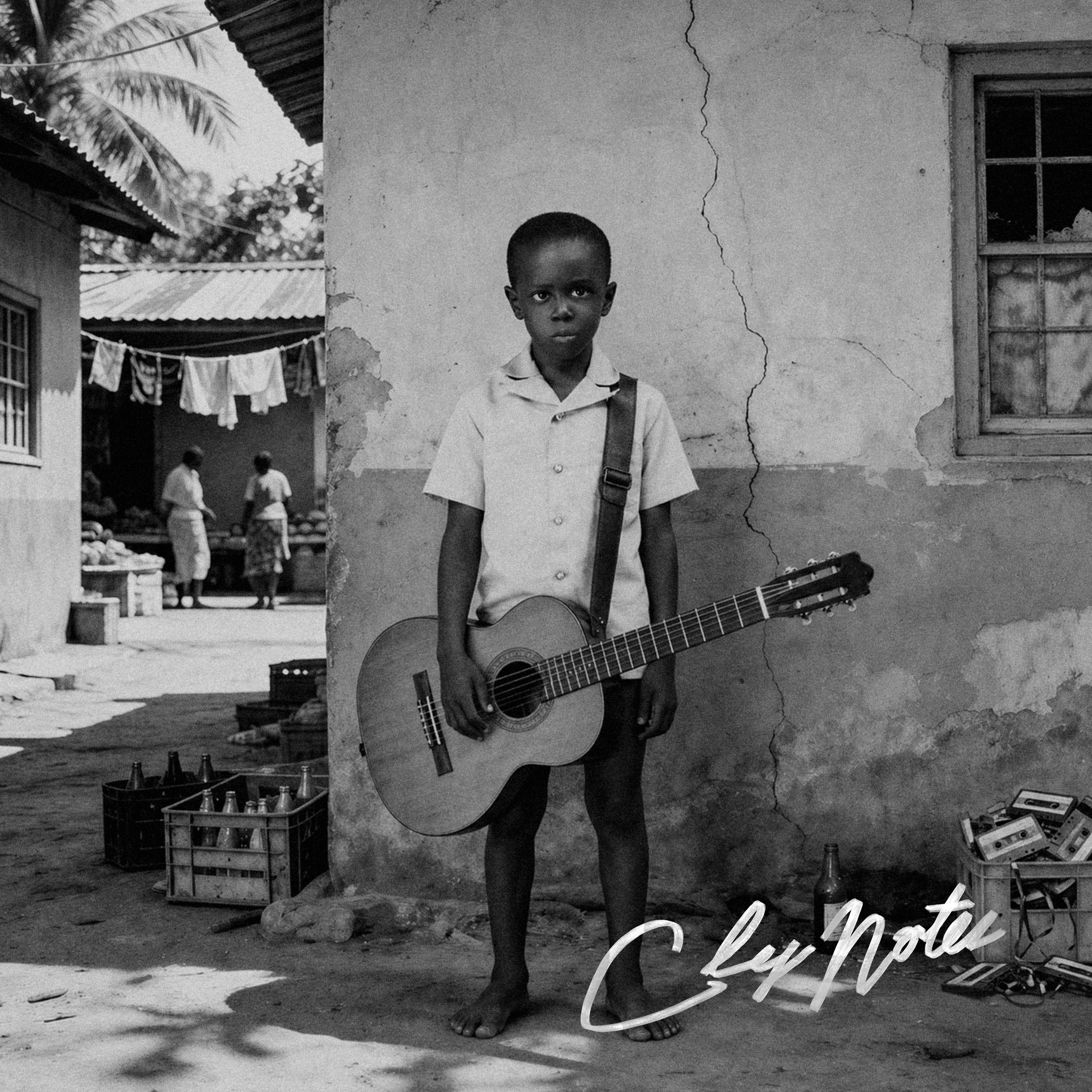
Wyclef Jean has always tended to overstuff his verses, and the mismatched order of the track finally gives the tendency a form. Most of it is delivered in the griot way, a host guiding someone around a neighborhood, singing in a sing-song flexibility so wide you could mistake it for song. The dates here ping pong from 1990, sliding backwards to 1994, then forward again to 1991, and skipping forward to 2010 and 2011, shrinking back to 1997, then racing to 2030, and it does it all even while the song titles are all shuffled through 3, 5, and 7. Listening to it in that order, the dates describe a life the way you could keep it in your head, in shards, the loud parts smothering the dull.
Lena Waithe has the first word, a spoken not telling Wyclef to take it back to the beginning, shout out to Compton, Watts, East L. A., and he‘s gone, memories spilling out at a godspeed. A 1964 Impala on the Westside, pines swaying from Leogane to Long Beach, a picture of Toussaint up on the wall to remind us that being a general ain‘t easy. The thing that stays with me is poverty turned into riches, proclaiming back home dirt cake and Corn Flakes water were like Wagyu beef. Bragging about coming back from Haiti with nothing but culture, moving into a line about running to be president for real, already we‘re on to the next time before either sentence settles, the full band bed beneath staying low and steady, a heavy rolling beat. The same backward pull applies in “1994 - Boom Bap” when the memory gets its soundtrack. He contemplates beepers before cell phones, a shiv art trick caught from a youngun leaving Rikers, rakes thrown down outside the barbershop until a man called Little Fatts got put down, and the hands stopped. The chorus is a chain of R&B phantoms, Frankie Valli, Ralph Tresvant, and Oran “Juice” Jones, reflection decked like a chain. Rapsody arrives and already makes everything more precise. He rambles; she‘s truncated and urgency-powered, describing herself as “Quiet, chill like Thelonious, a Monk amongst all the pandemonium,” affirming fishing for dope boys and preachers alike before the knockout, “I‘m not Toby, I might be Kobe.” He loops low, steady, and hard; she jumps on him like this is the song she‘s been waiting for all year.
The first echo of “Yahweh” arrives before anything else, on the hook of “Devil’s a Lie,” and the chorus can pile up the hard facts of life versus the faith supporting it, a trap raided, an ankle monitor put on, a near-deportation dodged on an ICE charge before Wyclef answers back, singing like Solomon, building like a mason. Wyclef is writing scripture for the street, and counting off his Genesis, his Exodus, his Leviticus, the bullet that missed his head, making him believe. He drops a beat switch for a confession, the sinner marrying himself to the choir, then PRICE drops us off in bleak Carolina, then shot him in broad daylight. This all-pervasive mixture peaks on “1997 - GBTC,” where Wyclef leaves the rapping behind in favor of directorial duties. “Gumbo” was the sign, the first verse goes to Lil Wayne, breaking down a break-dance walkin’, reaching toward heaven as he crosses over the title into “God bless the child that shall become a bastard for that boy,” and the hook, by Andra Day, extrapolates backwards to the “God Bless the Child” classic, pushing weight on the old-soul gravity. Theo Croker‘s horn traces a bluesy line beneath a slow, swaying momentum, and Wyclef calls his own verse last, drawing a line to himself that begins and ends with Rick‘s death and blood, then ends with the crown.
On “Mr. October” is the song of survival, and it is the business plan: Wyclef‘s is started by learning English for self-defense, then battle-rapped through projects, then built a paramilitary in Port Au Prince; he lays the shift, from drug dealing to a corporation structure, from quarter bricks to quarter reports. The hook has it down to a science: “200k a week, I used to spend on Jacob/200k a week, and now I’m buying acres,” and he quickly attains the name Reggie Jackson used to bear. Further down, on that same percussive, clipped, effervescent beat, G Herbo makes similar assertions eight-figure checks, forty acres, a hook that is happy to point blame: rap made a generation of kids who got whacked and once the hook hits, the cash has migrated to the web: a Coinbase wallet, and ‘“Real estate outer space,” a variation on the original theme, but transposed onto the landscape of the future.
He uses two of these; these two are pulling against each other. The cold one is “Winter Is Coming” when he lies on an ice bed, wondering how he could‘ve been unfaithful when she was only ever grateful. The loop is colder and enclosed. It uses one steady, dry drumbeat to push it on without popping into a large moment, and the most clichéd line in history, grown men don‘t cry, before admitting the rivers are long down his own cheeks. The warm one is “Freedom.” Here we slip into Afrobeats, it‘s the presence of the collective voices of the Joyous Celebration which is altering it completely, and he spends his verses looking inwards at the self-image and the longing for affirmation (branded the body with chains and tattoos), he calls everyone slaves to opinion. There is one hard slice about tithing: “Ten percent, pay your tithe/Freedom comes when we die.” There is one admission that he wrestled with Satan just to get to God. Pulls out for the first section and then crashes into the choruses, which are upbeat call and response, and the rise is processional and up, and the choir has the last word in isiZulu before he leaves them.
At the other end of the scramble is 2030, the one song in looking forward. Wyclef starts out on “Gemini Man,” where he is describing a world after the platforms a world he apparently used to possess all of its features a world with the views without the tubes, the likes without the ‘Gram, and the I before the A.I. Soon after, that world is transformed to a tragic, near future, a world where a bot serves up your breakfast, a brick is being purchased by an plainclothes officer with crypto for a sister, who is mourning her deceased father while accepting a clone from his estate, a couple is embracing across their screens, and swords and wars are unfolding inside the wavering minds of its creators. Theo Croker‘s horn keeps the surface of it all impossibly smooth by producing a constant, buzzing drone. Wyclef’s voice is one part reflection and one part hyperbole; a part Wu-Tang Killah in Ghostface masks and a part telling his daughter the world is a play and she should learn the words of her part while cautioning against clickbait. His final spoken exhortation is a forward-looking prayer to an unseen crowd.
Great (★★★★☆)
Favorite Track(s): “1994 - Boom Bap,” “1997 - GBTC,” “2030 - Gemini Man.”