

Album Review: Cold Comfort by Stik Figa & Heather Grey
The Topeka-raised rapper teams with a Salt Lake City producer on a low, steady album where one person produced every track. The uniformity holds the record together and costs it some air.
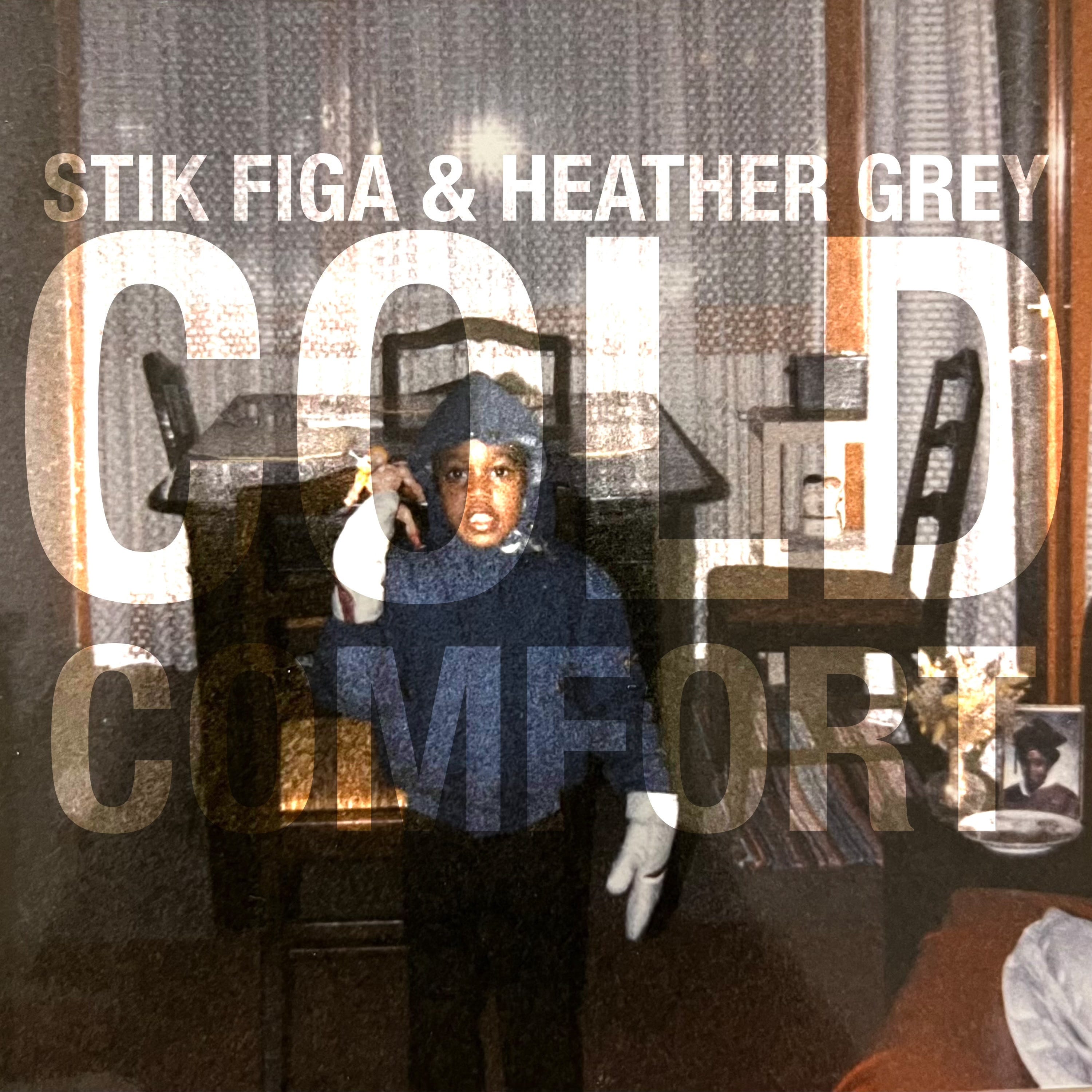
Translator’s Note: Originally written in Japanese; translated into English for publication.
Stik Figa has been making the same record since the early 2010s. Recording out of Topeka, Kansas and later Fort Worth, Texas, John Westbrook Jr. has rapped about persistence and the daily work of staying employed across every release, all in a low register borrowed from the Bay Area rappers who ran Shawnee County when he was coming up. Cold Comfort, produced entirely by Heather Grey, tightens that loop to one producer and no detours. In the middle, the argument repeats.
Punched close with the reverb pulled off, Heather Grey’s drums knock like a knuckle on a kitchen table. Every snare stays dry, every hi-hat thin and riding high. At a Salt Lake City skate shop where Grey worked as a teenager, his boss put him onto Dilla and Premier; Grey produces the way Dilla produced, keeping the bass and the loops low. Produced by Grey alone, the album sacrifices surprise for consistency.
Stik Figa says “this is chess, not checkers” on “All Is Fair,” where the first verse plays it straight—Miranda rights, blocking lefts, defending yourself as a natural right. Every rapper who has used a chess metaphor owes the listener proof it goes somewhere new, and the risk of “All Is Fair” is that it starts on a cliché. In the second verse, he pays the debt: “You pushin’ quarters in the game, pushin’ buttons, holdin’ sticks/You got one life to live, you ain’t get no extra, man.” The chess player became a kid feeding quarters into a machine with no continues. In the outro, spoken low over the beat, the pawn makes it all the way across the board and becomes a queen. The whole song’s borrowed framework breaks apart into something stranger and better than strategy.
A Topeka police broadcast about a drive-by shooting starts “Recollection” while Grey strips the beat to almost nothing underneath it. One chopped vocal sample, the drums pulled low. Westbrook’s second verse runs the blocks like a headcount: “‘80s baby, crack rock, central side, blacktop/Deadbolt, padlock, dope house, stash spot.” These are Shawnee County blocks, the county where Rich The Factor’s Kansas City street rap ran louder than anything on the coasts. He covers a full decade (yellow tape, crime scenes, bullet wounds, IVs) before reaching the only physics on the album: “Escape velocity, had to leave Shawnee County.” Blu picks up from South Central with his own exit route.
Asher Roth’s verse on “No Secrets” matches the track’s tone for about eight bars (surveillance, exposure, the price of living in public) before drifting into a tangent about vodka Sprites and college-girl gossip that belongs on a different record. Grey’s beat holds underneath; the verse doesn’t. Blu kept his aggression inside Westbrook’s temperature and added a South Central detail that thickened the song. Roth’s verse floats off.
Grey presses “Joyride” forward with a mechanical pulse while Westbrook raps contradictions inside eight bars: “We lost our name to the slave trade, freedom to the state case/Faith in the AK.” He takes the broad and spacious path in a verse about the narrow one. “The truth will set you free but niggas find God in prison,” he raps on “Floodwaters Run Deep,” and the bar folds two clichés that collide into something larger than either one alone. Westbrook circled faith on both songs without picking a direction.
The middle of the album sags. “Red40” rides a tight, urgent loop; “Blac Top Griot” runs a similar argument over a lower bassline. Grey gives each song a different groove, but the words pull them back into one. Eight songs might have been enough.
When Oddisee found Westbrook on MySpace and told him he was dope, the connection led to Mello Music Group and eventually Central Standard Time in 2017, with Nottz and Apollo Brown behind the boards. Grey taught himself to produce at a Salt Lake City skate shop after his boss put him onto Dilla. Cold Comfort was recorded at TWLVS in Fort Worth with engineer Sean Patrick. A Topeka rapper and a Salt Lake City beatmaker in a Texas studio, nobody from the same scene.
Over the heaviest bass loop on the album, he asks on “Blac Top Griot” whether what he’s been doing is passion or ego. Grey’s snare cracks the way it cracked at the start of the record. The answer was never in the lyrics.
Great (★★★★☆)
Favorite Track(s): “Recollection,” “All Is Fair,” “Joyride”