

Album Review: Confessions of a Lonely Girl by Victory
Victory Boyd gave away her best songs and won a Grammy nobody expected. Her third record asks who profits from love and whether God’s answer is the honest one.
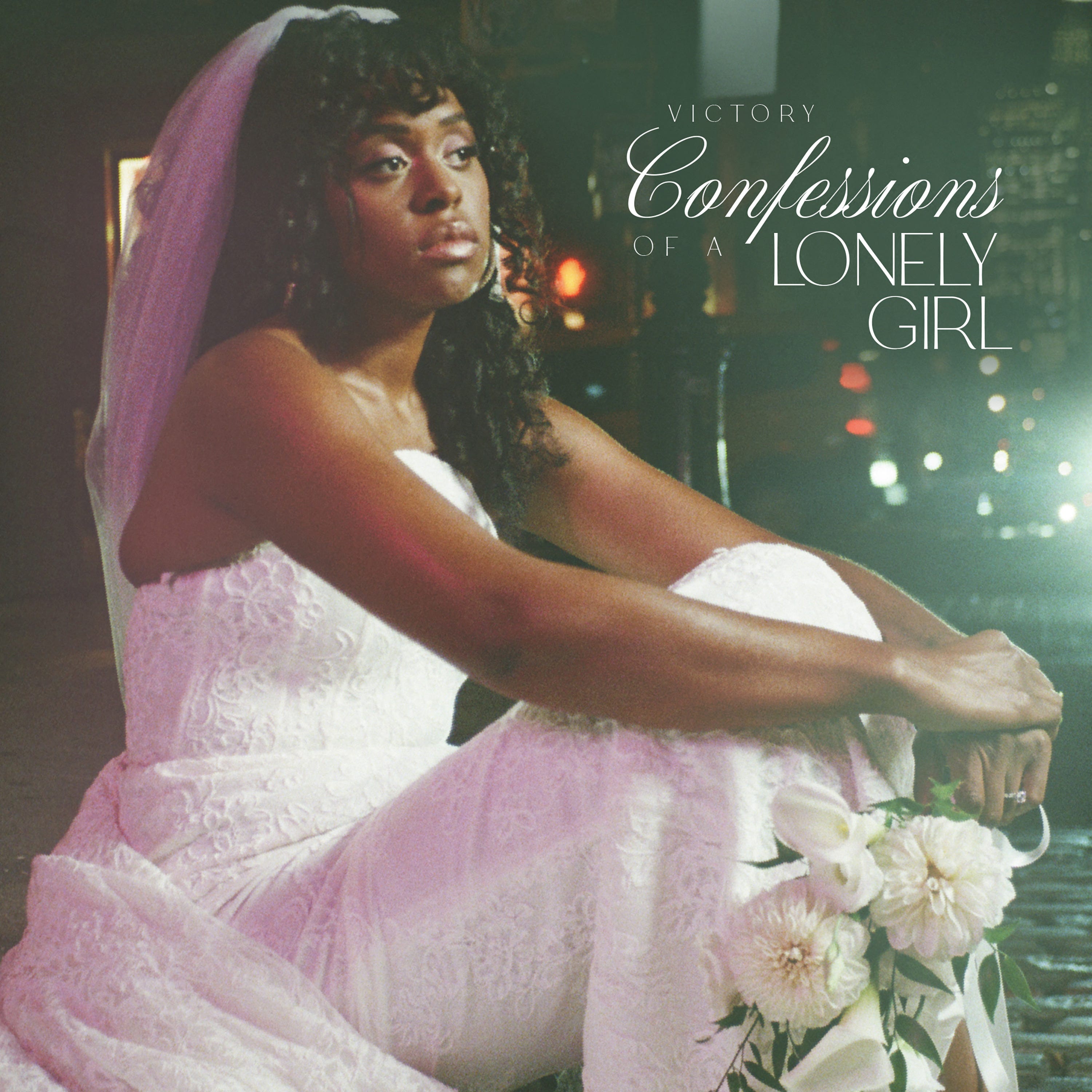
For years, a family of nine siblings busked at Grand Central Terminal, Times Square, the steps of the Met, Bethesda Fountain in Central Park. They sold CDs out of bags, passed the hat, did it again the next morning. Their father, John Boyd, had founded the Boys & Girls Choir of Detroit before moving the family to North Bergen, New Jersey; a viral clip from one of those Central Park sets eventually reached JAŸ-Z through director Jeymes Samuel, and he signed all of them to Roc Nation. Victory Boyd, the singer and multi-instrumentalist at the family’s center, co-founded the group Infinity Song with four of her siblings, left in 2021, and put out two solo records before Confessions of a Lonely Girl. The second, Glory Hour, was a full gospel LP prompted by her experience writing “Closed on Sunday” and “God Is” for Ye’s Jesus Is King, which won a Grammy for Best Contemporary Christian Music Album. West reportedly called the Boyd family “the future of music” after flying to a free concert of theirs in Batesville, Indiana. What Victory took from that session was permission to write blatantly-Gospel material for a mainstream audience.
Confessions of a Lonely Girl keeps the faith but ditches the pulpit. Victory wrote every song and produced or co-produced every track, and the first half stays in romantic territory, moving through hesitation, online dating, communication breakdown, pride disguised as independence. Then the address changes. Tracks aimed at boyfriends and crushes give way to tracks aimed at women, then at everybody, and finally to cuts sung from God’s perspective to a human listener. She has the concepts with genuine specificity and ideas, and a structural ambition in the way it moves from human romantic confession to divine first-person address that most records in this lane don't attempt.
A man she met through the internet never showed up. She waited; hours passed; he ghosted. On “Ghost,” a midtempo pop-soul cut, she recounts the whole thing plainly, from browsing in her living room to spotting him on Instagram with somebody new. “All up on the gram with your bae tryna’ boast,” she sings, drawing her one conclusion. The detail is small and earned, the screen she spoke to for months now hiding the person behind it. “I’ve Yet to Learn” is the LP’s sharpest confessional, with Victory on guitar and accordion, addressed to a partner she pushed away with self-protection. She faked strength, hid her foolishness in pride, didn’t trust that he’d still choose her if he saw her in need of help. “Love without truth is vain,” she sings. “Trust cannot be built on top of shame.” Then the guard drops entirely:
“Here I am as is, take it or leave it.”
The folk-pop register of “Say It,” with acoustic guitar carrying the melody, puts the blame on a partner who stopped communicating. Ice forming, fire burning low, years of silence where conversation used to be. She wants five words from him and names them one at a time. “Just Friends” flips the premise, warning a man who claims he only wants friendship that his hesitation will cost him. These tracks share directness, and Victory’s bluesy contralto saves them from self-pity.
Women are the audience for the middle stretch, and the writing broadens. “More Than Enough” and “Every Woman” tell listeners they’re queens, they’re princesses, they deserve the best, they should stop apologizing. The language arrives pre-worn, familiar from a hundred empowerment anthems that said the same thing with the same words. Where the confessional material gains traction from specifics (the internet, the Instagram, the shame), these two lean on affirmation without friction. “What if Love Was Free?” rescues the impulse. At seven-plus minutes, with trumpets and chord changes arriving in the arrangement’s second half, it asks why love operates as currency. Why she’s posting selfies, counting calories, competing with other girls to earn attention, and why he’s pulling up in a Benz to get paid with likes and mentions. “Lonely hearts are a target,” she sings.
“Our need for love fuels the markets
They’re sitting over there filling up their pockets
From our insecurities.”
It finishes in a gospel declaration, God giving love with no contingency, but the social critique preceding it has real teeth.
Victory retells the crucifixion as a love story on “Foolish Love,” a spoken-word piece built on nothing but her voice and Joel Ross’s vibraphone. Jesus humbles himself to be born as a human, all to have the woman of his dreams, “a broke, busted, and disgusted bride that could never be clean enough” to be with him. She delivered him to be crucified. His blood was the only currency strong enough to settle her debts. Then Victory stages a proposal: “Will you marry me?” he asks the world, and one by one, doors slam in his face. One person doesn’t believe in God. Another’s religion doesn’t like Jesus. A third can’t see what any of this has to do with making more money. Most everybody serves him with rejection, and that’s the risk you run when you love for free. The piece ties directly back to “What if Love Was Free?” and answers its question. Love was free once, and it looked foolish, and most people turned it down anyway. “I Choose You” and “A Love Song From GOD” extend the conceit, sung from a divine first person who knows the listener’s history, secrets, battles with addiction, and still picks them. Victory’s voice and her willingness to mix R&B songwriting with real theological argument keep the LP above the devotional-pop records it could easily have been. Her confessions are stronger than her sermons.
Great (★★★★☆)
Favorite Track(s): “Ghost,” “I’ve Yet to Learn,” “What if Love Was Free?”