

Album Review: Critical Thot by sha ray & DJ Haram
sha ray arrives on her debut with the belladonna persona already finished, and proves sex rap can do its hardest thinking mid-strut.
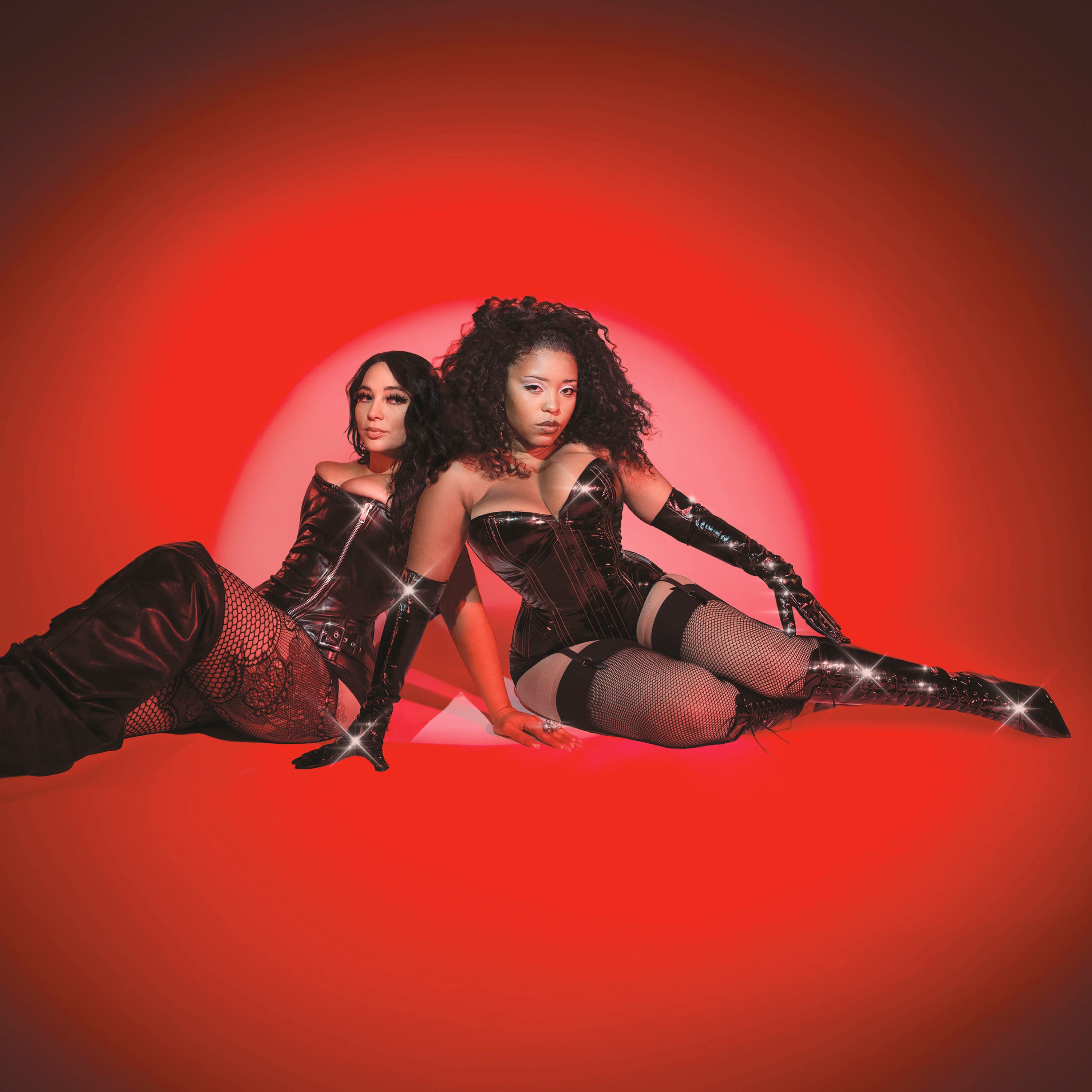
The critical thot, that belladonna of rap, is the kind of figure constructed for gazing at, which has figured out that attention translates into power. Critical Thot begins with a trancelike state. A voice, eyes rolling back, rattles in an unknown language, asserting it has no body and answers to no one. An older name smolders below this, before the guise seals itself around its user with a snap. That is sha ray, the Bay Area rapper and producer whose debut project arrives with the support of DJ Haram, the New Jersey-raised, New York-based producer, who collaborates with Moor Mother on the group 700 Bliss and who last year ran underground-rap through experimental club-music on Beside Myself. Over beats produced by Haram on Backwoodz Studioz, sha ray embodies both the belladonna of rap and the princess with the Uzi: fully formed, weaponized.
The male figures in sha ray’s songs exhibit contradictory modes simultaneously. They either become deafens the moment she utters a sound or contort their neck as she passes. “They ain’t listenin’ when a bitch talkin’,” she observes on “Champagne and Bouquets,” then, “Watch they neck swang when a bitch walkin’.” She has monetized the space between these two states. “If you askin’, this pussy taxin’,” she says, bundling sex and luxury into one phrase, aroses the cake, a coupe in the driveway—all for a currency the suitor never sets. On “Thot Daughter,” she dismisses the suitor who loves the idea of her more than she and directly rejects his bid to play caddy: “But he can’t have me never.” “Low End Skeeza” presents this sentiment as an accusation—men only manage to access her through force, an accurate, unsparing appraisal of how such transactions have traditionally functioned.
The beats by DJ Haram offer sha ray space and stability from which to command, stepping back only when she’s exploring some complex idea. “Strictly” perhaps serves as the clearest example of the first role. Both Archangel and Haram are mentioned in the intro to the beat; the bass hits are sufficiently loud to control an entire room, and Sha Ray executes the part as sheer dominance. The other dynamic emerges as the beats become minimalist, comprised of samples and openness, thus surrendering the lead role to another voice. The two have co-produced together, and it becomes evident in how many of the loudest songs give center stage to sha ray’s.
The declaration from sha ray lands dead center in the midst of the song “Elixir” on a beat subsequent to her referring to purses as well as Mason—“Can’t even tell if they know I’m a person, bitch”—shifting the atmosphere for everything around it. All of the flexing, the value assigned to the allure, the pricing has circled this concern of whether these men regard her truly human.
Then it inserts another voice explaining what a witch truly is. The witch is the woman on whom all others cast their accusing gaze and to whom their perception of wickedness is attributed, used to dominate and placate men. Thus, the sample is an essential addendum that sha ray intended all along. The following voice details the unspoken work that “Black women are well aware of that nobody really speaks about,” the secret underpinning the entire constructed persona. “Boudoir” concludes with a similar borrowed narrative, composed of two statements concerning the fear of public expression, balanced by a mirroring fear of remaining inarticulate; of all the things the guise has stated plainly, the act of becoming quiet is not one of them.
“Shole Ain’t” finds sha ray in peak swagger, riding on a girly get-dumb 808. Her verse on it contains the project’s finest moment, where a query regarding whether she appears the type to play humble, eclipsing even the padded hook. At other times, her densest prose turns toward contradiction and sheer incoherence. The poetic twist at the center of “Hey Queen,” a celebration of pleasure’s collision with female intuition that’s wholly at odds with ladylike sensibilities, is beautiful, and in many passages, closer to perfume than intelligible meaning.
A deeper listening of “The Material” opening trancelike scene strips away the pretense. The voice with rolling eyes speaking an indecipherable language, the slow decay of an older name below—it’s the image of a person being hollowed out to fill the void left by a figure of public veneration and payment. sha ray introduces this hollow before anything else, even a boast, to ensure her struts are hard-won. The belladonna was forged from that which was taken, and she shows the ravaging process before placing it on the crown.
Great (★★★★☆)
Favorite Track(s): “The Material,” “Low End Skeeza,” “Elixir”