

Album Review: Did the Rain Stop? by Felix Ames
Writing again with producer Calvin Valentine, the R&B songwriter turns a lost love, a heavy cup, and a family name he’d sooner bury into unambiguous records.
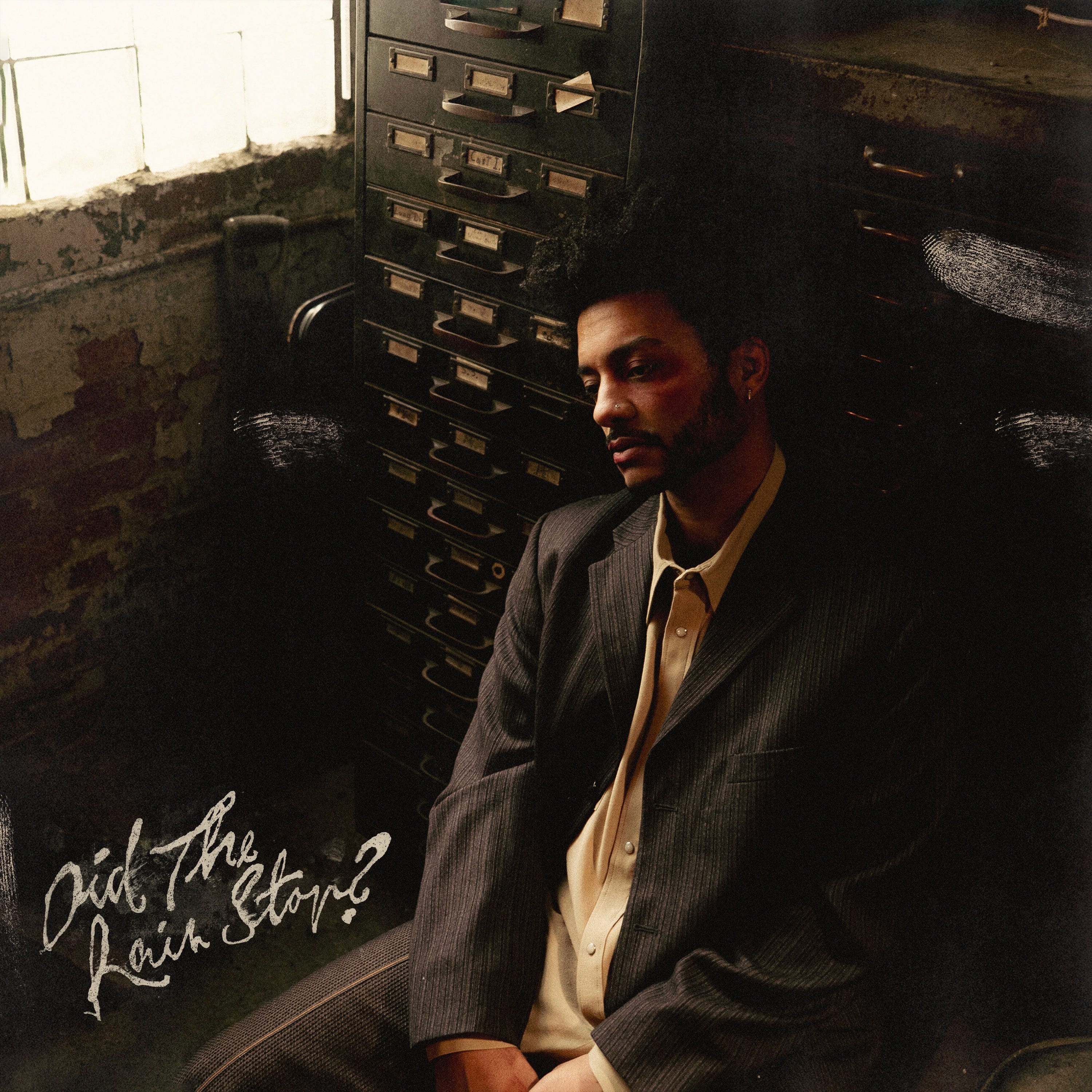
Felix Ames set up his recording studio in his mother’s basement during a period when he didn’t travel much, and the songs he recorded there became 7711, one of the first efforts in his discography. The equipment remained modest throughout. JENA, which Ames recorded in the house of his producer Calvin Valentine, was made immediately after he paid farewell to his grandfather in hospice, and in a 2024 interview he noted that he always saw his songwriting “as almost like telling myself what I need to hear.” Did the Rain Stop? continues the tradition and discusses such issues as a woman he cheated, a cup he doesn’t allow others to see, a surname he is afraid of, and a God he nevertheless thanks for everything.
The greatest amount of apologies is reserved for the woman, and on “What Went Wrong?” Ames begins with repentance and immediately questions the validity of the process: he accepts the guilt but acknowledges that it doesn’t really matter if he is saved if he doesn’t live according to the Gospel. The feeling becomes stronger as the song progresses: “I climbed to the top of the world/And forgot why I even did it,” from leaving his baby where he found her, letting the walls close in and end up alone and hopeless in a wilderness with no one left to call and no strength to make it further. One promise broken taught him that promises are broken. The woman herself refuses to be washed out: “Like a bad dream/I tried to wash you off/But I still know the smell of your hair.”
A car accident was imminent in “Crack a Smile,” but he foresaw it and could never say he warned her, learning how to keep silent while watching her in need of assistance. Sometimes loving her “felt just like war,” he confesses, and the photograph that makes him smile leads him straight to the bottom: “Only I know what’s in my cup/And only I know how long it’s been/Since I’ve had a sober thought.” Ames depicts the process of drinking in the grimmest way possible on “I Don’t Wanna Die”: a monkey on his back, outlasting everything else, a poison that he uses as his only company, and everybody surrounding him putting the blame on everything else except the man who keeps her here. He answers himself that it is about time he simply grows up, and asks what he is supposed to do now.
There must be something in the water, he decided on “The Colemans,” something tainted and several toxins that are constantly on his mind, and he considers himself among the last representatives of his family “With the power to change,” sadly mistaken if history repeats itself, half-ready to take everything to the grave that gave birth to them. A child’s voice is heard after the verse, greeting him: hi to Dada, hi to Daddy. He knows the other side of the process from “I Was Just a Child,” where all he can see when he closes his eyes is the memory, and he would rather not see it since he grew up, and the person he addresses is still in the same place. “I had no options, and, no, I didn’t,” he claims, and when he realizes that he is ignoring the warning signs, he understands that he is no different, and changing his mind takes him a lot of effort even if the truth is obvious.
Every night in “You Built Me a Home,” he awakens himself asking what controls him, and decides that it is something beyond his control, all the quick changes and broken friendships just to have some room for her. His clearest description of her becomes a warning about himself: “What’s a drug to a fiend?/That’s what you are to me.” She wonders what will happen if it doesn’t last a lifetime; he promises to leave her stronger than before. The touch becomes more important the softer it is in “Arms of Your Lover”; the arms in question “Can turn over stones,” and though he feels the pain she is feeling and gets what he deserves.
Another home is another thing he left in search of something on “Fell Short, Spun Round,” short of it, spun round, returned to himself with “At least I can say I tried” to justify his trip. Everything he returned to is all over “Taste of Summertime,” where he misses his friends that he left, and most of whom are already gone forever, and where “Home don’t feel like home” even though he stands in it. He never managed to say goodbye: whatever he was looking for was already gone, and it looks like it is time for him to move on alone.
The Lord is mentioned by name all through “Second Second Chances”: “Thank God for second chances/And the second, and the third and the fourth too,” by a man who was cooked and hogtied while the devil won by a landslide, becoming a better man than he used to be and being completely sure about it. When she lies in his arm, she is assured about who he is; she doesn’t know his history. millkzy mentions the same prayer somewhere less certain, asking whether God changes His plans and whether love is alive after all the sins committed. Ames answers for both of them, claiming that he never thought it would be like this, and that he doesn’t miss anything else about who he used to be then.
Somebody’s voice is worth praying over in “Way Back When.” He prays that he never forgets the sound of it in his ear, wants the person to live, to live his life, but not without him, and tells that he is just as lonely as the person found him. He cried, was engulfed in silence, escaped just to meet them here. But then the prayer turns on him: “I said I’d never live the way you did/But here I am.” He broke the vow, and prays over the ruins, asking for the only thing left to ask for, for the sound of the voice in his ear.
Great (★★★★☆)
Favorite Track(s): “What Went Wrong?,” “Way Back When,” “Taste of Summertime”