

Album Review: Divided Times by Qwel & Nightwalker
On Divided Times, teaming up with Nightwalker, Qwel raps about what’s killing people, from capitalism to his city’s blocks to the self.
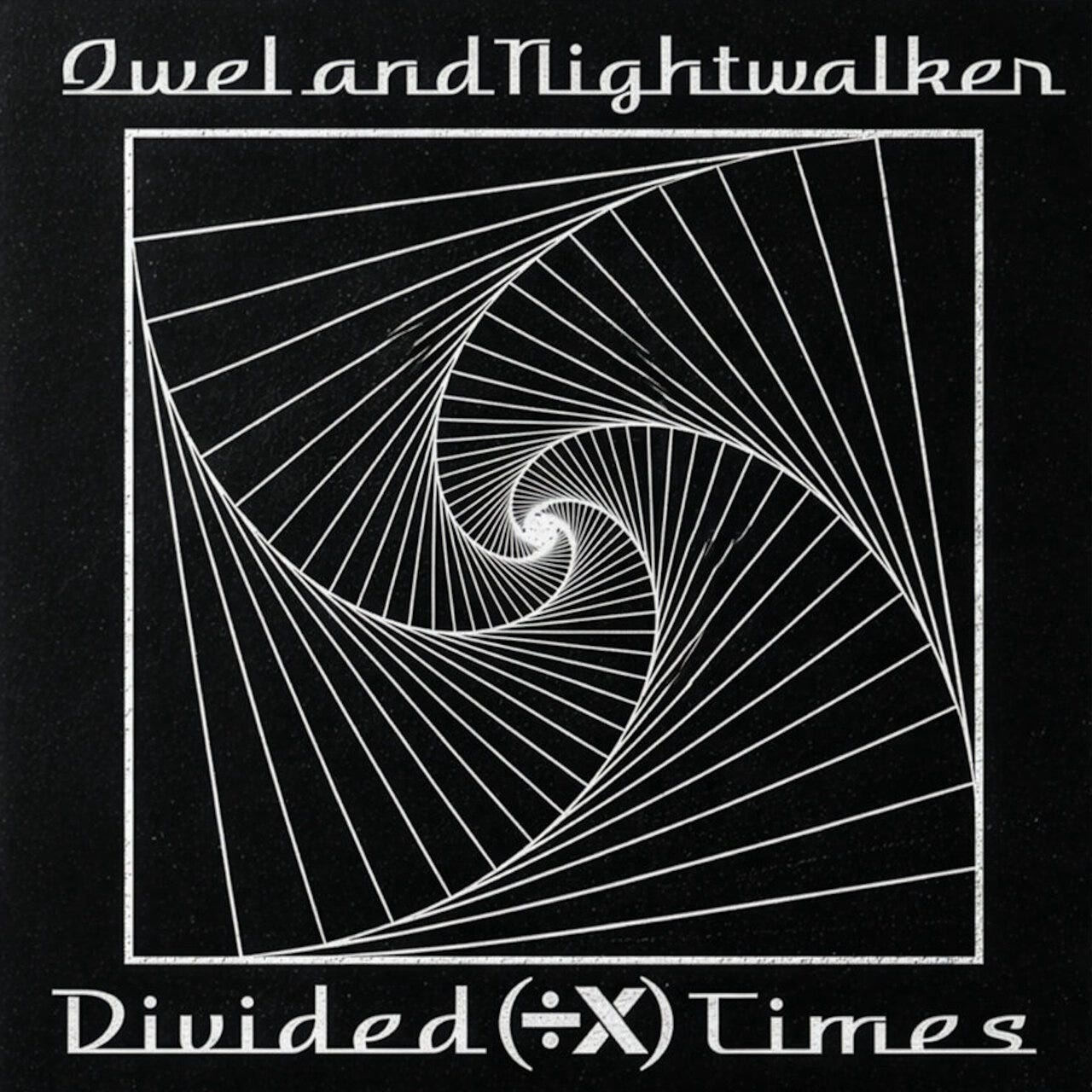
The Chicago rap we were introduced to around Galapagos4 in the early 2000s stole a lot in any given bar, dredging crews who could creak open a verse until it was threatening to shatter. No-frills cats cut the self-titled record that nailed that beat in 2001, four guys trading bars for miles of dust and jazz, and one of them imparted a flat, brutalized corner-end approach that turned the syllabic skeleton into bricks. That was Qwel, who spent the rest of that decade and the majority of the next constructing a discography with Maker, releasing records of similar tight bandaged verses, revered by the people who care to listen to this niche and unseen elsewhere. On Divided Times, he passes the entire slate of production and hasn’t sounded so self-possessed in a long time. Nightwalker keeps the tracks brooding, steely, and pedal to the floor, and Qwel gets himself erect in the space.
Before Qwel says a word, “Hologram” is Denizen Kane’s, his genre-mate from the group Typical Cats, over a tightened, tense loop, “here eye come in alone, a witness and a digger of graves, a killer of giants and a runaway slave, a filler of chasms and a builder of bridges.” Kane sets the song “in these divided times,” keeps an eye on the pipelines that “pump pups to prison” and makes rapping into contracting work, manufacturing sixteens “to spill actual facts” and ripping them open “to build up synapses.” Somewhere in the bend, he ends up, asserting every word he utters models water, “rapping about futures you can’t see, but have already happened.” Opening in this fashion, with one of his co-writer-singers taking the first hit of the verse, leap-frogs the poetry lines ahead of the author’s last name on the front cover before Qwel can get his first rhyme out.
“Got me a job, bought me a clock,” Qwel raps at the beginning of “Buy More Clocks.” He and a beat are munching through a treadmill rhythm when the words, a kernel of wage slavery, part some air: “The thoughts, your sleep, your peace, your breath/Every little bit of me, but let me keep the rest.” Making that labor his body, he blurts out how the job claims his thoughts, his sleep, his peace, and his breath, “Every little bit of me, but let me keep the rest.” From here, Denizen Kane and Jam One get meaner, squeeze the last out of the poem with a literal purpose: “Capitalist dream, it’s a pyramid scheme/It’s an anti-poor people killing machine.” His only advice was a nationwide strike to bleed the boss a river of green.
The other side, the side that does the dying, “Indian Burn” works the same way. The “have-Nots, starve and die,” he snarls, while the “haves scarf and barf oil and wine,” then he injects a citizen into the equation: “One nation under numerator, monetized,” he shapes as another citizen in the decimal. Examining a map of Chicago neighborhoods where the signs are left silent, he names Harvey, Posen, Englewood, Humboldt Park, Pilsen, Roseland, and then plots the people who prefer to be told about it at a brunch. He puts it all down flat, right next to the harder-than-to-floecide line of the chorus, that money isn’t the root but “it fertilizes well.”
Jesus arrives at the Southern border on “Good Morning Jesus” where agents demand papers: “We gon’ need to see your visas/We no speaky broken English.” Burnin’ straight for the wall, Qwel shall appear in your face, trumpet in hand like Joshua at Jericho, then makes it clear, if there’s any confusion: “I ain’t talking about Fox.” Strong stuff. The hook makes it dead serious: “I don’t even rap no more,” he admits, “Now this is me with a jackhammer chiseling the rock away,” a reverse rap, or demolition. The next verse targets the rappers who learned the art by false pretense online, all reach and no grip, lacking “grasping bars” that could only be bought with “lack of practice in them trapezes,” until the camera withdraws back from the block, the joints and the Churches.
And the children who “lose they life, light, and mind before they pride” while the OGs guiding them are, he points out, “ain’t even old enough to drive.”
Nightwalker is the only producer: his beats all have the same rough quality, thick and destructive and sampled-down, drums weighing heavy as can be in your gut. He mixes it up a little: “Buy More Clocks” is an out-blast of speed and spookiness; Golden Plane is sprawling and sky-gazing, the long song that lets it all breathe; Good Morning Jesus makes room to get serious; Indian Burn works your pocketgear raw. Set “On My Mama,” alongside “Book of Baby Names (Bang Bang),” though, and their pounding loop and snare runs are almost indistinguishable in the darkness, just a few of these records are indistinct from the others.
Qwel, though—that’s the difference: the way the pace of his speech tightens and then bursts away to nowhere in turns, the way the story turns a bend that the track doesn’t. That’s a lot to ask of one rapper. He delivers.
Great (★★★★☆)
Favorite Track(s): “Divided Times,” “Buy More Clocks,” “Indian Burn”
Qwel never disappoints, truly one of the unsung heroes of the artform. He's been away a while but hasn't lost a step. Always been one of my favorite emcees and this solidifies his place among the elite for me. Now if only the rest of the would open their ears...