

Album Review: DO YOU SEE ME? by Q
The South Florida singer and producer’s follow-up to Soul,PRESENT is a long address to a boy who won’t listen, his falsetto staying soft over cops, mirrors, and a wishing well with no water in it.
Sipping back to 2002, just as we came out the other side of the Diwali Riddim from Kingston, is that sort of handclap-driven beat that has you dashing out of your seat. Steven “Lenky” Marsden constructed the instrumental and came during the summer of that year after it hit American airwaves with “Get Busy,” “No Letting Go,” and “Never Leave You,” and came a little bit closer to knowing his name. Years later, his name is part of the writing credits for his Q’s debut on a big label, “Take Me Where Your Heart Is.” Q spent his life in or around the studio, in Broward County. As far back as sixteen, he’s been writing and recording raps under another moniker, riding the Kodak and Ski Mask wave that the county has going. They don’t exist anymore.
Fast forward to this current climate; he’s been holed up in London for the lockdown, working on a solo project, and given a choice of the tracks he could’ve brought, he’d bring Soul, PRESENT. Very slept-on 2023 release. According to Teen Vogue, the melody itself arrived on the plane back home to Florida after he’d been ravaged to the depths of his being in bed. With a bold title, Q explains, saying his soul was enough for his creator. Three years down the line, and we’re heading for tracks that exist to make a kid happier. Some say, for this kid.
When you listen to a voice like his, you might think of the theme of love. Least of all his output. But all the way from when he was eleven and making them his own, you find the lyrics are bare and direct. You have to listen twice and twice over to realize that many of the scenes here are actually just the same thing seen under a different light. His discography is a mishmash of everything and nothing since 2018: R&B, soul, reggae, folk-pop, jazz, and funk, none of which he’s going to be right about. His newest release went into an experimental, alternative side of R&B.
Q owns the stage in DO YOU SEE ME? When challenged to a competition with a spirit, Q finds it too heavy a task to carry and disintegrates it, the “silly boy” in the vocal line a reference to a kid: “Silly boy, silly boy/I wish you nothing but well in your life.” And then the third verse makes him turn 360 degrees. He’s the young lord. He has lunch with the boy, and no later than the next line, someone calls the police, and he swears blindly that he would stand by the very kid he was slating. Q is not given to flash in his writing, and the imagery is repetitive. “boi” is the same old story without the costume change; after a cough and some liquor and old tears and wondering whose life it is when you can’t control it, “Wipe those eyes, you’re still a little boy” is what you get.
At a party she has his hand and offers some counsel: “You’re better than what they been telling you/Please don’t conform to your thoughts.” It is the sort of advice he gets back. “hey there [i have a compulsive complex]” is as plain as it gets. He could tell you how he felt if you put him to it but wouldn’t be sure of its veracity. “Tear up all my words/Let my actions be the proof,” is the line, and he says he is learning, stumbling even, because growing is long overdue. On “my favorite lovr girl” he has been driving by her place with thoughts of blowing it up until he comes to his senses. Q only wanted to pick her up.
The ache of “i wish you were here” becomes a matter of logistics: “I wish you were here/Even though you’re right there.” What he wants is for somebody to put their hands on his shoulders and rub him to sleep with their hair down. On the last hook, he has changed you to she and is speaking of her to the room. “déjà vu darlin” is more of the same want made generic, the verse making a promise wide enough for anyone while the chorus goes round and round. “2 things” is of a piece with that and has less substance; the one image to hold is of her giving him gas for the trip and Marco McKinnis is there at the close to put in the title. There is not much to “how do you process everything?” yet it outdoes the rest, in no small part due to a line where he concedes that somebody has made him feel as though his own heart was within reach and the diamond he puts by after saying he is fond of it.
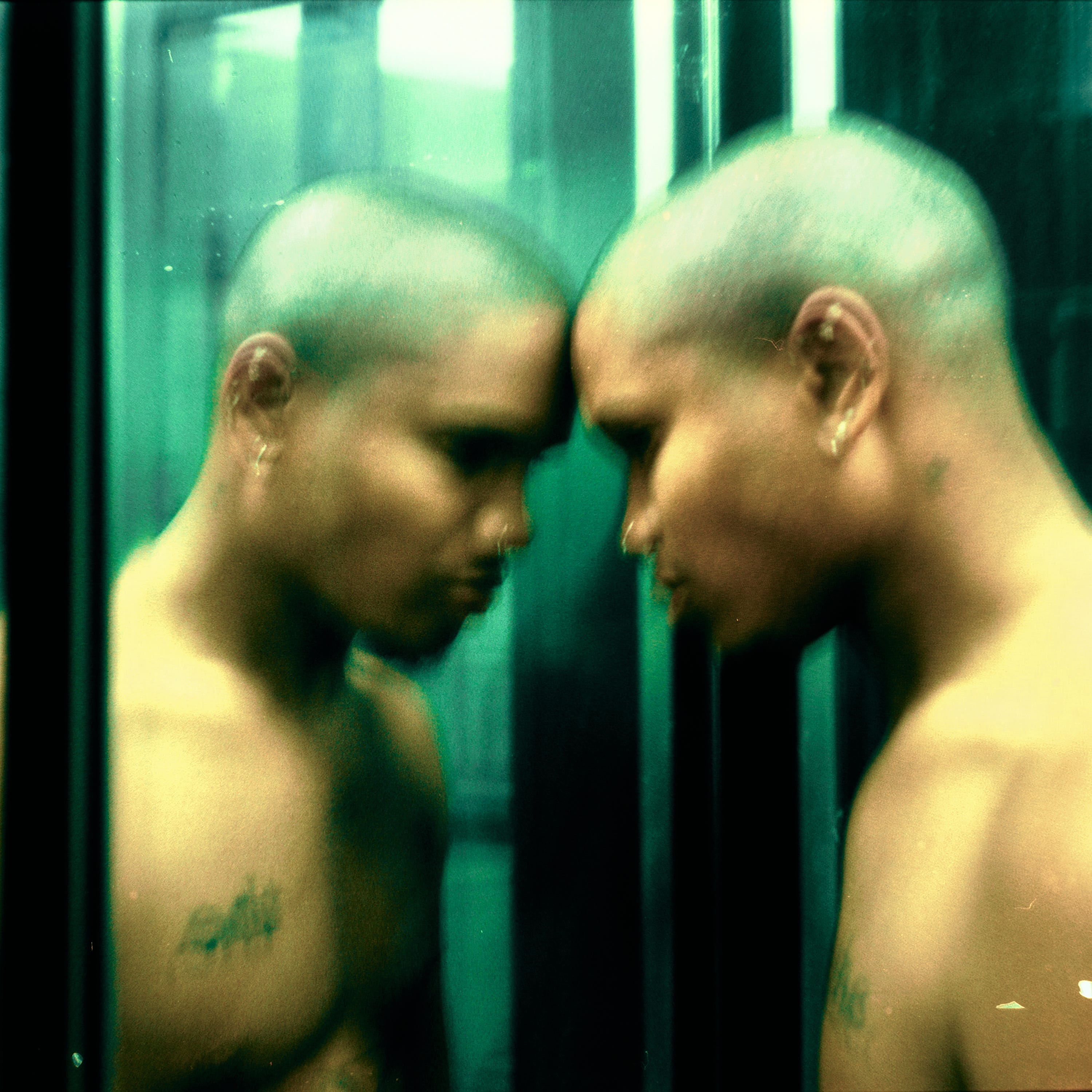
In some of them, he is in a room he is making an effort to get out of. He makes his way in through the window when she is asleep, which he will have you believe is what prompted her to give him her info. And so the sex on “keep our clothes on” is put on hold. “Girl, I think I like you better with your clothes on,” he puts it in song, and to make plain it is not what he sees but the peak he does not want; she would prefer to remain masked, “’Cause I know she don’t want what she really see.” He removes the covering from his face and wants to know if she wants him for life. On “drive me off the wall,” the standoff is before a mirror and not in bed. “When the body you crave is the one you hate,” he sings, and his reflection has him at bay and is the one leaving the room. The chorus makes short work of blaming her only to admit he is the one who drives himself off the wall. Deb Never is given a word at the close about a long ride and how it all came out in the end. For the most part, “STOP GOONING!!” is two words on a chant, but in the middle verse he is on to her watching him and is left to question if there is any soul in him or if he is in this world for the gaining of it. His hiding place.
On “do you see me [LISTEN],” it’s three verses of questions, none of which he deigns to answer. Enormous ones. One voice tells him to go to hell and not return. “I don’t think it’s a man’s world/Maybe it’s a girl’s world,” he offers, then there is “But twisted preachers are God-deniers,” as good a line as the track has and the flattest. A mother is in tears, her heart aflutter, a prayer for the gates to be opened, and he envisions himself in the same colors as the tar. Parsing gives out. You have lines and passages that don’t amount to a sentence and the song is more than the writing can contain. The more modest affair is “i built a brick patio,” row upon row of house and the only image he lingers in to put to completion. Some things were not to be changed, his departure among them. He will have it, and on “It took me ten years to be who I am now/Tell me, what’s the rush?” he takes his time. What follows is a thin run of instructions to work hard and mix it up, hardly worthy of the halo he bestows.
From first to last there is a dry wishing well and the boy spoken to at the outset is still being spoken to. “die 4 life?” is in its way tidier and odder. The two verses are of a piece. The mischief of the first is a delusion in the second. UMI finishes it with a song of debts paid in the centre of her eye. As for “2shots [thank you]” he is thanking those who did him harm. Where would he be had they not said his name? he ponders, and in the third person asks if he is to sink or rise. Once the beat has been switched, he is a bad good man in need of tissues, a bad bad man with issues. Water is poured into the well he was putting coins in during the opening song, and he has one last word with the boy: the eyes are blurry, but the heart is fine.
Great (★★★★☆)
Favorite Track(s): “silly boy,” “i wish you were here,” “2shots [thank you]”