

Album Review: Don’t Call Me Lucky by DJ Muggs & T.F
An MC three LPs into a single-producer run sits across from the beatmaker who’s been running that model for thirty years. No luck was involved.
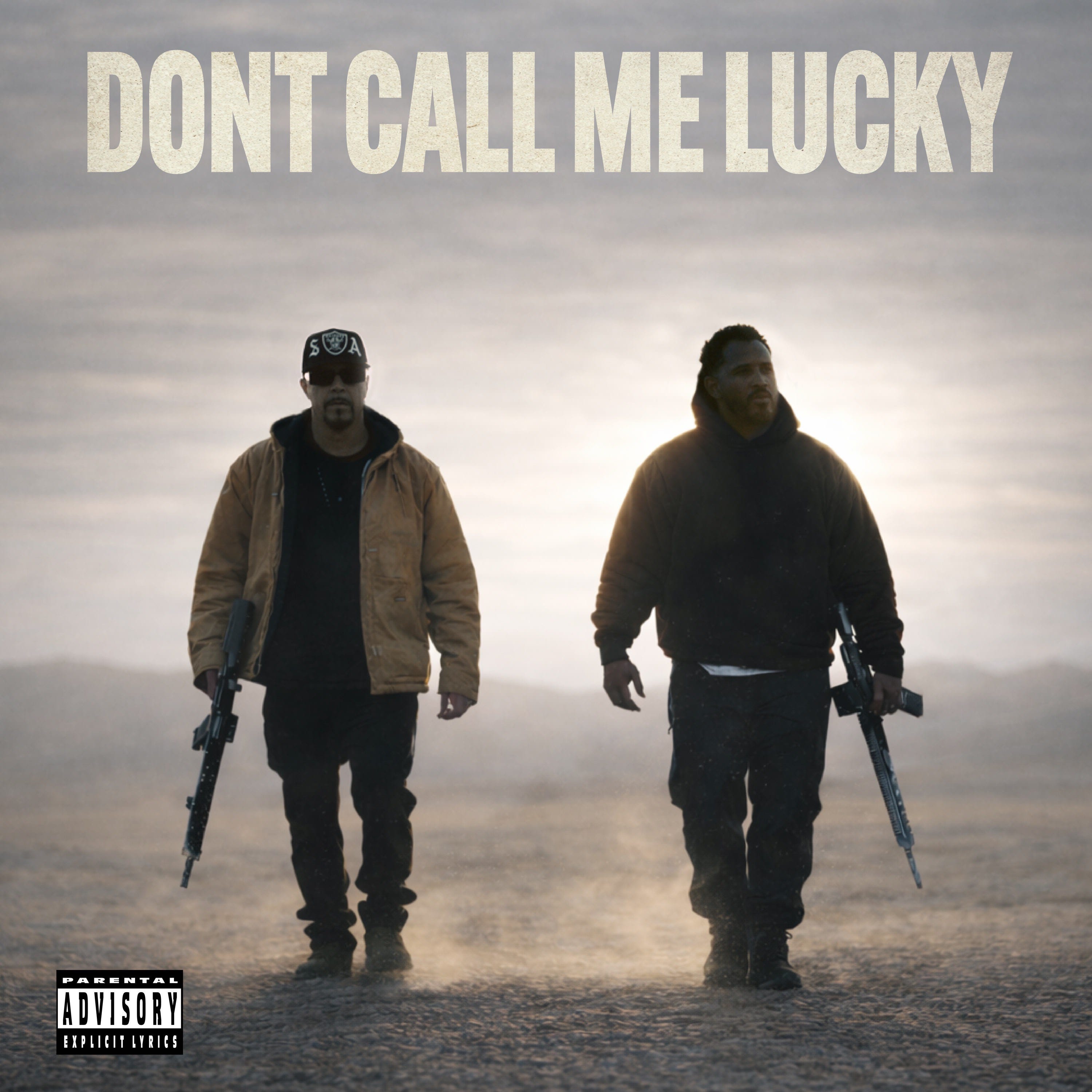
A particular working arrangement has come to define the underground rap calendar. One beatmaker and one MC lock into an LP from start to finish, pulling their guests from a sealed circle nobody else is invited to. Don’t Call Me Lucky arrives inside that setup twice over, since the rapper walking into it has already built his last two years around it. T.F. the South Central MC who first surfaced on ScHoolboy Q’s Blank Face LP in 2016 before signing to Lord Mobb Music, put out Blame Kansas with Mephux and Roc Marciano in 2024. The Green Bottle followed a year later, handled start to finish by Khrysis. Don’t Call Me Lucky makes it three single-producer full-lengths in under two years, this one across the table from DJ Muggs. And Muggs has been working this way longer than anyone. The Soul Assassins collective has been his vehicle since 1997; across the last five years he’s run a joint-album-per-season pace with whichever rapper fit the room, running through Madlib, Mach-Hommy, Rome Streetz, Jay Worthy, CRIMEAPPLE, Raz Fresco across as many different sessions. Both men were inside the same shop before the tape rolled.
Almost everything on the record is about commerce, and “Ressie Pieces” turns on the fake-yeast trick. Sell a guy a kilo of baking yeast as cocaine, and once he figures it out, chop him up and name the chunks after the peanut-butter candy. Meyhem Lauren opens the song at a table with sea bass crudo and truffle-baked brie and a plug with a fake knee, OT the Real walks the yard in cancer sticks with a lick he made the day before it got raided, and T.F closes, “Leave a trail of lava in the streets/If he don’t die, he seein’ chupacabras in his sleep.” On “100 Dollar Bill,” the opening method is flatter still. “I took a quarter, made a dollar, did that thirty times/Took that same method, and I merchandised it.” Verse two puts a cast around the table, niggas that buy stocks and cribs in the same line as niggas that bust down a box in cribs, Cheech getting the yayo, O.J. Mayo showing up in the timeline years after T.F’s crew had already been balling. “Money in the Wall” is a home-invasion chorus, “Knock knock, is anybody home?/we want that money in the wall,” and Heartbreak JC takes the second verse on the phrase that gives the record its floor, “Niggas dying every day over chains and a post.” Legitimate commerce and black-market commerce are written as if nobody on the record ever expected the two to look different.
Nobody on Don’t Call Me Lucky wastes a bar explaining himself, least of all the headliner. He doesn’t reintroduce himself at the top of a verse, doesn’t recap his own backstory inside a bar, doesn’t pause to tell you what a word means. “The chains is rusty but the hook stainless” passes without footnotes. You’re supposed to figure it out or go listen to something else.
The title phrase is a refusal more than an argument. Inside the first couple of seconds of track one (“They think I got a rabbit’s foot on me”), T.F follows it with a biographical counter: court-ordered therapy that helped beat a case, failure-to-appears that still let him pop up in city after city, cards declining at the spending limit, a few more cases pending, and the one unhedged number, “It’s been a few years in, but fifteen on the grind.” On “Money in the Wall,” he’s ten years in just up to where the record finds him. Luck is what people say when they haven’t been counting, and T.F keeps the count running over sixteen cuts. The refusal isn’t only his own. “Two million twice and ain’t stash nothing” is about a friend. The niggas fresh off state and federal bids on “100 Dollar Bill,” whose kids they haven’t seen in eight years, are in the verse with him. Everybody he breaks bread with while breaking ribs.
T.F voices every role on the album’s one three-act track, with skits doing the scene changes between them. It opens on a prison phone call that a girlfriend accepts from her locked-up man, who asks for commissary money and then goes quiet at “Wait, where you at? ‘cause I, I can’t.” Verse one of “El Sancho” belongs to the guy at her house. He enters on a Baby Boy reference, “I pull up like Snoop Dogg in Baby Boy,” which places him in the Rodney role, the one who sleeps with Jody’s mother, and what follows comes out flat. Feet propped up in the other guy’s living room eating Chips Ahoy. The girlfriend’s Christian Dior jacket in the Instagram pictures. The selling-dogs confession she’d passed on about the man behind the walls, the admission that the last litter was the boyfriend’s and the other guy sold every one of them and kept the money.
Then “I ain’t no motherfucking snitch, but that’s quiet as kept,” which is all the disclaimer the song wants to offer. The second skit hands the phone to the locked-up boyfriend as he figures out in real time that another man is inside his house. Verse two shifts to him in his cell, no pictures of his kids, “some nigga at the crib.” Verse three catches him walking back into free air, greeted at the door by the men who snitched on him, chasing the address down to a for-sale sign at the curb. The outro lasts a full minute of him screaming into a phone about Chips Ahoy, Ovaltine, pillowcases, Kool-Aid, and his kids. Three acts in under four minutes. None of it is hinted.
Roc Marciano has been in Muggs’s orbit for years in company with producing half of Blame Kansas the year before this one. On “Ya Heard” he takes the whole first verse, rapping, “dodge the pen, had to turn the pen into a poppy field.” A pair of pens across one motion, a decade of legal trouble riding next to a writing practice inside one image. Nearly all the mics on Don’t Call Me Lucky had been inside a Muggs session or alongside T.F at some point before this one. Heartbreak JC, who takes the second verse of “Money in the Wall,” walks in cold from South Central with no prior ties to either of them and a zip code that matches the headliner’s.
Muggs stays on the slow side of the record’s tempo range most of the time. “The Scorpion Sting” creeps, every bar stretched across a figure of two slow sustained notes, with the drum landing only on the second of the pair, the menace unhurried and in no need of speeding up. “Cha Cha Chicken” builds its hook around a stop-start percussion chop that matches the “chop chop” in the lyric, and the MC rides it the way a boxer rides a heavy bag. “Star Studded” puts reverb on the piano and a low-string pulse under it, and the verse about Wolf of Wall Street brunches and moldy laundered money arrives as dream-content. “Don’t Call Me Lucky” itself opens on a figure that could be a warning siren run through a guitar pedal. The record arrived the same day as a feature-length short film by Jason Goldwatch, whose prior work includes Muggs’s 2023 Death Valley and a performance of Nas’s Illmatic scored by the National Symphony Orchestra. Muggs calls the LP and the film one unit. The MC has described the whole thing as “the first sci-fi gangsta flick,” comparing it to Ready Player One and Inception. The scene-driven writing on “Star Studded,” “El Sancho,” and “Luchador” makes more sense with a movie sitting next to it.
An MC halfway through a three-LP single-producer run, none of which have arrived with streaming-era rollouts, all of which have been handed to beatmakers with their own long discographies, is making a case for a way of working that doesn’t assume the audience has to be lured. Between him and the producer sitting opposite, the MC is the rarer half of the partnership. The records are for whoever was already listening. Don’t Call Me Lucky is the third in the row and the first with a veteran on the other side who has been running the model for thirty years. Whatever comes next will happen the same way. Somewhere in a verse he hasn’t recorded yet, the word will show up again.
Great (★★★★☆)
Favorite Track(s): “The Scorpion Sting,” “Ressie Pieces,” “El Sancho”