

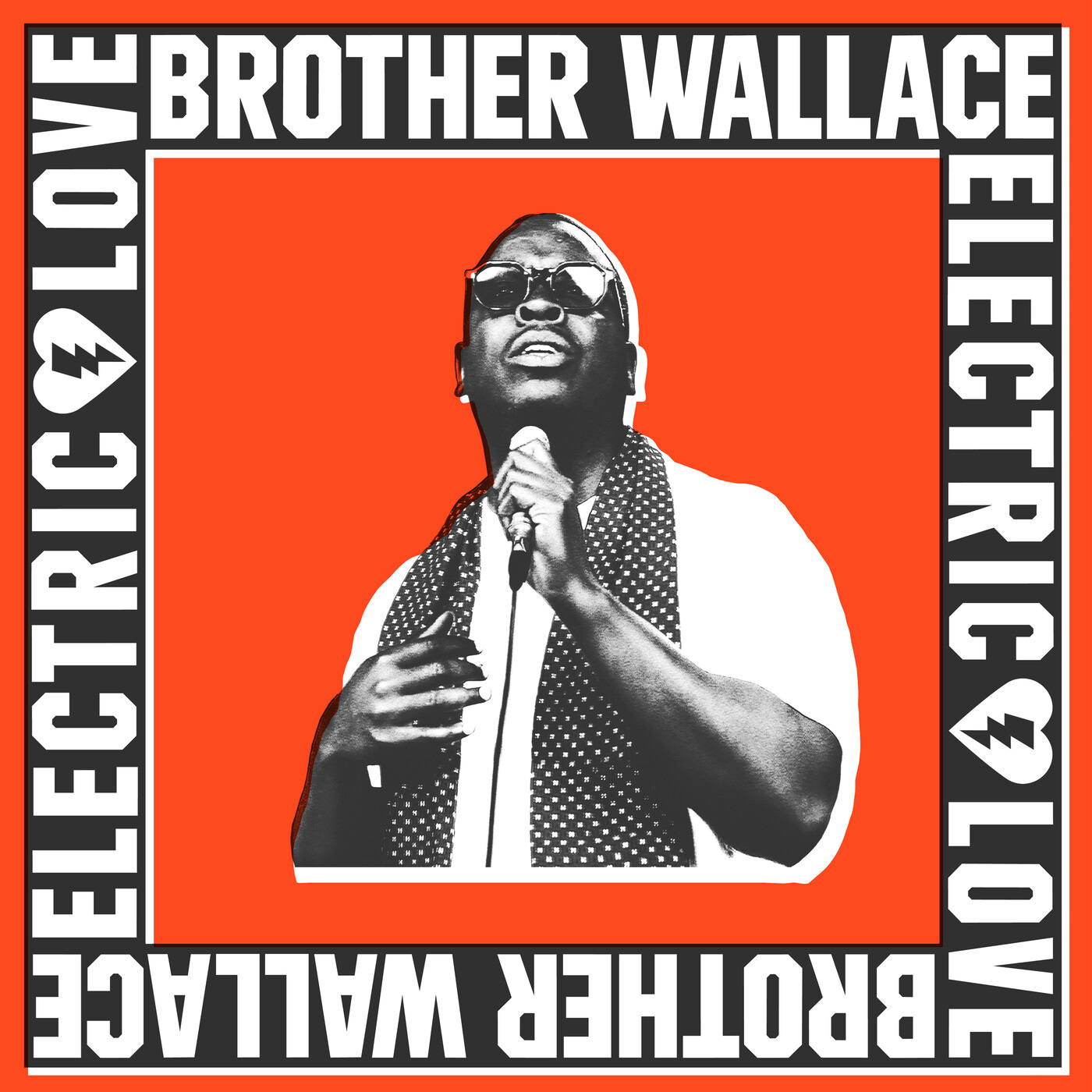
A kid from West Point sat at a piano at age six, then directed a hundred-member church choir at fourteen. He led the room before he wrote a song. Three decades teaching K-12 in Georgia. Brother Wallace is forty-something with a debut and a Top 30 single, “Who’s That?,” in which he plays a man walking downtown who spots his partner’s twin holding hands with another man. “He had a fine lady on his arm, why ask why?/‘Cause she had eyes just like you/A cute dimple when she smiled, like you too,” he sings, his voice tipped between gospel call-and-response cadence and a conversational rasp.
Wallace stays inside the scene like someone telling a story over drinks. Yet he never says the word betrayal across all four verses. He repeats “Who’s that baby? Who’s that baby?” four times, then asks, “I just want the truth, girl/And don’t be ‘round here lyin’.” Walking, watching, held hands, the new man’s fancy car. Every song here was produced and co-written by Dan Taylor of The Heavy. The sessions ran at Real World Studios in England. His arrangements run on drum breaks, organ stabs, horn sections, and walking basslines instead of pads or presets. “Who’s That?” is a heartbreak scene, not a confessional.
Sincerity and sarcasm are stitched into the same place by You’re the Man.” It runs on a descending bassline and stabs of organ chord that push Wallace into a lower register. He sings “Ain’t this the life, ain’t it grand?/Ain’t this the life, you’re the man,” aimed at someone who left safety and found doom. “Standing in the shadows of midnight hour/Waiting for the sun to bloom/Say brother, they ain’t tell you/There ain’t nothing here but doom,” he sings later. A lower register, not a lyric, carries the verdict of “You’re the Man.”
Yet the third-person songs are built to survive his platitude mode. Charlie Mo, in “Top Shotta,” “slipped up falling in with the crowds” and got “reeled in/Like a fish, he’s hooked, no turning ‘round.” Mary, two verses later, “used her lips of honey to go run up her money/Selling soul to make the two ends meet.” Here Wallace writes characters. Not affirmations. “I am loved, I’m alive,” is the phrase repeated on “A Patient Man” without any pressure on it. “We’ve got L-O-V-E energy/Peace and harmony,” sung by a multi-tracked choir over rapid hi-hats, a tambourine shuffle, and a punchy horn section trading with piano, closes the record on a triumphant ending it has not quite earned.
Over a solitary piano figure, then a kick-and-snare loop, with a jazzy electric bassline snaking under sparse echoing guitar notes, the two characters get walked into the same cold ending. Mary’s beauty runs “skin deep, blood cold as the creek,” her smile bringing “a man to his knees.” He pulls back and watches the high side of town, where “eyes wide open, but nobody sees.” Misery loves Charlie Mo.
In the spring he had been opening big rooms for a touring soul band, places where a hook has to land without anyone in the band explaining it. On “Hope of Fools” he is stretching a meager check while his boss’s pockets get fatter, watching inflation rise, war rage all over the land, with little money to feed his babies, narrating his way through the wreckage of “tryna make it day to day” yet still arriving at a chorus that calls itself “the hope of fools.” Between the verses, the slogan itself flips. “My vote counts/and my life matters,” he sings the first time around. “My vote didn’t count/and my life didn’t matter,” he sings the second. In verse three, a politician with “the purest heart and a real plan for the nation” bites “of the poisoned fruit/and sells out to the corporations.” Wallace keeps the contradiction unsmoothed. Both readings are sung, on opposite sides of the same horn and piano refrain.
The bigger songs swallow the smaller ones (one could argue), and the choir vocals and horn swells of “Let’s Get Together” flatten everything around them. But the case dies on “Jealous,” a mid-tempo boom-bap track with a snappy snare and soft electric piano chords, where Wallace catches his ex out with someone else and admits, “the only thing I know I feel/Is E-N-V-Y.” Spelling it out is corny. That corniness is the move; Wallace calls his envy “that old green eyed monster” and lets the monster win. “No God In This Town,” the one song built on a distorted vocal scratch and a melancholy synthesizer pad, lands its verdict, “despite all that you have done/there’s no God in this town,” with the heavy plainspoken finality of a singer who has run out of ways to soften it. Hire him to direct the choir. Then leave him alone with the songs that prayer cannot reach.
Solid (★★★½☆)
Favorite Track(s): “Who’s That?,” “Top Shotta,” “Hope of Fools”