

Album Review: Expansions by Zo! & Tall Black Guy
Zo! and Tall Black Guy fill a full-length with Detroit grease and warmth. Expansions bets workaday optimism weighs as much as heartbreak, and the craft is undeniable.
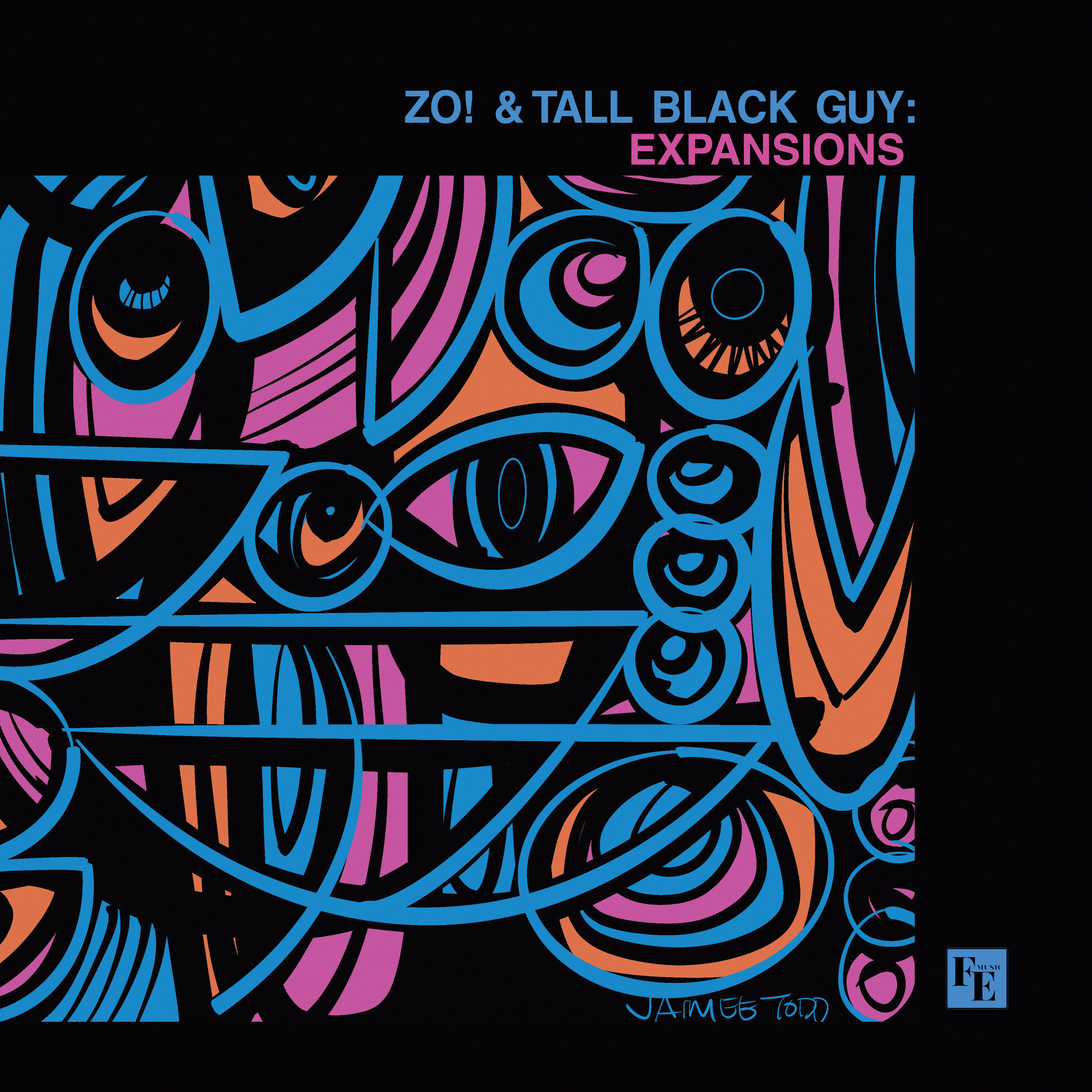
Grown-people music carries a particular risk. The minute it announces its own maturity, the maturity starts to shrink. A record that centers adult optimism, the kind that coexists with alarm clocks and unanswered texts and partial credit, has to prove that optimism isn’t laziness, that tenderness hasn’t calcified into politeness. The best cuts on Expansions manage exactly that, and the so-called ‘lesser’ ones only partially dodge the trap. This is the second full-length pairing between Zo!, the Detroit producer and multi-instrumentalist long affiliated with The Foreign Exchange, and Tall Black Guy, who’s also a beatmaker from Detroit, whose sample-flipping instincts tilt a few degrees looser. Their 2021 debut together, Abstractions, gave them a working vocabulary, and Expansions widens the aperture without changing the lens.
J. Ivy’s spoken-word opener sets the terms before a single chorus drops. “Stretch your soul,” he says, and then clarifies that stretching means rewriting old code, climbing past your own ceilings, holding on to incomplete work as proof you’re still in motion. “That blemish is merely evidence that you ain’t done” is a fine thesis if the songs behind it keep earning it. Sy Smith’s turn on “Keep Him Satisfied” is where the record first shows teeth. Smith sings about a partner who brings breakfast to bed, about swatting away women in his DMs with an ease that’s half affection and half sport. She drops the hook’s centerpiece:
“I’m not conceited, I’m convinced
And I will say that shit with my whole chest.”
The conviction is loud and fun, but a competitive wire runs underneath it, a barely concealed pleasure in knowing she’s being watched by a rival she considers overmatched. “I’m really rooting for you, sister/So let me know if you need help” sounds generous on the surface, but the sweetness is lacquered over real territorial instinct. Kindness, as a calling-card moment, gives the song more personality than a straight love anthem could.
BeMyFiasco’s “Catastrophe” sits at the other end of the confidence spectrum. Where Smith radiates control, BeMyFiasco keeps undercutting herself mid-sentence. “Am I looking right?” she wonders before describing a dress so tight it cuts circulation, a smile aimed at a man she identifies by cheap cologne. The pre-chorus is stark. “Are you sure that you like what you see?/Behind these eyes, I got uncertainty.” She’s performing desirability while narrating its cost, and the chorus begs for “thirty more seconds” to keep the recklessness from tipping into disaster. By the bridge, she’s bargaining. “Let it just fall down, break to pieces/Maybe you’ll find out you were needed.” The insecurity isn’t pretty, and the song doesn’t rescue her from it.
“I’m Good,” featuring Raquel Rodriguez and Phat Kat, handles self-worth more directly. Rodriguez sings in broad, purposeful lines and her delivery is spirited enough to keep the plainness from going slack. Phat Kat’s contribution is the surprise. He turns peace into something you condition into your body, like muscle memory. “Peace ain’t a place, it’s the way that I breathe.” Then he narrows it. “The sun look different when the shadows leave/That’s why I’m more than I was, watch the new me proceed.” Contentment as a practiced skill, rehearsed daily. Rodriguez tells you she’s arrived; Phat Kat tells you how much sweat the trip cost. His verse is the one you believe walking out the door in the morning.
Brittney Carter and Lyric Jones split “Quiet” into two arguments about the same tactic. Carter lays out her credentials before admitting she’s going silent not from indifference but from strategy. “I shut you off ‘fore I let you hurt me back.” Jones takes the second half and strips it further. “Now I see it all, but say less/‘Cause my peace of mind is priceless.” Both women wield restraint as a controlled response, and neither confuses it with weakness. The spoken interlude that follows carries the album’s most useful instruction. An unnamed voice offers a principle in plain language.
“The only way we can grow is to experience situations as they are and turn them into medicine.”
Ozay Moore’s spot on “High On Your Love” is the album’s most convincing marriage of uplift and physical detail. He raps about the cost of generosity. “Homies in army told me, ‘All you gonna get out of being altruistic is broke.’” Then he steers toward the payoff. “My kids get the truth I hum, and all the ceiling’s just another space you can dance on.” He’s talking about handing your children proof that effort pays, and the domesticity of the image grounds Darien Brockington’s floating love-as-altitude chorus in something you can touch.
The two songs “Waiting to Call” and “Make or Break” share a nerve. Micki Miller sings “Waiting to Call” as someone who recognizes chemistry but won’t sprint toward it. “I have wasted love, I have learned to own it.” The chorus negotiates terms in real time. “If we’re giving it all, or we’re keeping it casual/I’ma give you the ball and let the chips just fall where they may go.” Gareth Donkin and Debórah Bond split “Make or Break” into two halves of the same hesitation. Donkin opens with swagger bordering on overcompensation. Bond answers with a quieter admission that she still remembers how their relationship started, and that memory alone constitutes a reason to stay.
Nicholas Ryan Gant repeats “Find My Way Back”’s simplest pledge for its entire runtime, and the question is whether that repetition is devotion or thinness. On a shorter record, this might work as a palate cleanser. After everything this album has said about uncertainty and practiced calm, the song risks conceding that some emotions resist elaboration. There’s a stubborn dignity in Gant’s delivery, though. He is not building a case here as much as he is just going home.
The instrumentals earn their space. “Hart Plaza” carries a Detroit warmth that requires no annotation, “Be Good (Interlude)” drops the temperature between heavier emotional arguments, and “Steve’s SkyBreak” lets the keys drift without a destination. Together, these three prevent the record from collapsing under its own sincerity. A few sung passages settle for sentiments that feel borrowed rather than lived in, and the record could lose a cut or two and tighten without sacrificing range. But the sharpest performances here speak with specificity about how adults actually manage love, doubt, and ambition when nobody is watching. The producers built a house with enough rooms for all of it.
Great (★★★★☆)
Favorite Track(s): “Catastrophe,” “High On Your Love,” “Quiet”
Peace! Thank you for the positive review and the love on the album, we really appreciate it!
A quick amendment, TBG and I are both out of Detroit. Just wanted to show love and clear that up as well.
Zo!