

Album Review: Extraordinary by Gareth Donkin
The breakup accusations have a defendant and a temperature; the self-directed pep talks describe nobody.
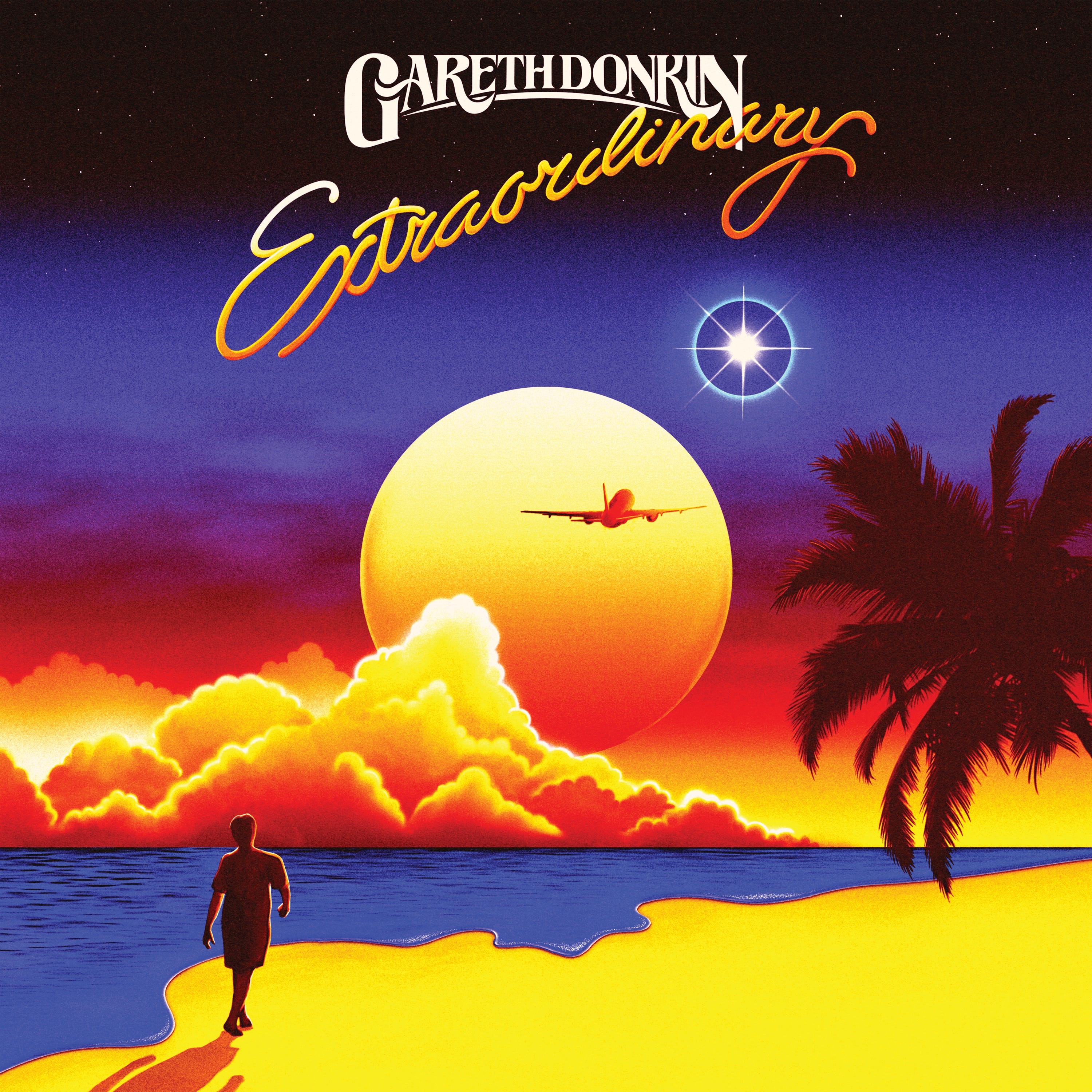
Six minutes and forty-one seconds is a long time for a song that rhymes “sunrise” with “photobook.” Gareth Donkin, the twenty-five-year-old London singer and producer who has perfect pitch and has been working in Ableton since he was thirteen (the pedigree often gets mentioned before the songs do), parks an extended hum at the centre of his second album’s closing song, and across the tail of it keeps singing “It’s only the start, it’s only just the start,” as if repeating the line will make it feel like an ending. His 2023 debut Welcome Home was a self-produced R&B record that got him onto BBC Radio 6 and to SXSW. Extraordinary follows that debut and the cathartic Suite Escape EP from 2024, and Donkin has described writing it while learning to “stand up for myself and recognize and acknowledge my self-worth.” That is his frame. It is not what most of these songs evidence.
The breakup material is meaningfully better than the rest of it. “Never Gonna Break Your Heart” works off a negation: the hook quotes someone else’s lie back at them, and Donkin’s voice pitches up into the interrogative as he sings it.
“Don’t say that ‘I’m never gonna break your heart’
If you knew it wasn’t true right from the start, why lie?”
He closes on a line that does more than the hook, but only because the hook set it up:
“I’ve been there before
But you owed me so much more.”
That second couplet will not settle for a mantra. The title track, later, is in the same address-mode and opens with an accusation: “You took a part of me and threw it all away,/Like I can’t tell?” The chorus-level pun on the title, rendered in the sheet as both “extraordinary” and “extra ordinary” with a visible gap, pushes the song’s conceit into its sound. Underneath Donkin’s I’m free, a counter-melody voice keeps interjecting you’re never gonna change me, and the two phrases argue with each other for the outro’s length. His writing, whenever it has someone specific to accuse, tightens fast.
Whenever the “you” stops being an ex and becomes a generic listener, or Donkin addressing himself, the tightness drops. The chorus of “Please Don’t Give Up!” is the title phrase plus “you’re only one of one,” and the verses do no work to particularize either: “Tell me what you want to say, if you can try, please show me, say what you wanna say” amounts to a polite request for conversation, and “all of the things make me happy, night and day” is not about anybody or any thing or any day in particular. “Don’t Be So Hard On Yourself” does the same trick softer, built on five lines of verse:
“I don’t wanna be alone
It’s more than you could ever know
Same old city
Swim in circles
Time to get out there!”
The one concrete noun in there is “city,” and it is doing nothing. “Swim in circles” is what somebody drafts before they have worked out what the problem actually is. The verse gives the coaching voice nothing specific to coach against, and the “Ba da ba” syllables that come in after carry the melody because actual lines would have to mean something about someone. Donkin keeps singing to “you,” on song after song. Nobody is home.
Track to track, the playing is lovely, and Donkin has brought in people who sharpen it. “Where Did We Go?” is co-produced by Kiefer, the jazz pianist who also features; the chords after the first chorus open into voicings Donkin’s own ballads do not attempt anywhere else. “Half Shuffle” carries its vamp on rhythmic conviction alone, because lyrically it has “It’s time we move it on” and little else. “Play the Game” holds the best sustained piece of writing on the record, and it belongs to the featured rapper, UHMEER, who spends a full verse on the embarrassment of a blown almost-romance:
“Failed the assignment
My jokes wasn’t landing
Panic residing
In the convos that are random
Like fun fact
We both felt it fall flat.”
Someone remembers an actual evening in those bars. Howard Lawrence of Disclosure co-produced “Running Away,” which arrives as slick as the credit promises; the writing on that song is “Hold out your hands, come and dance with me,” which is not nothing, but it is also the whole of it.
But on a record whose stated subject is self-ownership, the one spot where somebody is actually present as a specific person, remembering a specific evening, came from the guest rapper. Five words of UHMEER’s that keep coming back: “We both felt it fall flat.” A whole failed almost-romance sits in those five—the dud, the look after it, the embarrassment that follows for blocks. Donkin has the singing. He has the playing (and he’s a whole sweetheart), the ear for who to bring in, and, once he has an ex across the table, the language too. What his own writing across thirteen songs cannot find, in any listener he sings at, is any corner as small or as remembered as UHMEER’s.
Slightly Below Average (★★½☆☆)
Favorite Track(s): “Play the Game,” “Extraordinary”