

Album Review: Fading Forward by Les Imprimés
The Norwegian producer’s second album as a frontman buries wakes and apologies inside the sweetest arrangements he can build. The loneliness of the method is the method.
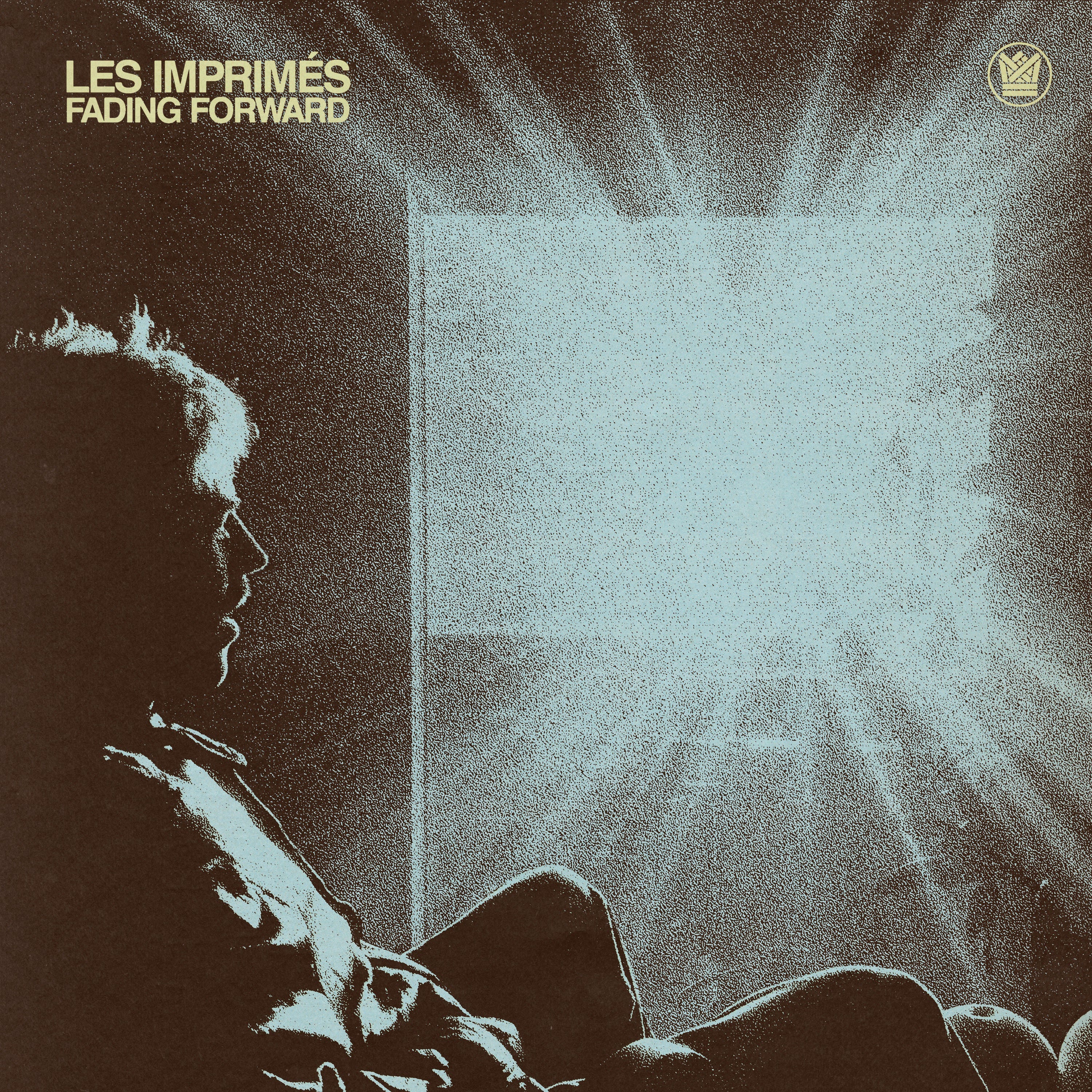
Big Crown Records has been building an analog ecosystem out of Williamsburg for the last decade. Danny Akalepse and Leon Michels putting Lee Fields in a room with a band and running the tape, El Michels Affair cutting RZA instrumentals like Muscle Shoals outtakes, The Shacks harmonizing over reverb you could stand inside. The house style is the sound of musicians playing together in one room, and the twelve tracks of Fading Forward are a strange entry in the catalog. Nobody else was in the room.
Les Imprimés, a name that could be mistaken for a lost ‘60s French yé-yé imprint, is actually the stage alias of a Norwegian producer named Morten Martens, who cut the whole thing by himself in Kristiansand, on the southern coast of Norway, playing nearly every instrument, engineering every overdub, and singing every lead on every track but one. The cohesion Big Crown usually gets through players who can hear each other, Martens reaches here from the opposite direction, by being the only ear in the building.
Martens logged more than twenty years behind the glass before he ever took a microphone seriously. Producer, engineer, the guy Norwegian acts called to get something on tape that sounded older than it was. His 2023 debut Rêverie was his first full-length under his own banner, and it pulled him out onto live stages for the first time in his life, late by most industry calendars. Rap was the way in, the way it was for a lot of people his age. He followed drum breaks on Wu-Tang records back to their originals and loops on De La Soul albums back to dusty funk 45s. The trail ended at the gospel records that started the whole chain. Fading Forward is a soul album made by somebody whose first teachers were Golden Age samplers, and you can hear the route in how the drums are programmed, in breaks that run an eighth-note too stiff for 1972 and an eighth-note too loose for a grid.
Finger-snaps open “Beware.” A call-and-response doo-wop chorus, a voice purring like your uncle Ted at a wedding reception (around the third bourbon), Martens playing the part of the predator. He leans toward the woman he is narrating to and says:
“A beautiful woman like you
Should never be left alone
Is there something I could do?
Maybe I could drive you home.”
And the charming friend warning her about charming friends is the charming friend himself; nothing in the sweetness of the production tips the trick off. “Close My Eyes,” on a Marvin-ish guitar-and-organ groove, lets its speaker blame his partner for not reading him, then turn around in verse two and own it, “Maybe I never let you in/my closet’s full of skeletons.” And “Paradise,” a farewell to a friend who has died, borrows from Martin Denny and Les Baxter’s ‘50s exotica records, all lap steel and tiki-bar vibraphones, and sings its goodbye so calm you have to listen twice to catch what the words are. The second listen is worse.
I missed “Paradise” the first time through. It was playing in a room I was doing something else in, and the arrangement was so calm I assumed it was a love song. Absence runs under half the LP without announcing itself, and “Paradise” is the only place it gets named directly, a letter to a friend who has died. On “Next Summer,” the man in the song is not getting a call back, he is getting a calendar with a winter in it, “I see you next summer, after love comes winter.” Mortens on “With You” asks an absent subject a question he already knows the answer to, “Will I ever hear your laugh again, will I ever see you smile again,” and shrinks the chorus to the word you, held there like a bruise. “Again & Again” opens on a question: “Have you ever felt alone, mistaken, forsaken, in a static state of mind, a soul that’s breaking slowly,” then gives its whole chorus to the word again, said the way it gets said after you have run out of any other way to say it. The warmth of the arrangements is what keeps those songs from calcifying into mope. Martens stays a shade warmer than the words deserve, which is harder than it looks.
The record opens on “You & I,” where the partner is the one who keeps the speaker from flying apart during his worst stretches. Both of them are still around to do the dance, so the dance keeps going. “Only Love” runs its long-awaited collision as a mantra, and Martens is allowed to ask somebody what her fears are: “Baby, you’ve been on my mind for a long, long time, the memories are the treasures I find.” “Untainted Love” flips the title of Gloria Jones’ 1964 single, later the Soft Cell hit, and writes the opposite of what the original is about, love not yet ruined. Martens goes for it after cataloguing what the ruining does everywhere else on the record, “I stumbled the words when I asked you to come sit right next to me.” “Miss the Days,” the one guest-vocal track on the set, splits the memory between him and the Danish-Gambian singer Ama Li. He takes verse one, all innocence, the hand in hand, sometimes wasted phase. She takes verse two, where the memory sours outright, “Now your body undress me, all you wanna do is stress me.” The same nostalgia from two angles, and only one of them is sweet.
The backward route Martens described, rap to funk to soul to gospel, has become a generational biography for a lot of people making records right now. Not many of them work this way, though. Big Crown’s house style was built on the premise that the vintage-soul sound is a collective labor, bodies in a studio listening to each other; Martens makes the opposite case. A guy alone at his own console in a small Norwegian city, working backward through the same old 45s, can get to the same place without the bodies, and the songs he writes once he is there will not be songs a 1972 studio band would have put to tape. No 1972 studio band would have parked a stalker inside a doo-wop. None of them would have hidden a friend’s funeral inside a Martin Denny LP.
Those are the instincts of somebody who came to this music after it stopped being the mainstream, with enough distance to pull at its seams. Martens has the distance and the twenty years of studio chops. He also has what the songs are about, which is a partnership that has weathered some long stretches and a friend who is not coming back. The record is the sound of all of that written down alone in a chair in Kristiansand, in a town most American listeners couldn’t find on a map.
Great (★★★★☆)
Favorite Track(s): “Again & Again,” “Beware,” “Paradise”