

Album Review: Fidelity by Yaya Bey
The Queens songwriter’s fourth full-length is a self-produced record of grief. She counts what’s been taken from her and leaves the numbers unrounded.
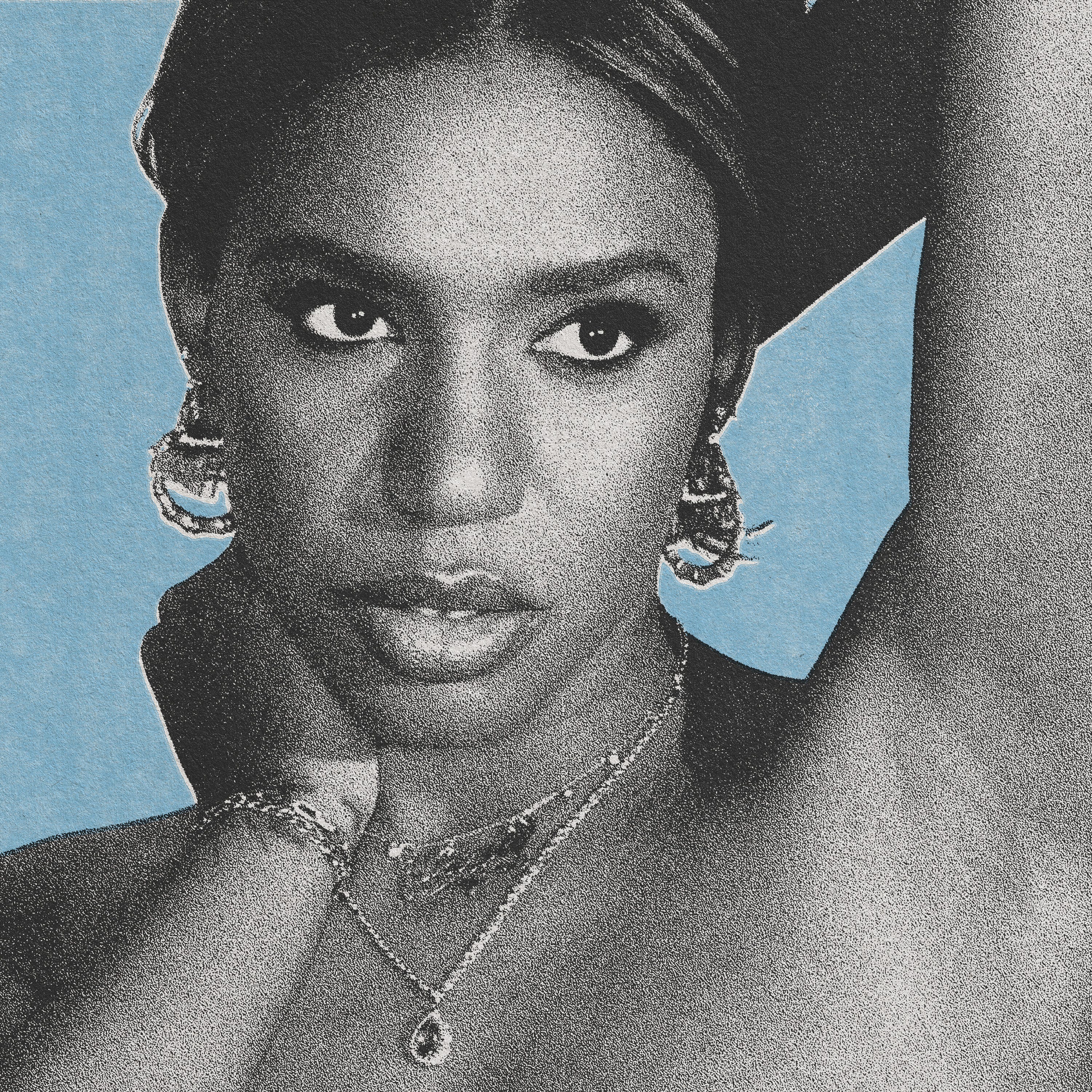
Last summer, the week her third proper album landed on streaming, Yaya Bey checked into a Miami hotel and cried for an hour she couldn’t account for afterward. She had just released Do It Afraid (the record that named the worst year of her life and tried to live through it). But she was not any closer to being okay. In that hotel room she realized that Black grief at her scale would always be turned into spectacle. She went back to the studio that summer and began writing what became Fidelity.
The music she comes from has a name. Her father, Kaleel Allah, was a Queens rapper who came up in the Juice Crew’s golden-era run on Cold Chillin’ (under the stage name Grand Daddy I.U.). He died in 2022, and Bey has been writing toward that absence across her last several records. But Fidelity is the first one where he appears as more than a wound. The reggae she grew up on through his Bajan side and the ‘90s rap he did for a living are both audible in what she does now, no longer hurting so much that she can’t put them to use.
She produced Fidelity nearly alone (with Exaktly co-producing in a handful of places). Everywhere else is Bey working from home. An SP-404 and a ukulele, mostly, with her leaning into intuition and first-take looseness until what comes out sounds like exactly that. The room stays in every take, and so does the breath between lines. These are late-night songs, three-in-the-morning songs, kept low so nobody else in the apartment hears.
Her writing tightens up when she raps instead of sings. “Freeze Flight Fawn” has her rapping that we have all got to sell our souls on the internet for a little rent money, asking who is keeping track of what we lost and who pays inflation on the cost. She is keeping a ledger. The same accounting runs through “The Towns (bella noche pt. 2),” a sequel to a song from last year about a since-closed Baton Rouge nightclub.
“The rent is too high
The wages too low
Home girls can’t drop it low to the floor
If you can’t get down at Bella Noche’s no more.”
The song ends on two words, “no music.” The nightclubs that held Black community in South Louisiana, Bey is saying, are gone, and the music went with them.
The song on Fidelity that speaks most directly to her father is “Forty Days.” Bey holds that it takes forty days for a loved one to reach the ancestors after death, and she is writing to him at that threshold. “Shine your light down on me,” she sings over a dusty shuffle, “Hold me while I’m lonely/Guide me to a love that was made special for me.” She wants him to do one last thing for her. The refrain “and it don’t stop” is how long she plans to keep asking.
Bey saves something vicious for late in the sequence. It surfaces inside “The Breakdown,” which begins as a ballad about grief and turns, halfway through, into language she is aiming at somebody in particular (whose name, I’d guess, half of indie rap could name). She is cataloguing a friend who got successful and let the wrong people in. “You got all them crackers in your ear, they wreaking havoc,” she raps. “You used to be a prodigy, they told you you ain’t have it/Now they moving past it.” She closes on four words that could hang over half the music industry, “They just wanna pimp it, sell it, bag it.”
The softer middle of the album is where Bey lets her Bajan side come up. “Egyptian Musk,” a reggae duet with the Queens singer NESTA (whom Bey ran into at an event the night before the session), has him shifting into patois for his verse. “Mi nah give pon you,” he sings, “Even if yuh mek mi likkle vex/A likkle blue.” Guitar-and-voice love songs like “In the Middle” and “Higher” stay in her conversational range, songs to hum along to while washing dishes. “Simp Daddy Line Dance” is a cha-cha aimed at an old hookup who “wasn’t all that back in the day” and is back around trying his luck; its hook goes “left foot, yeah, right foot, left stomp,” a chant the whole room can get in on. This is where Bey makes good on her own definition of fidelity, which she has called the ability to be religiously joyful while the world is on fire.
Bey is thirty-something and based in Brooklyn, producing her own records inside a culture that keeps trying to price out the scenes where Black women get to be loud. Her last album had a command for a title, Do It Afraid. This one answers back with “Cup of Water,” where she says, plainly, that she could use a cup of water if the path gets any longer. That is a small thing to ask for on a record this dense with loss. Nobody she names on these songs (her dead father, her priced-out neighbors, her sold-out friend) is in a position to hand her one. She keeps asking anyway.
Great (★★★★☆)
Favorite Track(s): “The Towns (bella noche pt. 2),” “Forty Days,” “The Breakdown”