

Album Review: Floetry the Extension by millkzy
millkzy writes live chamber rap as short-story scenes. The scene-writing carries his self-coined style better than the defense ever did.
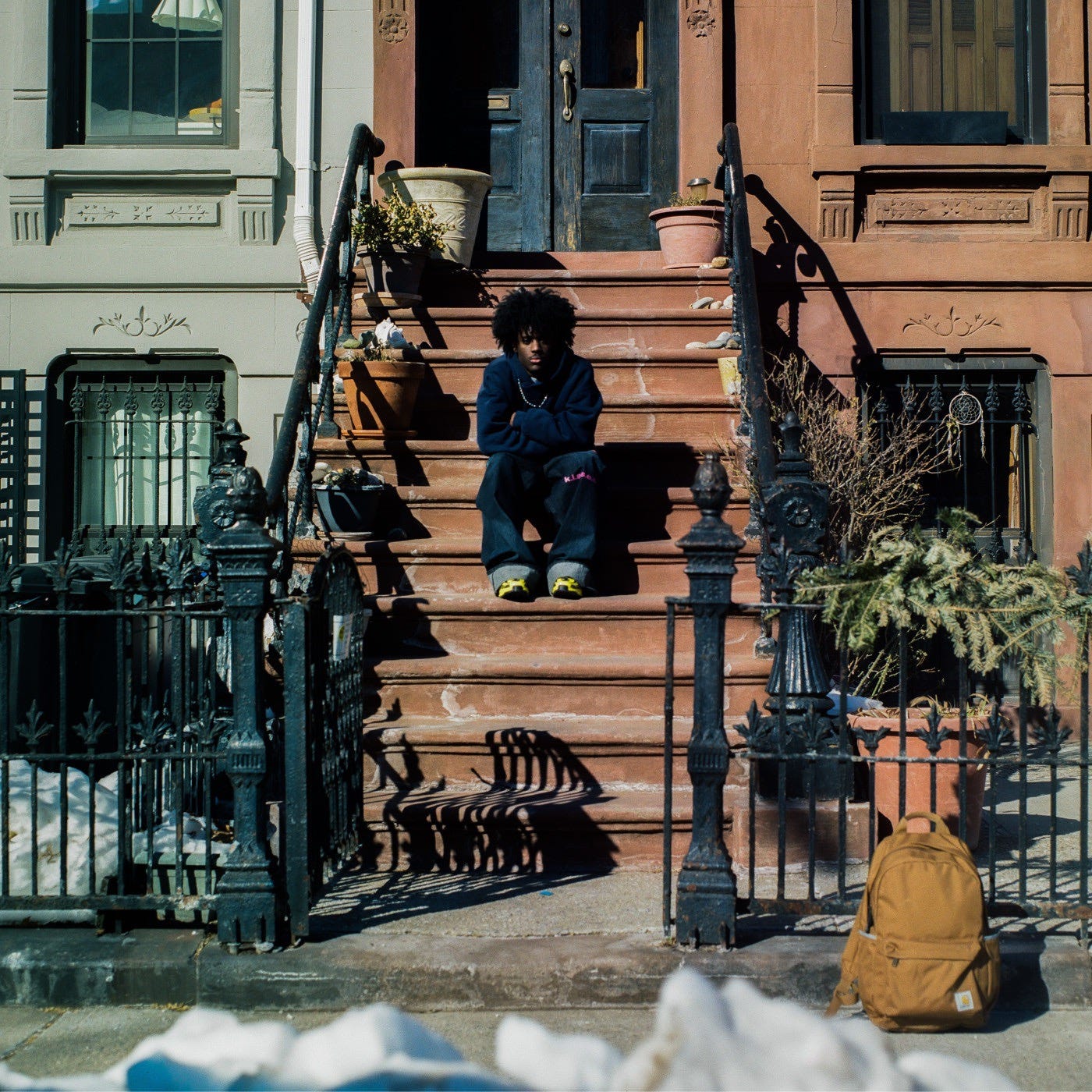
Coining a word is a strange gamble to make young. You spend years announcing it at the top of every song, printing it on merch, naming an EP after it, explaining it to interviewers who keep typing it back at you in different fonts, and then one day the YouTube comments tell you the word is the problem, the flow is a gimmick, the trick is thin. The 21-year-old Saint Louis-born, Dallas-based rapper who calls himself millkzy has been running that gamble since 2023, the year he dropped the original Floetry (not to be confused with the R&B duo), seven short songs defining a style he named himself, a fusion of fiction and poetry scored on live piano and strings, with almost no drum programming anywhere on the tape. And three years on, the gamble is paying well enough for him to keep running it without much doubt. Spotify has him near a million monthly listeners, the release calendar is closing in on an album per quarter, and a merch line called Failed Author now stocks a shirt whose copy, in the rapper’s own words, reads, “I got a lot of hate for a flow that I started; this song is a response.” Floetry the Extension is the first of his four full-lengths in eighteen months to put the writing on the word’s level.
Start with the women, who have names. Asmita is one of them. “Asmita the Prideful” is a direct argument with her about pride, about the maintenance she will not keep up on the mansion of herself, about his love being havoc, about how he had the biggest heart and left the building hurting. Verse one arrives once, and verse two arrives word-for-word identical after it, as if she missed the message the first pass. Joy is another, his mother, the one whose first name the title puns on, and the outro to her song cuts the final hook with a sampled fight where she says, “you hurt me,” then, “get out,” and the song is over.
And the girl at the back of “A Woman Written by God” is unnamed but recorded. She occupies the spoken outro as a phone memo (not a lyric, an actual recording) about runway prep, Dallas outfits, a Fashion Week trip, an A$AP Rocky concert, a streetwear event in ATL, and the grind of getting her modeling work off the ground. millkzy’s half of that song is a prayer to meet a woman. The last sixty seconds belong to hers, talking about her Tuesday.
The best piece of writing on the album is a short story set inside a single café conversation. Mike Vincent’s guitar and Sandro’s piano wander underneath it, quiet enough to make a cocktail bar sound closed long before the hour hand gets there. “The Cafe Closes at Nine” narrates by the clock. The first stamp is quarter past eight, and the opening verse is already working through a question about the woman’s dreams, whether she would rather be a nurse or a millionaire or “sit beside a man with money who’s been gettin’ you there.” Fifteen minutes later the nerves have set in about everything he just confessed leaving the table with her. Quarter to nine he can see through her disguise, orders two more drinks to keep her talking, and the drinks do not buy as much time as he thinks. At nine the bar closes, he wheels around, she is not seated, and somewhere outside the café a voice is yelling for her to hurry (“Hurry there before he gon’ leave/I got us reservations, and I’m savin’ you a seat ‘til ten”),
Verse two starts over at quarter past eight, replays the same question about dreams and aspirations and the same bit about the man with money, and the speaker is still at the table working his material for an empty chair.
For sixty seconds on “Free,” comfortuh takes verse two and the album stops arguing with itself. What does she do with it? Her verse opens after millkzy has already made his peace with leaving, and she spends it on a long solo drive that ends with her tripping over a rabbit burrow and noticing a tunnel in the distance that leads to a field of sunflowers. She ignores his argument entirely; the image she locates somewhere else is the better one of the two. “J’aimerais Que Tu Sois Holmes” pulls off a similar handover from the top. Its opening eight lines are in French, and the singer has already decided millkzy was an illusion.
The line (“Je pensais être celle qu’il te fallait”) translates as I thought I was the one you needed, and her version of the story arrives before his. MARCO PLUS grabs the second verse of “Robin Hood of Joy” and flips the gender on a dying-relationship argument, and La Reezy follows millkzy’s accusation verse on “Seed of a Serpent” with a first-love narration located in his mother’s car, under a sky without streetlights, eyes glossing over as they look up. millkzy writes every line on the album without a co-writer, and surrendering a fight’s final word to the person you were fighting with is a choice most rappers in his lane would not think to make.
The defensive writing is concentrated at the back end of the tape. Over AJ Huang’s piano on “Truth Be Told,” millkzy narrows the rap-origin-story monologue to four lines of refusal.
“Truth be told, I never asked to be no healer
Never asked to be no therapist
Never asked to be an only son
Never asked to have no ass to kiss.”
A plea to his mother arrives next, the one about choosing the pen over college classes, and then the track commits to a preference about the label on his work.
“I claim the poet lyricist role, not the rapper ‘cause I would hate to be grouped up with niggas’ tales and fables.”
The verse waves off Grammys and sellout shows in about ten seconds. “Two Words,” alongside KIDTOKIO, pushes the same argument harder. A gun reference arrives inside a vow not to use one.
“If I ever tote the gun, don’t let me pick up the switch ‘cause that’s the day I kill a man, and that’s includin’ this bitch.”
A bridge becomes a skit in which millkzy rejects a pregnancy by joking about blaming it on another man “like it’s the ‘80s,” and ends the joke with, “baby, I ain’t made for this shit.”
A lot of current rap about women is still written in “she,” “her,” “the girl,” “shorty,” and nothing sharper. But the women on Floetry the Extension have first names instead. He writes a whole track about what a woman written by God looks like, and the last sixty seconds of it belong to one of them talking about her Tuesday.
Great (★★★★☆)
Favorite Track(s): “J’aimerais Que Tu Sois Holmes,” “The Cafe Closes at Nine,” “Free”