

Album Review: Forever Ends Someday by Wesley Joseph
Three years of patient writing turn into a debut that calls youth something borrowed and grief something you repay by singing it forward.
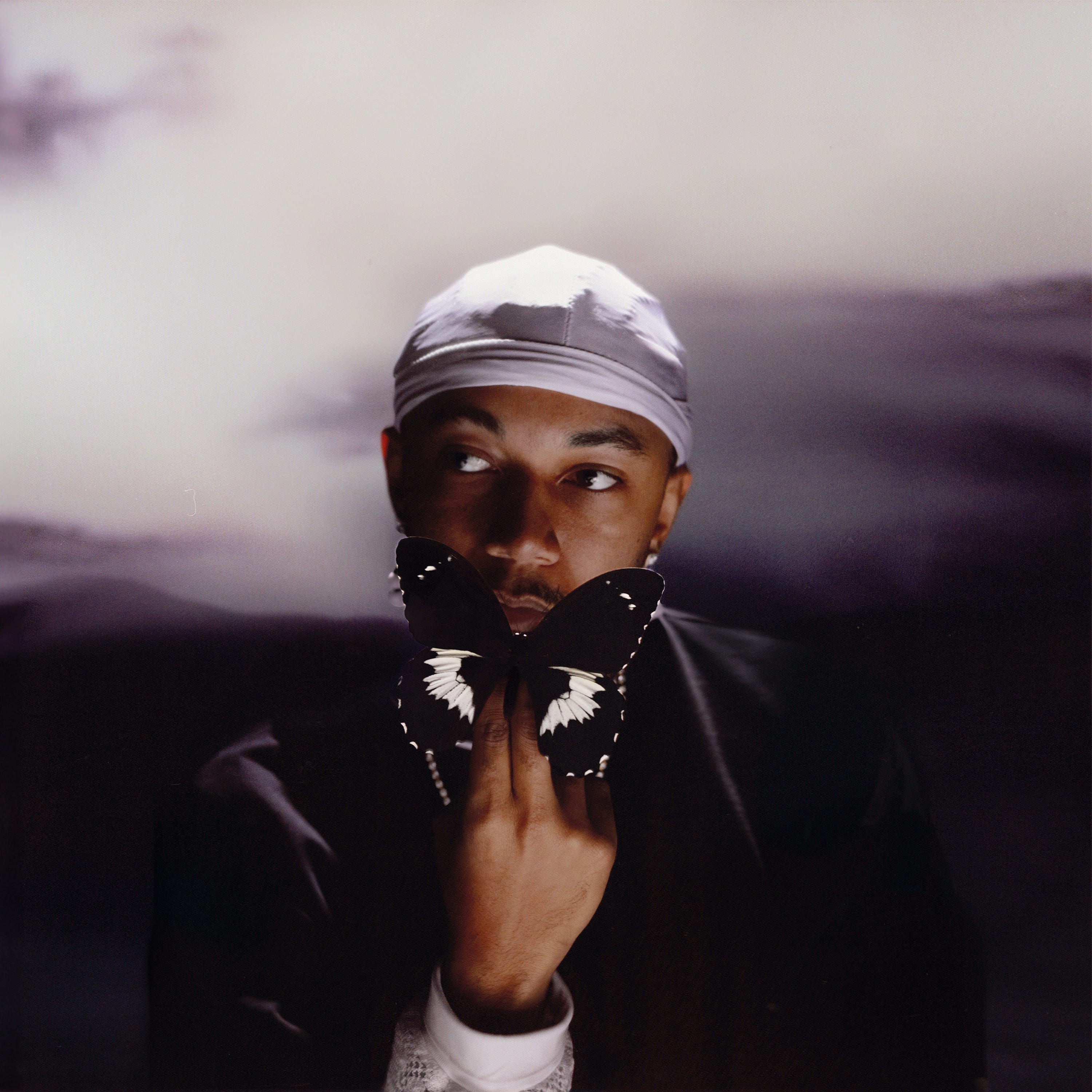
Walsall is a post-industrial town in the West Midlands that tends to get written out of British music maps until somebody from it insists on being drawn back in. Jorja Smith, who came from there, was the most recent insistence; before her, most of what travelled from that corner of the country to the rest of the world arrived as friends sending each other beats over the internet and leaving for London at the first opening. For those who come back, there is a particular kind of communication waiting for them, somewhere between an instruction and a demand, telling them they left and now have to show something.
That is the animating pressure under the debut album of a twenty-nine-year-old singer, producer and filmmaker named Wesley Joseph, who moved from Walsall to London to study film and never quite stopped making things for the people at home. Joseph has shared with NME the communication from home has always been “Do your thing for us.” Forever Ends Someday answers that request head-on. It sings to some of those people, and it sings for others of them, and it refuses to drop what it has been asked to carry.
The album title is Joseph’s phrase for a feeling he couldn’t shake across the three years of writing. The permanence of being young is a trick the brain plays until it stops. In a pre-release conversation with EE72, Joseph spoke about loss in his life and how it left him soberingly aware that youth is borrowed. That recognition does most of the work the LP needs.
On “Quicksand,” he says it flat, “came a long way, but forever ends someday.” On “If Time Could Talk,” the same idea shows up in its harshest form, “If time could talk, it would say nothing but ‘I told you so.’” The record takes the recognition as a starting point and then discovers the recognition does not actually ruin anything. It makes the small pleasures legible as themselves for the first time in a while.
Running under every side of Forever Ends Someday is a brother whose identity shifts from song to song, sometimes a particular person who is no longer here and sometimes the ones who are, whose heads have stopped being entirely their own. The first line of the record is “Back home, my brothers never had a voice, so the least I could do is sing for them.” On “Quicksand,” that obligation breaks into something closer to panic.
“My boy isn’t the same, I think he went skits
His thoughts aren’t his
They were calling us twins
Stood in the same skin.”
The song then eases back into the shorthand of people who have known each other since they were twelve, “Memories in a suitcase/100 miles away with no soup when your belly aches.” The soup line is the heaviest on the record, and the heft of it comes from what it assumes about its audience, which is that you would only say such a thing to somebody you had already brought soup to. On “Blinded,” the same obligation answers back in a single line, “For my brothers’ sake, just keep it going.”
A constellation of producers runs through this record, and the credit list belongs to somebody who knew exactly whose room he wanted to be in for which kind of honesty. Harvey Grant, who records under the name Harvey Dweller with Loyle Carner and Joy Crookes, threads through nearly every song as the stabilising constant. Nicolás Jaar, the producer behind recent work for FKA Twigs and Mustafa, shows up on the songs that fall furthest into electronic weather. Those include “If Time Could Talk,” “Pluto Baby,” “Peace of Mind” and “100 Miles.” A K Paul, whose guitar work is all over Nao and Fabiana Palladino, carries “Distant Man” and “White Tee” and laces a second figure under “Blinded.” Tev’n runs melodic counterpoint across the sequence. Romil Hemnani of Brockhampton co-produces “Shadow Puppet” and “Peace of Mind.” Joseph has a co-producer credit on every track, which is the reason the LP can move between a house-adjacent electronic figure and an A K Paul soul-guitar shape inside a single song without any transition feeling manufactured. The tone and the mood do the stitching the credits do not.
The biggest single swing here is “Peace of Mind,” the Danny Brown feature. Brown is one of the heroes Joseph collected while making DIY videos at home in Walsall at twelve, and the song’s first job is to deserve him. Joseph has described his headspace going in as empowered but unsettled. Before Brown ever opens his mouth, Joseph has already earned the room.
“Push me, I’m already close to the edge
Smile on my face with my toes on the ledge
If I don’t do what I already said
Well, fuck it, pull up, I’m already dead.”
Two verses later he cancels his subscription to being watched. He’s done with the news, done with the net, done with the press, recording the tears he never shed. He stages his own wake and shuts off every feed that could have broadcast it inside a single song. Brown arrives afterward dodging the Grim Reaper and stepping over dollars to pick up a dime, and the way he sounds makes the anxiety in Joseph’s verses come across like something a grown man hands to another grown man as both of them keep walking.
The other guest here who walked into Joseph’s life before the LP did is Jorja Smith, who grew up alongside him in Walsall. She turns up on “July.” Joseph was deep into the song and piecing together what it was about just as Jorja texted him; they cut her vocal at home in Walsall after a day together talking about how much had changed since they were kids and how far both had travelled in the years since. Nothing about the finished song performs the full-circle that framing might predict. Joseph and Jorja talk through something hard in real time, and the production gives them enough room to do it without either of them raising a voice. “Hope you’re proud, just knowing I tried,” Joseph sings to the absent party, before the verse opens up.
“Up 10,000 miles, the sun in my eyes
It doesn’t feel blameless, the way we’re damaged by the time
Yet I get older with every July.”
Jorja answers from somewhere a little further inside the same memory, offering no promises in return. Friends since twelve, they agree that the past is not going to let them go, and that they can speak to it in the present tense anyway.
Joseph’s love songs arrive already aware that the romance they describe is not going to survive the month. “White Tee” has a chorus that is afraid of itself, “fuck your life for the night, there’s tomorrow.” “Pluto Baby” belongs to a narrator who has started noticing the ceiling.
“I think the floor is spinning so we step on the ceiling
Us against the globe from when I first saw her
I miss the way your skin is undressed.”
Inside “Manuka,” Joseph walks through a night that could have ended in a crash or in love or in both. The whole song is pinned to one question, “did I fall in love to be capsized?” Over on “Seasick,” Joseph offers a long aside about whether the sky starts where the ground stops. Buried in it is the plainest self-report in the set, “I’m 27 and time’s changing/True, nothing’s changed about what I’ve seen.” None of these songs perform the heartbreak they describe. They stand inside it and relay the view.
Then there is “Shadow Puppet,” which keeps a private accounting ledger, “I lost a few friends, now a couple have sons/It never made sense when a couple got stung in the same place/Looking at the same sun.” The lines are almost banal the first time you hear them, and not banal at all the second. They keep the record’s running tally of who is still here and who isn’t, without ever lifting the volume to do it. And on the much shorter “Mind Games,” a solo interior from a narrator who cannot sleep for the alternate lives projecting on the bedroom ceiling, the escape he reaches for is to “look through the ceiling and see the ebony night sky and tomorrow’s kindness.”
Calling Forever Ends Someday a debut is mostly a marketing decision. Joseph is twenty-nine, has been releasing music since 2020, supported Loyle Carner on the Mercury-shortlisted hugo tour, and has been making his own videos since he was twelve. He has admitted to Rolling Stone he tries to punch above his class. The class he is actually in is the one where Dean Blunt, Sampha and Loyle Carner himself have been working for a while now, making long albums that refuse to pick a genre first and still keep something plain to say under the production. Joseph has walked into that room with a first record whose songs know whose absence they are reporting back to. That is the rarer thing here, rarer than any of the names in the liner notes.
Great (★★★★☆)
Favorite Track(s): “Distant Man, “Peace of Mind,” “Shadow Puppet”