

Album Review: Garden Dance by Rap Man Gavin
A Cape Town–Providence rap album about plant medicine and historical erasure that never separates the personal from the political.
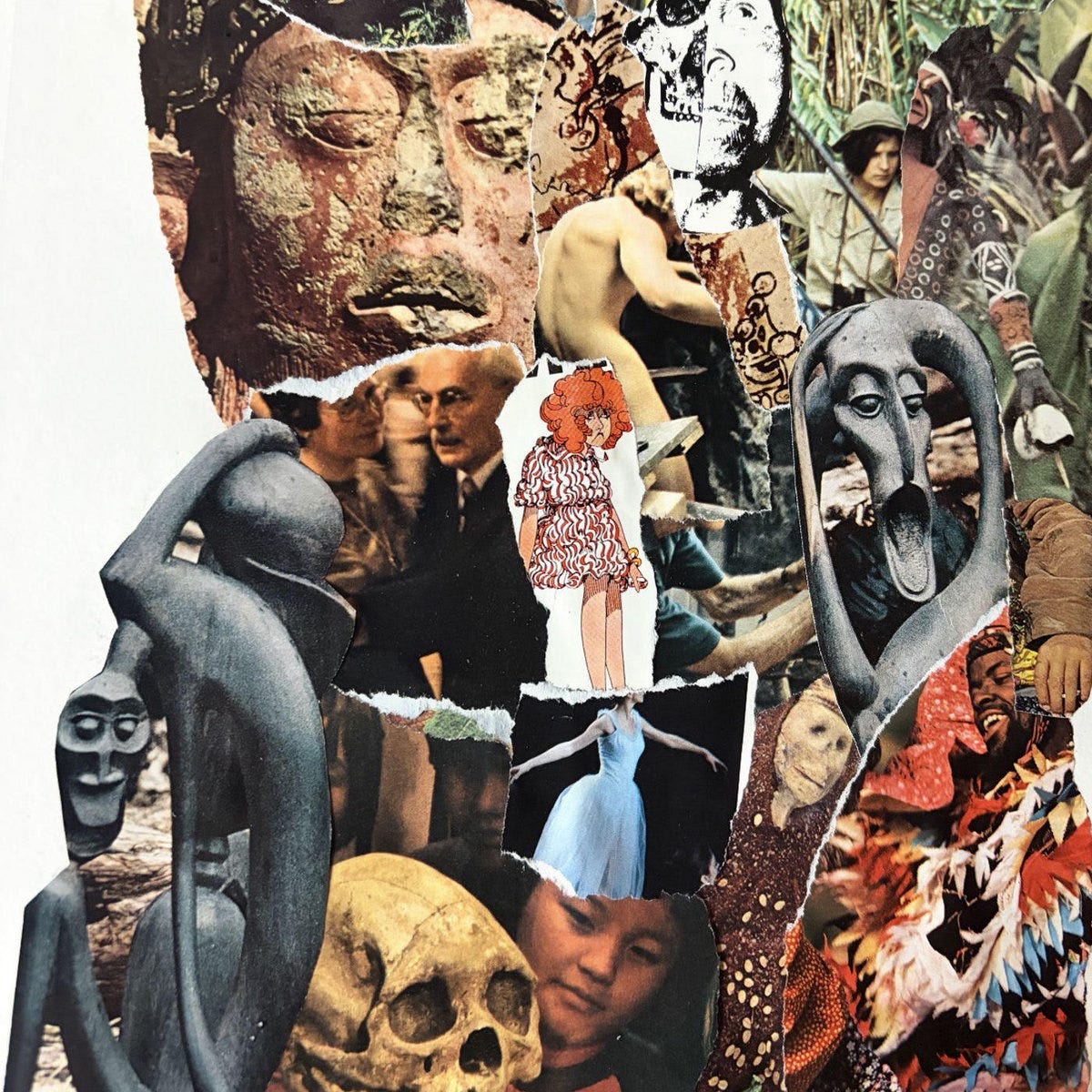
Cape Town and Providence, Rhode Island share almost nothing except an ocean and two rappers who met on Bandcamp. Rap Man Gavin, a 26-year-old running his own art collective out of Cape Town called Bottom Rock, first linked with Jesse the Tree on the 2022 EP Garden of Now, where their track “Grim Reaper” paired Gavin’s breathless, clause-heavy bars with Jesse’s looped, low-register production. Gavin showed up again on Jesse’s 2024 album Not Fade Away, trading verses on “Pale Horse.” Garden Dance is the full album they’ve been circling for four years, Jesse producing every beat, the two sharing a mic once on “Ritual of Art.” Jesse is affiliated with Strange Famous Records, home of Sage Francis. Gavin runs a collective nobody outside the underground has heard of.
Jesse’s boards run on muddied loops, dialogue samples pulled from psychology lectures and apartheid-era news broadcasts, and drums that shuffle and smear more than they knock. They rarely accelerate. Gavin’s delivery sits somewhere between Milo’s clipped abstraction and billy woods’ conversational winding, though he’s less joke-prone than either, his verses dense with sub-clauses that keep bending around corners before the bar ends. The one track where both rappers share a mic, “Ritual of Art,” makes the contrast plain. Gavin digs from inside the political, referencing the master bleeding out in the cotton field and statues that shouldn’t have stood. Jesse enters from a cooler distance, picturing crows drunk-dancing by the window and bloody hands clutching pearls at a wretched golden door. Where Gavin sprints through his anger, Jesse lopes. This braids them together: “This the ritual of art/Half instinctual, lit the spliff in the dark/Brave the dismal elements in absence of a God.”
Mapungubwe was the first state in southern Africa, a kingdom in present-day Limpopo whose stone ruins European settlers insisted Black Africans could not have built. Gavin named a song after it and spends three verses moving through that erasure—the migration, the deliberate scorching of evidence, settlers rejecting oral tradition because there was no written text. “Gold laid with the dead, the sky bronze, serpent’s eyes stay locked/The charms were mercilessly mocked, still they felt the spirits across the whole plot,” he spits, keeping the dead and their artifacts in the same breath. The history has curdled into something personal.
“Just ‘cause he’s angry, they done said he’s gone rabid
He had the whole world in his hands; he just smashed it.”
Gavin titled another song after Octavia Butler’s Parable of the Sower, and the verse names bone yards with known fascists, freedom fighters on the wrong side of crooked fences, the rich catching rides instead of learning to fly. He drops an Animal Farm comparison in the same breath and means it to sting. These aren’t references for decoration. The bars are specific enough to stand next to the titles they borrow.
Most rappers who write about death write elegies or threats. Gavin writes inventory. On “Charlotte’s Web,” he goes looking for a dead friend’s ashes in outer space, then admits he’s crippled by the thought of his parents dying. “One call could turn you dead sober,” he says, and the second verse keeps picking at it—thoughts bouncing all night, holes in the ground, wanting to fly again. The bar does nothing fancy. It just means what it says. On “Deep Rest,” which puns on the word without ever stopping to point at it, the first verse has him calling his own mind “an egomaniac” who is “really just a maniac,” the paper changing to ash while he keeps up the act. The second verse watches his corpse stand back up, legs collapsing and learning to crawl again. The third calms entirely. Carving the joy of the pen, horse feet dancing, eclipsing into dragon ink. Three verses, three states of consciousness, the beat level and unmoved through all of them.
Nine-to-fives replacing ancient prey selection. Money spent on trees to purchase breath. Profit affecting peace. That’s “Fauna Song,” and Gavin buries the politics inside the body instead of the institution. The hook (“Mirrors scream you’re in a dream/But everything you feel is real”) and the second verse put trauma deep in the chest and let identity form with every habit. It’s the album’s quietest protest, angrier for how little it raises its voice.
Great (★★★★☆)
Favorite Track(s): “Parable of the Sower,” “Ritual of Art,” “Mapungubwe”