

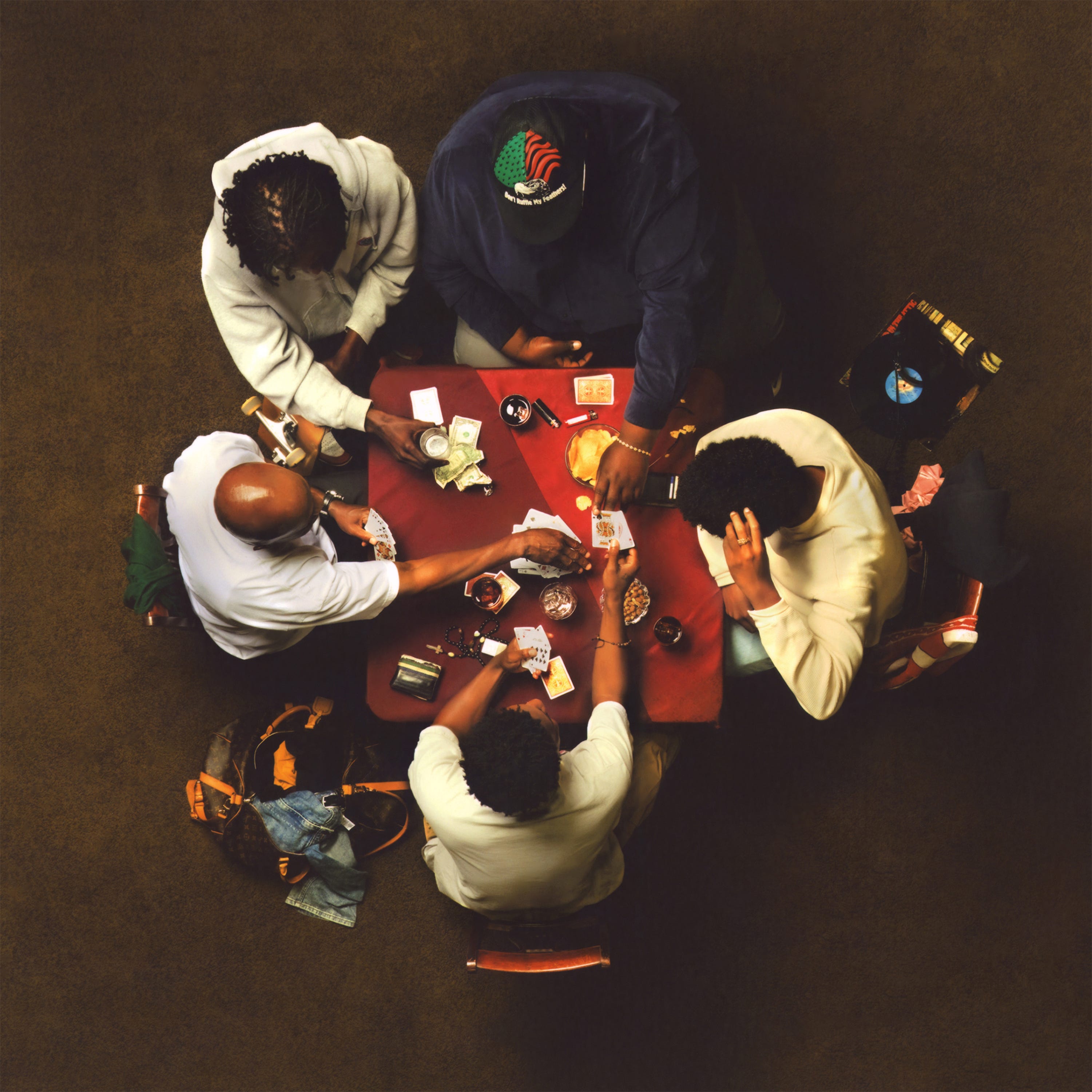
Self-sufficiency was the order of the decade. From East Flatbush came Chuck Strangers, rapper and producer, who came up in the Pro Era collective, making records for others’ breakthroughs before Consumers Park and A Forsaken Lover’s Plea, the loops and verses from the same hands, Strangers could have continued to commandeer for his own glory on the boards, for Glory of the King’s Hand, but he passed the production reigns once more to Preservation, Kenny Segal, the Alchemist, and an underground crew, he saved one beat for himself and declared his intentions for the rest, “I wanted to make better songs that people might want to hear again.” He moved to LA some years back, continuing to write about the blocks he left.
On “Intro,” he recounts childhood through one shared controller between kids, love found in the annex building, little brother tagging along, begrudgingly, measuring the distance with a steady cadence, “It’s been a long time since 23, it’s been a long time since New York City.” He’d have to lie to himself, tell stories for the joy of it, he freely admits, but the glory was its own reward. Faith is the other currency, and he guards that as a gambler might, “a hard card to play when you got options to weigh.” The present tense is the only assurance on “L2LL2C,” “There’s no forever, that’s a lie to feel better/God laughs at our plans,” while a label tries to herb him 20 days into his net 30. Obii Say hurls dice through “Miracle Miles,” snake eyes, hands shaking by their shoulders, sure on one rule, “All I know is what you get depend on what you sowed in.”
Che Jessamy gets a mic time equal to Chuck Strangers. “Malcolm” is recited from the government name he was tagged with, and the memories that come with it are visceral: the scratching of mice within the walls, the pork fried rice and tropical Sprite, no water till he was nine, a Fiji bottle opened up for the one time. He saw the tourists leave when the excitement dimmed. He wears that same nerve on “Solo,” stepping over a fentanyl zombie in the lobby like Iverson, clocking the check that comes in the mail every 3 months, forgetting to thank God, admitting outright that he never came to terms with the possibility of failure. The memory that sticks is smaller, a child singing “it’s the first month” before he knew what welfare was.
The dead keep their seats in “Goodfind,” qhwew he sends his respects to both kinds of gone, “Love to the homies that’s left, love to the homies who left,” then tells his mother he needs a big gold chain while taking her silence as instructions not to rate things; his brother looks him in the eye and feels the same. He asks on “Class Pictures Reprise” what a friend is worth and how anybody would put a number on it, then answers in the same breath on a memory of wings from the spot, hard fried, split amongst the guys. “Rebeldia” is where the losses are spoken, every night ended with amen, every day began with ache, a couple friends lost, a few good men down, and the most straightforward wish he had, “Mama I want to sing.”
Handing off the boards changed the complexion of the room. On “Breaking Atoms,” the location is Westlake, the treats are cookies out, the wine is pouring, Marlon is asleep, the trio Human Error Club are improvising on the verses with Fender Rhodes and drums. billy woods speaks in warheads, launch codes on the nightstand, heavy water through the reactor core, and the most straightforward sentiment on the record, “I got a chest full of medals, but my baby got a purple heart.” Zeroh answers them both: “Freedom ain’t fair.”
He’s most despondent in “Torn in Two,” between “Damned if I don’t, damned if I do,” speaking on money as a young Black man and wondering who will understand the planning after the dance. He offers a stern warning to somebody on the margins, “You ain’t got you no gun/Pause this shit and dial 911.” He follows it up with labor, fingers calloused, an invoice worked out on the celly, working. “Everyday,” the one beat he saved for himself, is looser company. He ties balding to balling, reaches for Jordan in ‘96, states his terms as a friend, “I always been the nigga you depend on or put your bread on/Or told you you was wrong when you was wrong,” while Obii Say offers up a survival rule of his own, “If you ain’t jumpin’, you not guaranteed to be around.”
Around spam dinners and a radiator banging all winter, the childhood in “Price Is Right,” where Bob Barker proclaims him a winner in a dream and borrows Jadakiss for the rent question: “Like Jadakiss I’m wondering why/Fuck pay rent die.” Born in sixth place, by his own math, he’ll name the credit due to the same, “Our audacity made us, the tenacity saved us.” By “G Pack” he’s in closer quarters to rich. Five years ago he couldn’t buy nothing; now he tells you what he thinks for a living, never needed nobody to book him, never needed nobody to manage him, made 12 and tucked 10 away. Somewhere in the math he forgets the number, “Forgot the amount/Let’s start again.”
Due to the amount of gratitude in his words, he’s rarely unguarded. The wariness in “Ski’d Up Reprise” is long-practiced, “Smiling faces with they knives tucked waiting/To cut yo throat when you ain’t lookin’.” The song’s Brooklyn is immediate, a run out for a salmon chop cheese and a Gildan white tee, and its primary grief is family; the mother who kissed and hugged him turns to judgment as the years wore on, a disdain he can now parse as something akin to love. That same combination of hindsight and affection is the most mature gesture on the track. He’s spent the decade-plus making other rappers comfortable on his beats; on a reprise of bodega run, he finally sounds like he belongs.
If you or someone you know is struggling or in crisis, help is available. Call or text 988 in the US, or dial 911 in an emergency.
Great (★★★★☆)
Favorite Track(s): “Malcolm,” “Solo,” “Rebeldia”