

Album Review: Good Intentions by Ego Ella May
A South London songwriter turns prayer, diaspora grief, and unglamorous love into her sharpest record yet.
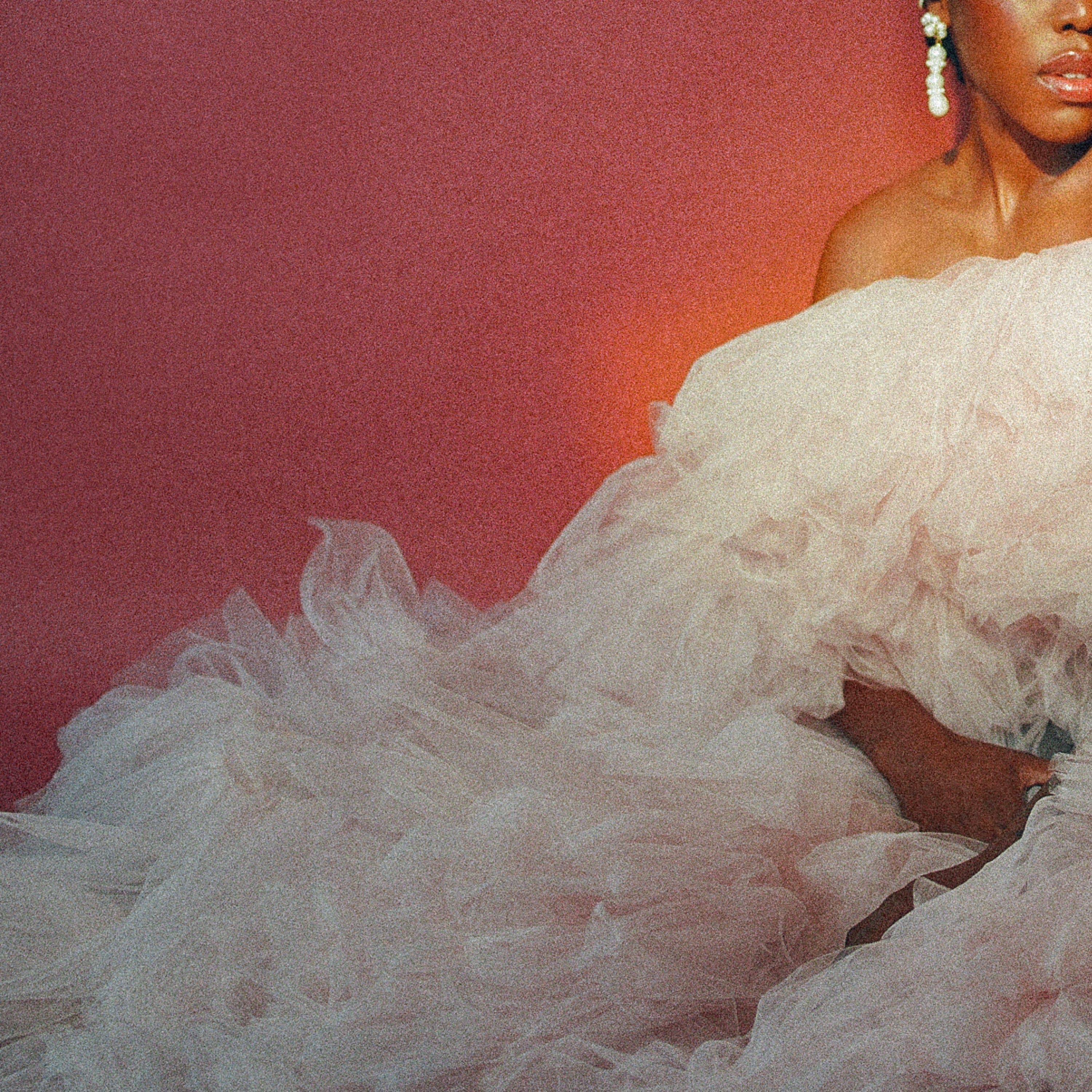
Somewhere on “Potluck Baby,” a woman calls her mother and hears Igbo coming through the phone. She can’t follow the words. She tries to understand, fails, and the rage hits:
“Feel rage as I land
My head into my hands
Like why didn’t you teach me?”
She flies back to Nigeria, nods along as relatives laugh, and repeats “o dị mma,” I’m fine, because it’s the only Igbo she knows. Ego Ella May, born in Croydon to Nigerian parents, named for Ella Fitzgerald, self-taught on guitar from the age of 19, put out a debut called Honey for Wounds in 2020 that won Best Jazz Act at the MOBOs and got her songs placed on Insecure, Sex Education, and Queen Sugar. None of that solved the problem “Potluck Baby” identifies. “Who’s to blame/For what they were promised when they came,” she sings, and the “they” is the immigrant generation, her parents, who assimilated at the cost of handing down the language. Then a physical memory. She closes her eyes, feels warmth in her blood, heat on her shoulders, “the total polar to what we settled for/In this red, white & blue.” The chokehold still ensues, she writes, hidden by the green grass. Good Intentions is her second LP, and this cut sits near its center like an open wound that nobody dressed.
The debut’s political frustration ran toward the general. “How Long ‘Til We’re Home” asked what it meant to feel too African for Britain, too British for Africa. Six years later, the frustration has names and addresses. “We’re Not Free” calls out Keir Starmer’s government directly:
“Tories out, but policies remain
What d’you mean trans rights are up for debate again?”
With Melo-Zed on the production, Starmer gets thanked for scrapping the Rwanda deportation scheme, then asked whether that was about morals or just money. “The money’s spent/On what? No-one knows/It won’t feed our kids, it won’t ceasefire/And it won’t heat up our homes.” Part of her wants to retreat. “It’s above me, it’s with God,” she concedes, “I mind my business, tend to the earth/And keep a sovereign heart.” But a still, small voice (the phrase from 1 Kings 19:12, the whisper God sent to Elijah) slices through the self-protection: “You’re not free ‘til everyone else is.” The song doesn’t pick between political engagement and private faith, as it holds both and admits neither is sufficient.
Love on Good Intentions is never a settled condition. The Alfa Mist-produced “Don’t Take My Lover Away” was written about her husband during a health scare. She calls him “Venus as a boy” (the Björk song), traces his nose at night, tells us their paths intertwine so fully that “I’m him & he is I.” She knows the fear of losing him is irrational, admits as much.
“Can’t help feeling this will fall through
‘Cause I’m hooked.”
She stays afraid anyway, because happiness has always felt conditional to her. Then “Tarot” upends the whole thing. She gets a reading. The tarot reader declares her partner isn’t the one. “What am I supposed to do now?/Break your heart, and run?” She sees good fortune, a lot of green, money flowing. Joni Mitchell’s “River” surfaces in her mind: “Gonna make a lot of money/And I’m gonna quit this crazy scene.” As TAVE and Beat Butcha gives her a unique soundscape, Ego Ella May counsels her to take it with a pinch of salt. The song stays there, funny, worried, stuck between trust in what she has and the pull of what an outsider’s cards predicted. These two tracks together draw the record’s emotional borders. Love that begs God for protection on one side, love that wonders if a deck of cards knows better on the other.
On the title track, May prays out loud. She asks for understanding, for sincerity, for her friends to know she’s always a listening ear, and for her enemies to fall. Her brother seconds the motion: “fire, bun dem all.” She hopes there’s light at the end and confesses she doesn’t know what’s coming, only that she’s not alone in not knowing. The segment shifts into a Buddhist metta chant: “May I be happy/May I be healthy/May I be safe/May I live life with ease,” then extends the same wish outward, to you, to whoever. The LP’s spiritual vocabulary borrows from everywhere and treats every source with equal sincerity—Christian scripture on “We’re Not Free,” a metta chant here, a tarot reading on “Tarot,” a dream visitation on “Hold On” where someone appears with a clean soul and needs a word they’ve never heard, a plea to Mary on “Back to Sea.” None of these traditions cancel each other out. They’re all tools for coping with uncertainty, pulled from the drawer as needed.
“Footwork” is the loosest moment here. It’s 2am, Detroit house blaring, someone passes a joint, and May makes eyes with a stranger across the room. “Tonight I’m Rick James/I’m high,” she sings, meaning she’s out of character, unguarded for once, not the woman who spent days looking inward thinking that would keep her safe. “Beau said ‘come dance, the gods recommend’” is the line that cracks the record open. Someone told her to stop thinking and move her body. She did. “What You Waiting For” works the same nerve from a different angle, a motivational address aimed at herself as much as anyone. In another life you’d be winning, she tells us, that’s how you see it. She has said the song was written about summoning the belief needed to make this LP. “If not now, when?” The two joints give Good Intentions its necessary counterweight. A record this concerned with diaspora grief, political anger, and fearful love needs moments where the songwriter lets herself go stupid on a dance floor.
Nothing on the record cuts deeper than “Sister.” It’s addressed to a woman in a bad relationship. Fell for him at 25, ten years later she gets the ick but won’t leave. He presents as impotent, content doing nothing. She still takes him back, perfects her smile in public so nobody sees, cries at night asking what she’s doing. “What you being a saint for?” the chorus asks, and it’s not rhetorical. There are children involved, and May won’t pretend that’s simple (“I would never make it so/I know it’s difficult.”). But she won’t pretend it means you stay, either. Then the generational curse kicks in:
“Bloodshot eyes, third time this week
If I speak
Mother’s fate looks like it ain’t
Only reserved for me.”
The sister’s life repeating her mother’s. The father prays to break the curse. “God, are you busy?/Feel free, intervene/Could be easy.” That last word (easy) lands with the full weight of knowing it won’t be. May addresses other women the way she addresses herself. No judgment, no pretending the answer is obvious, but no lying about what she sees. Good Intentions is the rare sophomore record that improves on the debut by getting more specific. The music here is someone who gave herself permission to be unhurried, and then used the extra time to write harder.
Great (★★★★☆)
Favorite Track(s): “Don’t Take My Lover Away,” “Potluck Baby,” “Sister”