

Album Review: GOOD TO BE BACK by Hype
The Cameroonian-born, Atlanta-based rapper-producer returns with a second album that swings between spiritual warfare and secular exhaustion, trying to guard his heart while admitting he almost quit.
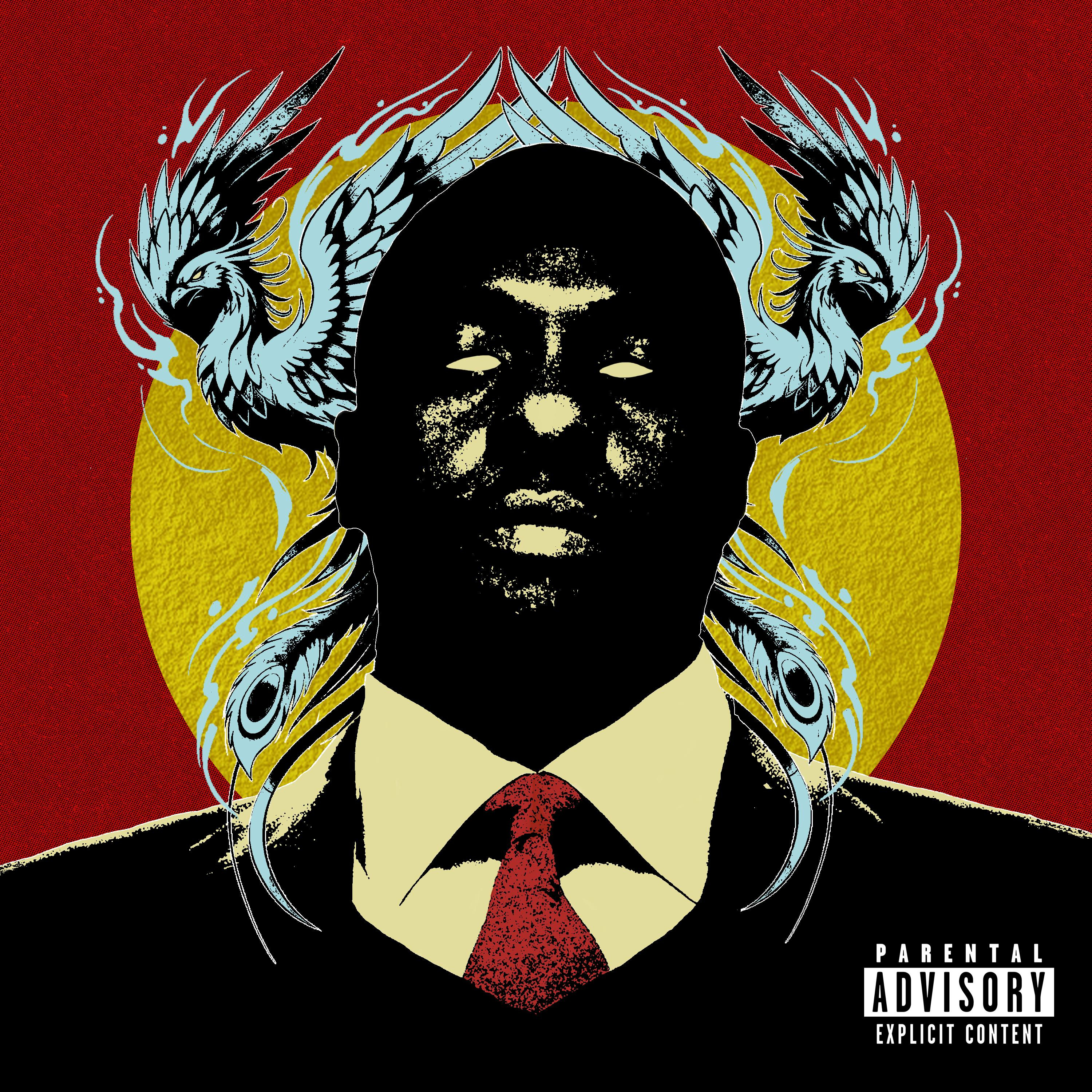
Fidelis Folifac, known as Hype, moved to the U.S. from Cameroon in 2010 and began writing rhymes around twelve, before getting into production at sixteen because he wanted to control his sound instead of waiting on someone else to deliver. That independence is reflected in the album’s design: these aren’t leased beats or canvases borrowed from bigger names. They feel like rooms he made himself, and the furniture is arranged for his body in particular. The drums on “Guard My Heart” land with a muffled thud as he layers his laments in long, uninterrupted stretches of verse, and the pace is generally slow and unhurried throughout the album, giving words time to accumulate until you feel the burdens they’re cataloguing. When he raps about walking into a new light with the spirits guiding him, and immediately turns to a warning that the devil will know to forgive him, the juxtaposition is no accident. He’s reporting live from a man in progress who still reacts violently to disrespect.
At the end of GOOD TO BE BACK, there’s a spoken interlude in which Hype thanks the listener and then bluntly reveals that he was going to quit music. He probably still will. It’s not a revelation so much as an aside, the way someone might mention they didn’t eat breakfast that morning. The album simply exhausts itself. Over the course of this album, he contends with a faith that never achieves peace, anger that interrupts salvation, and a body that won’t quit when its spirit is ready to. He asks God to guard his heart, but then he threatens to hurt someone in the very same bar. He urges patience, but confesses that he holds grudges and is petty.
The faith language here is constant but never calm. On “Higher Power,” he questions who’s next to step since the last great prophet, referencing Muhammad and Jesus, before questioning why he’s scared of prison if Malcolm gave his life. He calls on a higher power to use him, then admits his politics would get him convicted. It’s not devotional music in any traditional sense. It’s more like a man arguing with the ceiling, asking for protection while admitting he may not deserve it. Benjamin the Brain guests on that track and matches the tone, rapping about addressing the devil for all the shit he started and claiming he’s part Martin, part Malcolm, part Noah, yelling about a coming flood.
But the preparation keeps getting interrupted by the body’s refusal to cooperate. “If It Makes You Feel Better” is one of the most straightforward songs about depression and intrusive thoughts you’ll hear this year, and Hype doesn’t cloak his words: He admits he’s not suicidal but needs that ease, that he’s too close to something he can’t even explain. He confesses that he’s self-sabotaging, breaking down in front of people who can’t seem to see but maybe he hates when they’re too observant, he doesn’t even know. The hook offers little comfort to millions of people who feel this way. That’s just the company in the dark. He talks about intrusive thoughts spilling over his conscience, about keeping his problems to himself because everyone is dealing with something and it’s hard to care. Then he references eternal slumber, stopping his heart with reckless drinking and lethal dosages, killing demons that hold him hostage. The delivery is measured, almost casual, which makes the subject matter that much more impactful.
“Workin’ Thru It” transitions this into something more embodied. He talks about 3 AM workout sessions as therapy, about trying to hold back tears even though Jesus wept, about hiding fears behind ambition. The intrusive thoughts are loud but he’s trying not to hear them. He tells himself to get a grip but feels his hands slipping. Southside Vic enters on the second verse and changes the mood completely: his section is more relaxed and amusing, talking about chocolate cake, searching for something to let him know if his granny falls, and an ex who tried to hurt him through a blog. The contrast is effective because it doesn’t pretend the two moods are reconciled: Vic’s verse is a reminder that other people struggle differently, and the song’s hook, “I’m just working through it all,” applies to both verses—the shared labor of staying functional.
The political material on the album sits next to the mental health talk without any smooth transition, which feels accurate to how these things actually coexist in a mind. “The Count” opens with Hype returning after his wounds healed from backstabbing friends, his heart turned to stone from life experience. Then the hook starts counting bodies: one, two, three, four, up to ten, asking how many more are in store. The second verse gets specific about what’s generating those bodies: babies turning to casualties and being treated casually, the ruling classes needing execution, peace and restitution as the goal. He calls out people who throw fists but whose politics don’t reflect the movement, who turn soft when confronted. The anger is genuine, but it stays tethered to observable failures rather than floating into abstraction.
“Still Dreamin’” splits itself between personal ambition and collective liberation. The first verse is standard competition talk: he wants to be a rap star, not for money but for competing with the titans, running the summer, dropping fire. But the second verse pivots hard: he’s dreaming of freedom, rest in peace to Assata, liberation for all of Africa’s sons and daughters. He says he doesn’t believe in karma, which is a strange admission for someone who spends so much of the album praying. He talks about breaking out of the matrix, plotting the fall of Rome, and high-powered thoughts he’s been conjuring. The transition between verses mirrors the album’s larger structure: the personal and the political happen to occupy the same person.
“Root of Evil” is the most direct in its critique. Hype opens by saying America’s on fire, then walks through the contradictions: they don’t want us smiling unless we’re shucking and jiving, they just want us dying from bullets. He mentions the Capitol breach, Nancy Pelosi’s office, and the discrepancy in how violence gets policed depending on who’s doing it. Acacia Markel joins and brings her own history: growing up around crack fiends thanks to Reagan, runny doors by Sankofa huts, kids in Congo barely hanging on so someone else can hang up a flat screen. The song ends with both of them having catalogued damage. The evil has roots that neither of them can pull up in four minutes.
But the album doesn’t stay in that register. “Single” and “I Wantcha BAD!” show Hype writing about desire with the same directness he brings to prayer and politics. On “Single,” he admits he doesn’t like being alone, that maybe love isn’t in God’s plan for him, that he’s a strict motherfucker who won’t tolerate disrespect or shoes worn in his space. PHEROW IX’s hook, “We don’t like being single, goddamn,” is plaintive, almost childlike in its honesty. There’s no posturing about preferring solitude. He wants what he wants and he’s tired of pretending otherwise. “I Wantcha BAD!” goes further into the physical, describing synchronized swimming, leg-shaking, and the goal of making someone feel as if they're healing. The writing stays sensory and specific: he’s three glasses deep into a bottle of wine, trying to figure out why this person isn’t his. The desire songs are just another appetite the body refuses to abandon.
“Paradise (Good Smoke)” uses a rap-as-drug metaphor throughout: bars hitting like good smoke, lungs getting open, feels like THC is intertwined in sentences. It’s a familiar conceit, but Hype commits to it fully enough that it works. He describes being in a flow state, eyes low in the booth, expressing raw emotion that’s concentrated and potent. The song functions as a statement of purpose for why he keeps making music even when he wants to quit: the act itself produces something the body needs. “The Golden Child 4” with J. Arrr returns to the competitive mode, with Hype calling himself the holy trinity of microphone, beat, and self, threatening head shots and scrambled brains for breakfast. J. Arrr matches the energy, claiming lungs like Wiz Khalifa and Snoop, offering to show someone the ropes to compete with their noose. It’s skilled, confident, occasionally nasty: the version of Hype that sounds like he never doubted himself for a second.
The features across the album fulfill distinct purposes. Steph Simon on the title track comes after Hype has already decided he is back, and drops a verse about recalibrating, self-validating, carrying love on broad shoulders and serving like fresh dope out the stove. His appearance is confirmation that Hype is not working alone. There are other rappers in this lane prioritizing bars and introspection over hooks and streaming optimization. Tommy Quest on “Menace” brings red clay Georgia energy, likens himself to Crash Bandicoot, and asserts the title track’s thesis: that the world considers him a menace. The Joker dialogue samples at the beginning and end of the track are a tad heavy-handed, but Quest’s verse has enough character to merit them. Benjamin the Brain and Acacia Markel, as discussed, wield anointing and political consciousness in their respective verses. The features help Hype’s presence, orbiting around him and contributing texture that he could not have accomplished alone.
The album’s weakness is revealed in moments where Hype relies on generalized dominance language that could apply to any skilled rapper: top five dead or alive, smashing egos, finishing others’ careers. These assertions do not pack the punch of his confessionals about battling depression or his specific examples of political hypocrisy. The flex bars are solid but interchangeable. In the same vein, some of the threat language feels unearned when he cautions about names being on bullets and drive-bys, it feels like him code-switching to a harder inflection. This is mirrored in the blanket political moments (“fuck the government,” “overthrow the system”). These lines do not have the first-hand depth that standout tracks possess. These themes are certainly not failures, but represent areas where staying in the successful pocket could have paid off.
What is consistent across all 17 tracks is a persona that does not feign integration. He is not an artist presenting a problem solved: the Christian who learned how to hold his tongue, the political critic who made peace with injustice, the lover who learned to trust. He is revealing a man still vulnerable to outbursts. The spoken intro on “Release” embodies this attitude: he expresses gratitude toward the listener, admits that he was going to quit, says he still might, then ends with a verbal shrug (fuck it, let’s just dance). The song that ensues is about releasing unnecessary tension through dance, how emotions can be high and you might just pop off the wall. He describes feeling like a rose that grew from a wild garden. He’s not asking for forgiveness about it.
The best run on the album is from “If It Makes You Feel Better” through “The Count:” four songs about depression, labor, spirituality and politics that never compartmentalize the issues at hand as though they aren’t occurring simultaneously. This is one life, and Hype copes by working, by writing, by creating beats to fill with himself. Whether or not that will be enough is unclear across the album.
On “Mind Over Madness,” he admits he is an amateur when it comes to handling feelings, that he kept things bottled inside for so long in order to keep everyone safe. Now, “out the gates, feeling freedom unrestricted,” he asks for space. All the years he had to mask his demeanor were saving face, and heartbreak became his saving grace. The prayer at the end of the song is not a victorious one. When the sky falls and Heaven is calling, he’s here to answer. When the waters rise and the winds are revolving, his feet are planted. He’s talking to God while tears fall, thinking of what he made it through. Not what he became. What he survived.
Solid (★★★½☆)
Favorite Track(s): “If It Makes You Feel Better,” “The Count,” “Root of Evil”