

Album Review: Hagler Hearns by Numbz & Thought Provokah
Thought Provokah maps his career onto Marvin Hagler’s fight record, bout by bout, with real dates and round numbers. The most obsessively researched concept album in underground rap this year.
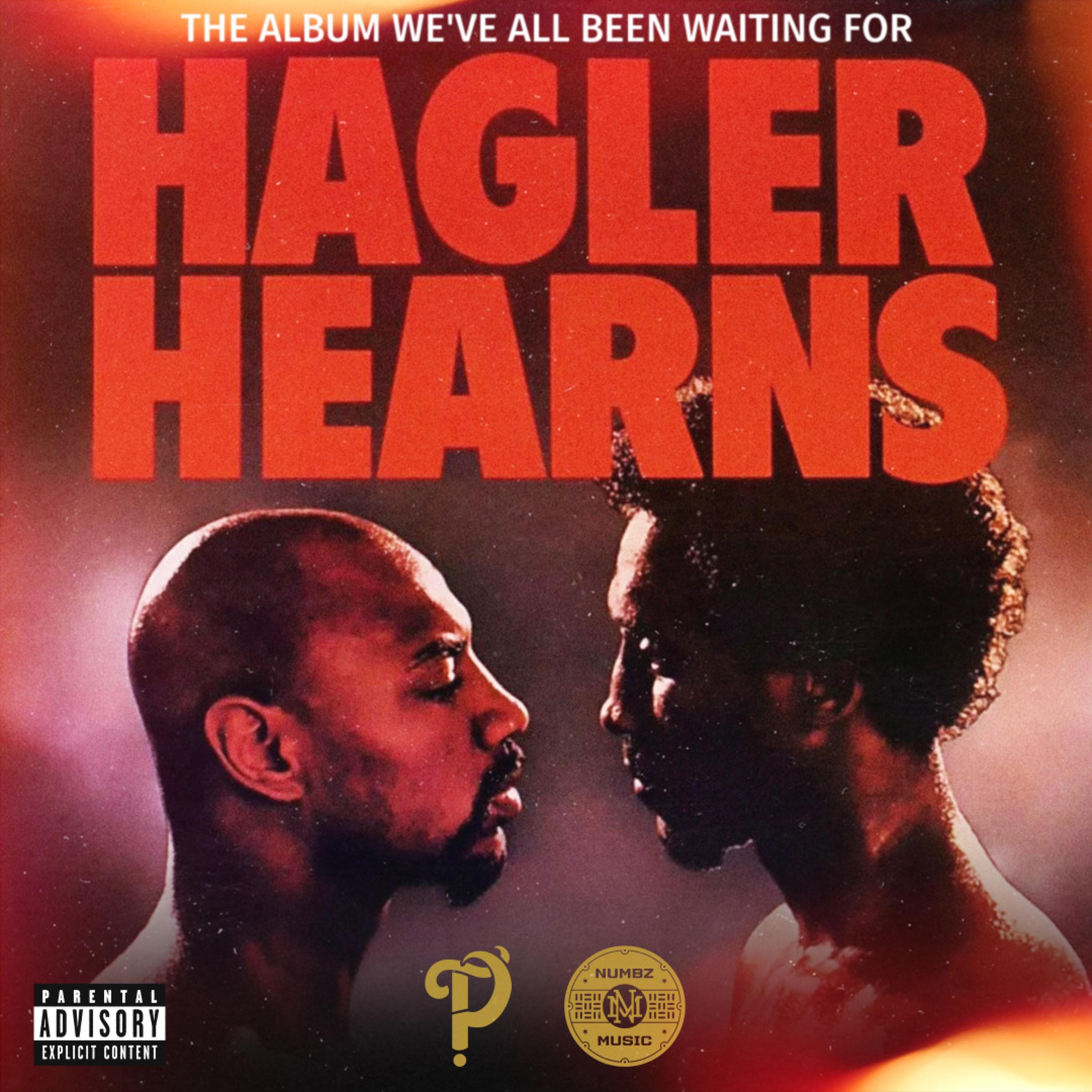
Marvelous Marvin Hagler was born in Newark, New Jersey, made twelve title defenses as undisputed middleweight champion, and retired without a loss that anyone outside the judges’ table believed was fair. Numbz, the producer behind every beat on Hagler Hearns, was born in Newark, too. Thought Provokah, an independent rapper from Port Jervis, New York, has spent the better part of five years releasing music at a pace that shrinks most underground catalogs by comparison—twenty-one projects between 2020 and 2025, engineered mostly by the same person, promoted mostly by himself. He drew a direct line between that grind and Hagler’s. Twenty-four bouts in 730 days, fifty dollars a night, and a title shot that didn’t come until fight number fifty. Hagler Hearns asks you to take the comparison seriously, and Thought Provokah did the homework.
Most rap that borrows from boxing settles for the general, content with ropes and rings and a knockout or two. Thought Provokah goes deeper than the iconography. He traces Hagler’s 1979 bout against Vito Antuofermo, his fiftieth contest, the controversial draw that denied him the middleweight belt, and bends its bitterness into his own storyline:
The inferno of Antuofermo, internal, eternal
It burn slow when the bouts don’t mean a W
Using the flames to make a name how Marvin did
’Til y’all believe it, I’ma make y’all call me marvelous.”
Then he gets more granular. Hagler’s ledger of 46-2-1, getting dropped by Juan Roldan before scoring a tenth-round TKO, the Carl Leonard bout. On “Stop the Bleeding,” he reconstructs the first round of the actual Hagler-Hearns contest, Hearns opening a cut on Hagler’s forehead, referee Richard Steele almost calling it, Hagler demanding to continue. A sample of Hagler’s own voice fills in the rest, the fighter recalling how “in the back of his mind” they were going to find some way to take away what he’d earned. The LP treats this history as primary-source material, and the effect is a rapper who studies the tape the way a prosecutor would.
Numbz’s production strips the floor bare. The beats run on samples, some drumless and others with trap-esque drums, with the broadcast commentary from the Hagler-Hearns bout threaded between songs. That austerity turns Hagler Hearns into a rapping album above all else, and Thought Provokah fills the negative space with a pen that won’t sit still. His references shift constantly. On “War,” Hagler gives way to professional wrestling. He’s in his “attitude era,” “prickly as Cactus Jack,” counting pinfalls, comparing his opponents to Heather and Helmsley, rushing the edge “with more spears than Micah.” The jump from boxing to wrestling could seem scattered, but both belong to the same competitive mythology he’s assembling, and his comfort with the allusions prevents the verses from tipping into list-rap. He lived in these worlds because he spent time in them, and the offhand ease of a line like “a heartbeat kid when you just strip it” says more about his fandom than a thesis sentence would.
The verses into “Doubt in Mind,” Thought Provokah stops performing with confidence and starts talking to himself:
“Here I go again speaking to myself like I don’t deserve it
Maybe success makes me nervous
Self-sabotage on purpose.”
The rest of the verse holds that register. He refunds compliments, signs “deals with doubt,” and describes being “timid with the vision, second-guessing ambition” before arriving at a small, hard-won claim, “Now conviction in the mission got me speaking like I live/And I do.” No bravado follows. This shifts to observation, people confusing humility with timidity, confidence with ability, and he leaves it there, “quiet as kept.” The last thing he mentions is catching the moment and holding it, which is something a boxer would say about a punch he barely saw coming.
Hagler trained for the Hearns fight at a camp in Provincetown, Cape Cod, alone. “The Melody of Isolation” borrows that detail and turns it domestic. Thought Provokah’s spoken outro lays out his own version plainly, “I be going to the studio by myself most times. Ninety-five percent of the time, it’s me and the engineer. Ain’t no drinking or smoking in the studio. It’s not a party.” There’s nothing glamorous about it. He ticks through a regimen—Cape Cod swimming, shadow routines, sparring “with serenity”—and the Hendrix and Brady Bunch references that pepper the verses give the isolation a lived-in quality, a mind drifting through pop culture while the body holds still.
Rome Mallory adds a guest verse on “In the End It’s All Marvelous” that runs through the Ali-era ring with Duran Duran puns and Roberto Duran callbacks, and Thought Provokah tallies Hagler’s sixty-four bouts before Hearns, the eleven years at one-and-one in title decisions, and says simply, “He’s a champion of where I am.” Then it addresses Richard Steele and Tommy Hearns, ghosts on both sides of the conversation. That the album saves its domesticity and its dead fighter’s unanswered question for the same song is the sharpest choice Thought Provokah and Numbz make together.
Great (★★★★☆)
Favorite Track(s): “The Inferno of Antifermo,” “Doubt in Mind,” “Stop the Bleeding”