

Album Review: HATE ISLAND by Teller Bank$
The Denver rapper who got swindled out of his house made a record about what guilt costs when the money shows up. He’s arguing with himself and losing.
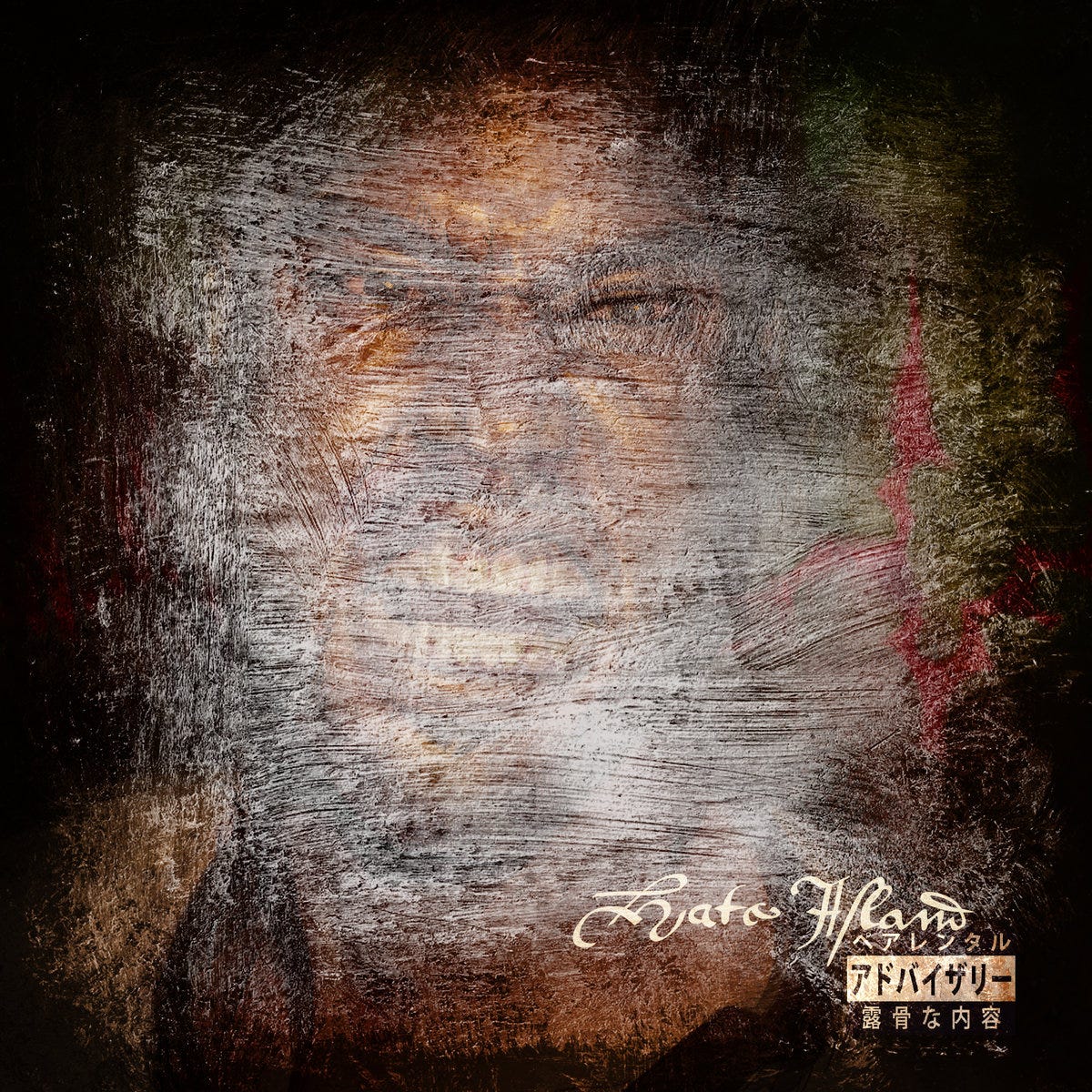
Teller Bank$ has put out more than 30 records on Bandcamp, and at some point, the math stops making sense as a career and starts making sense as a compulsion. Born in Denver, swindled out of his house by white people (his words, and the title of a 2023 album), now based in Des Moines, Iowa, still recording. Five Skull Face albums dropped on his birthday in 2022 alone. None of this information prepares you for how dense and how serious HATE ISLAND is, or how little Teller seems to care whether anybody keeps up.
DRUG$$$, his collaboration with the Philadelphia production crew TripleDollar$ign (Philth Spector, Q No Rap Name, Killer Kane), came out in August of last year and told a story Teller described as “what if Rico, Mitch, and Ace were all one person and that person was a rapper.” The hustle record, the come-up record, the Get Rich or Die Trying record. HATE ISLAND picks up seven months later with the same producers and flips the premise. The protagonist made it, has the money, and now can’t stop dreaming about the people he shot, the plug who died in an accident before he could grieve, the fiend he watched try to sell her kids. DRUG$$$ was about getting out. HATE ISLAND is what “out” actually feels like.
The TripleDollar$ign beats on this album chop soul and funk loops into thick, abbreviated phrases that leave just enough negative space for Teller to bark into. He raps loud. His voice pushes forward at full volume on almost every song, filling every pocket the samples leave open, and when the beat shifts on “George & Javks” into an uptempo, almost dance-floor feel, his delivery barely adjusts. He stays loud. The consistency of the sound across a lengthy record could wear thin on a lesser writer, but Teller packs so much into each verse that the production mostly needs to hold still and let him talk. When the drums thin out or a loop flips into a quieter chop, it reads less as a mood change than a brief exhale before the next confession.
On “A Hate Supreme” (the Coltrane nod is obvious and Teller doesn’t play coy about it), he claims he caught a body, warns don’t tell, describes shooting someone in the forehead five times, moves enchiladas, and then apologizes to his mother:
“Sorry momma had to do it
Know you raised me smarter, but life is stupid.”
He drops it and moves on to serving fiends behind King Soopers. “HATE HATE HATE” opens on four flats, leads through serving in front of a church on Colfax and checking Facebook from a burner phone for missing persons ads, and then swerves into mass incarceration, stop and frisk, American imperialism, without ever pausing to announce that it’s about to get political. The jump from “I changed the locks” to “slavery ain’t ended” occurs mid-verse, same breath. On “Gang $hit,” the 9mm weighs 2 lbs and he rattles off killing a cop every day for two weeks before changing clips, and in the same song he’s at “From the river to the sea our blood always flows the farthest” and “They gave us AIDS/They gave us drugs/But we gon’ make em wish they never gave us guns.” Street bars and political bars aren’t separate categories for him. Colfax and the Middle Passage are the same story told at different scales.
“Benny & WE$ 3” (the third in a series stretching back to White People Stole My House) has Rent Moneyy on it, and the song lurches between Boost Mobile boosting and sharecropping, Post Malone in blackface and Booker T, before Teller arrives at something he doesn’t seem happy to have figured out:
“A blood sport
been rhyming bout killing niggas for a long time, I thought wanted more
I thought niggas was sure
I thought niggas was warriors, but we was corner boys.”
The chant that follows, “NIGGAS IS NOT LIKE US,” doesn’t sound triumphant. It sounds exhausted.
The guilt on HATE ISLAND shows up inside the money talk, inside the flex. On “G-Uniiitttt,” Teller holds material gains in one hand and overdoses on guilt with the other, wears his tears for war paint, prays every day, then buys product in paste because he had to adhere to the plan. His plug died in an accident—”was really my friend”—and he didn’t have time to let it register because he was state to state making ends meet. On “$6,666,666,” he’s got half a brick of fentanyl and a box of bullets and then he tells you,
“I told my therapist I feel like sellin drugs my self care
I told my nigga ain’t nobody made a million playin fair.”
Teller stashed a block in insulation by the engine on “Let the Hate In,” did the speed limit while the pursuit of happiness eluded him, and served in front of his son. His forefathers drank firewater and spoke cursive, spellcasting rootworkers. A therapist can’t solve his problems because he already knows what’s wrong with them. He cleaned the aftermath of a shooting and can’t undo what he saw, doesn’t get good dreams, doesn’t get good sleep, and didn’t have good friends. People knew him as the reaper before he started selling features. Two careers collapsed into one sentence—the dope game and the rap game—and the joke is that the rap game came second but sounds exactly the same.
One of the DRUG$$$ tracks was called “Look Ma, I’m billy woods!!”—a wink at the lyric-first underground Teller runs adjacent to, the audience that gives you a funny look when you spit gun bars in a cipher. HATE ISLAND won’t smooth that over. He raps about cooking crack and the bones of his ancestors at the bottom of the Atlantic in the same verse on “They Hated Jesus.” He makes indentured servant jokes and then goes, “Matter fact, I’m still trappin’ got em for 1600.” He won’t make you comfortable. On “Hate Island,” the title song, he announces the rest of it “just happened,” and he chose not to write it down. For a rapper who self-produces, mixes, masters, and drops 30-plus records, that’s a strange admission. He floods the zone with words and then stops mid-song to declare some things are better left undocumented.
Great (★★★★☆)
Favorite Track(s): “A Hate Supreme,” “HATE HATE HATE,” “Let the Hate In”
Definetly a favorite this year. He’s so underrated it hurts