

Album Review: Highs + Lows by KADEEM.
A ghost musician steps to the mic and lets a wide array of talented guests confess on his behalf. The instrumentals never falter, but the voices carry everything.
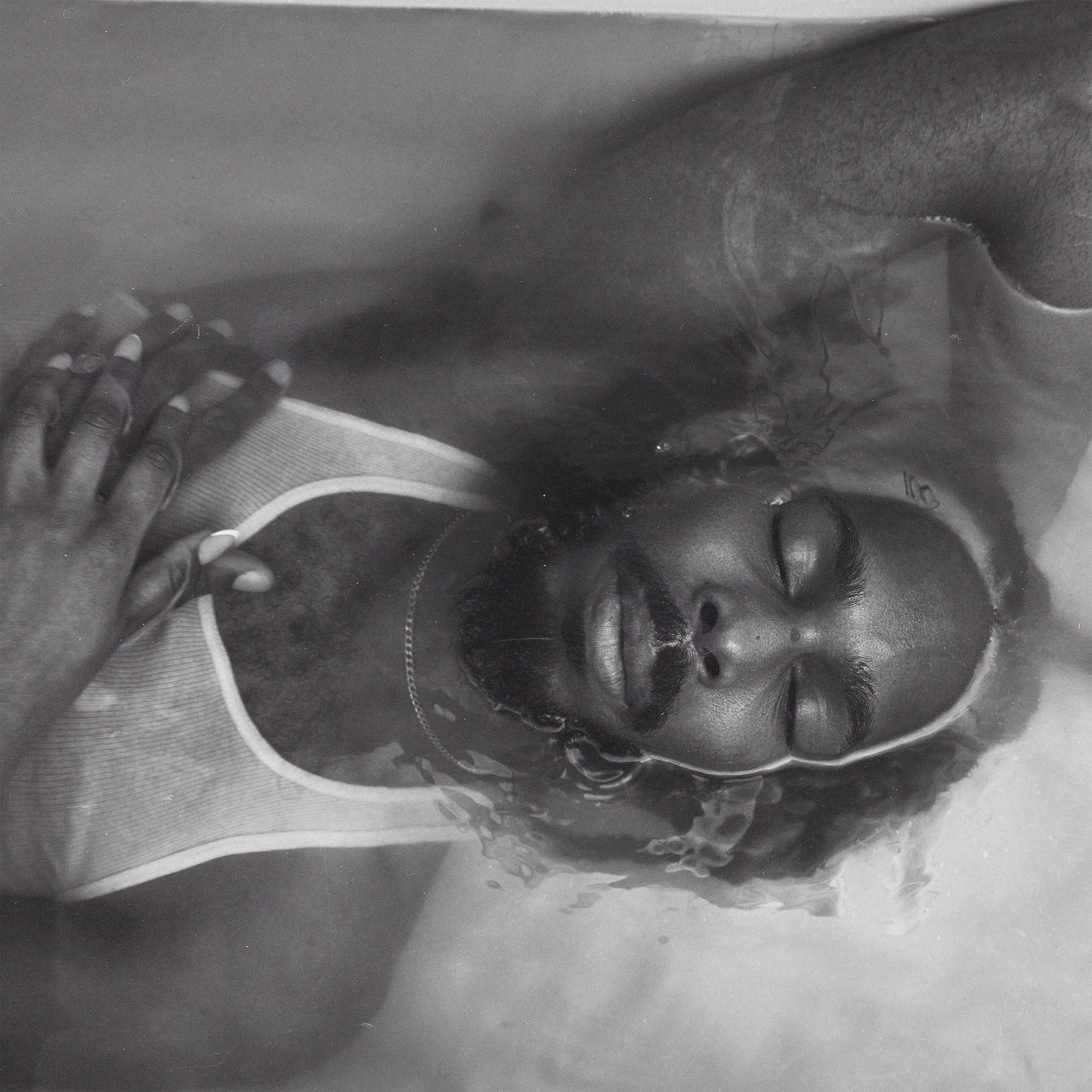
For years, the anonymous London collective SAULT dropped albums like packages left at the door. No press runs, no faces, just the music and a locked comments section. Behind their records sat a web of players nobody rushed to identify, and one of them was a Grenadian-Jamaican-British multi-instrumentalist named Kadeem Clarke-Samuel, credited under the alias BLK VYNL. He played keyboards, Rhodes, Hammond organ, and bass across SAULT’s Untitled (Black Is) and Untitled (Rise) in 2020 and Nine in 2021. He co-wrote five songs on Little Simz’s Mercury Prize-winning Sometimes I Might Be Introvert and later sat behind the piano on her Lotus. He played keys on Cleo Sol’s Mother. On Highs + Lows, his debut under the name KADEEM., he pulled the strangest version of a coming-out party imaginable. He produced, composed, and played nearly every instrument on every song, then handed all fifteen vocal slots to other people.
His guest list pulls from everywhere. Bilal, the Philadelphia neo-soul singer behind multiple stellar albums and helped build To Pimp a Butterfly‘s vocal character, takes “XTC” and wrings it into a falsetto plea about closing your eyes and falling “so deep you’re flying/high above the moon and stars.” The song floats on flugelhorn and a saxophone bed that fattens without ever getting busy. Nate Holder and Matt Roberts share brass duties, and KADEEM. tucks himself beneath them on bass guitar, keeping time while Bilal goes off-leash. Norwegian rapper Ivan Ave cracks open “Suede Memories” with the exact tunnel vision of pre-relationship grind: “I was married to the cause/climbing the ladders, no matter the cost.” Then he meets someone and starts boarding the wrong bus. His bars carry a wry Nordic deadpan that contrasts well against the warm, mid-tempo Rhodes chords underneath, and the phrase “a brain full of art like it’s about to burst” scans as funny and true at once. These early tracks paint infatuation as a gear-shift, ambition interrupted by a person who makes the ambition feel beside the point.
Scattered between the songs, the spoken pieces pull off something interludes rarely manage. On the intro, a woman recounts a man she’d marry without hesitation if he called today, and the specificity is disarming: “He wasn’t perfect, but what we were was, it was as easy as breathing.” On “Underwater,” DS1 measures emotional depth by how far into the water he’d wade. “Ankle deep is safe, come further/Okay, but knee-deep is as far as I can go,” he admits, and then confesses the idea of full immersion both frightens and thrills him. On “Self Love,” two women argue in what sounds like a real conversation caught on a phone mic. One insists all men cheat; the other fires back: “You don’t know nothing at twenty-five/All men don’t cheat until you pick them.” None of these people sound rehearsed. They sound like friends in a kitchen late at night, and that willingness to let people be uncertain on record—without cleaning it up—is the album’s quietest strength.
Lila Iké brings the record its most painful love song. “Lost in Time” pairs a choir against her reggae-inflected vocal, and she spends the whole track admitting contradictions she can’t square: “I was clearly distracted by pleasure/You treat me like leisure.” She has traveled everywhere and nothing erases the memory. She calls herself toxic. And then she circles back to the hook: “But I still want ya.” The honesty is plain, almost embarrassing, and the song earns that because it never pretends she’s above it. On “Focus,” Deyah raps the album’s sharpest, funniest verse. She booked a hotel room with an infinity pool to impress someone who never even watched her Instagram story. “I’ve joined the queue of heartbreaks and pitiful gimmicks,” she spits, and the self-awareness stings worse than the actual rejection. J Warner, on “Wish You Well,” bends a breakup into the ugliest formulation of goodbye: “I hate to say it, but I wish you well/I hate that I do and it kills me.” He’s furious that he still cares, which is a much more interesting place to be than either pure rage or pure sadness.
The album’s heaviest weight, though, falls on Sampa the Great and Ghetts, two guests who arrived loaded and left the deepest marks. Sampa kicks off “Self Love” calling herself “a fucking renegade” and a “degenerate,” then follows it with an admission that she’s been parading as a healer while nursing her own scars. The beat staggers beneath double bass and heavy percussion, and Sampa barks over it with a Zambian toughness that the album’s softer songs don’t prepare you for. “Whose healing the healer?” she asks in the second verse, and the question hangs. Ghetts closes the album with “I Owe,” which begins with a child’s prayer, and then plunges into one of the most tangled spiritual confessions East London grime has ever produced. He prays for money, then catches himself and insists he should be thanking God for health instead. He mentions his aunt’s chemotherapy in the bluntest possible terms: “Why can she go in the microwave?” He cried today, he tells us, and keeps going. He wonders aloud, “Is this a bar from Ghetts or a verse from the Apostle Paul?” The brass swells behind him and SheZar & The Soul Sirens sing the album out with “I owe it all to you.”
Sophia Thakur’s “Devotion Pt. 2” asks the question the whole album has been circling. “I could write a list of dates for you to plan that I’d find dreamy/I could build memories right back into our gaps to fill with closeness,” she recites, “But really, I just need to see you act on love/I need to see devotion.” She’s talking to a specific man, but the line presses on KADEEM. himself, a musician who spent the better part of a decade acting on devotion for other artists and is now asking whether anyone noticed. On Highs + Lows, the answer is less about whether anyone noticed and more about what he did with the skill he accumulated. He built a record where other people’s voices tell his story, and the strongest of those voices says more about love and its costs than most solo albums manage when the artist sings every word themselves.
Great (★★★★☆)
Favorite Track(s): “Lost in Time,” “Self Love,” “I Owe”