

Album Review: HITstory 2: Success Is a Dirty Word by Hit-Boy
Eighteen years into a publishing deal he signed at nineteen, Hit-Boy got free in 2025 and made a record about it. Success here is the prize and the bill.
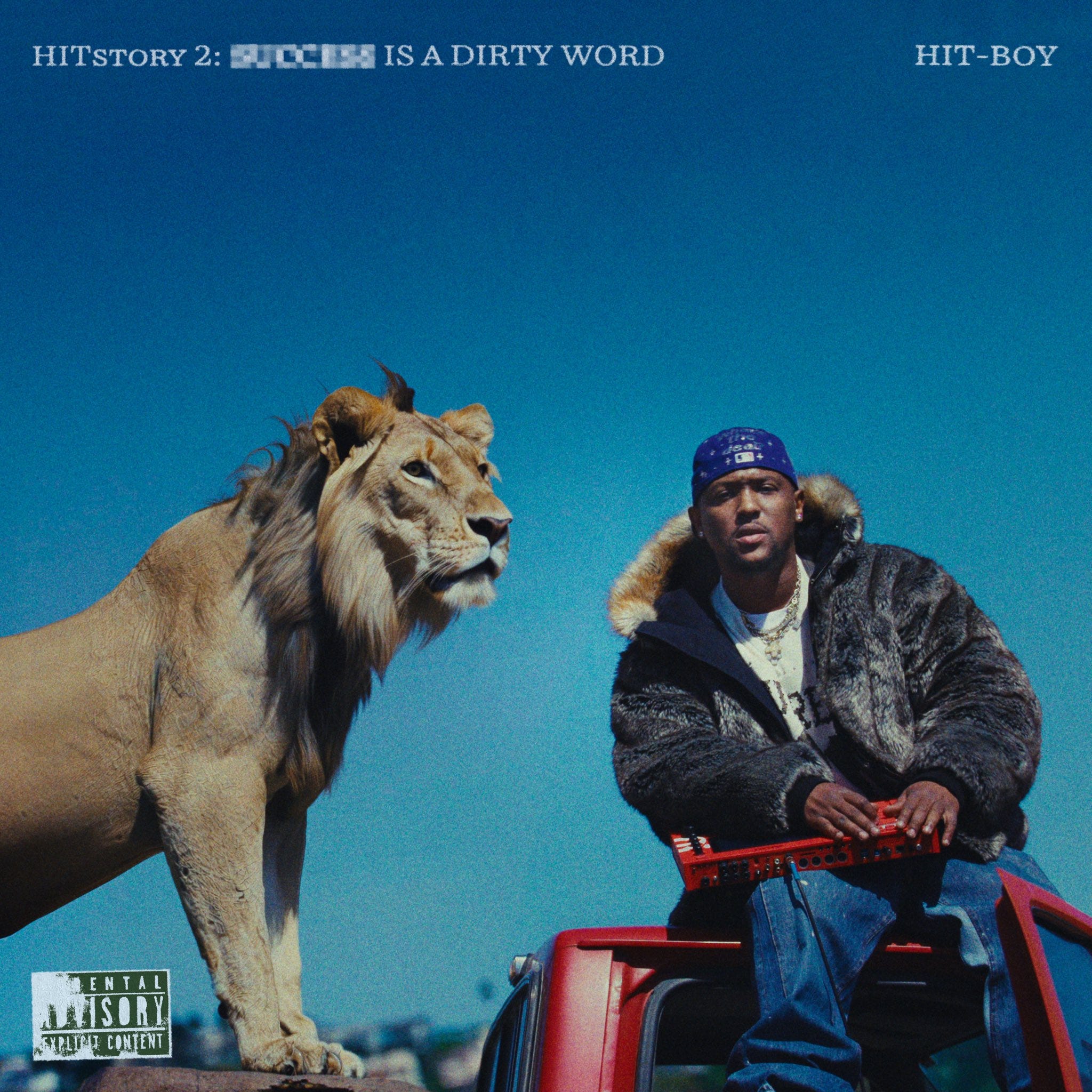
In the 1975 episode of Good Times, a cash-strapped James Evans endures a debutante ball by constantly having his leg pulled by his daughter’s wealthy boyfriend’s dad, who can’t stop referencing the housing project the Evans family is living in. Backed into a corner all night, James tells him, “Now, I busted my butt a lot of years to get out of here, and I made it. Now, you make it sound like success is a dirty word, brother.” Hit-Boy pulls this dialogue to the start of HITstory 2: Success Is a Dirty Word, his follow-up project under the moniker he established when he became everybody else’s hit maker. Fifty years later, the sentiment holds up for the producer he borrowed it from.
He takes this further on the project’s title track, with him in therapy describing whether or not he’s in good spirits as depending on whether he’s tallying streams or relying on his actual friends. “I turned my heart into a rollout, I turned my pain into a pitch deck, how the fuck I sold out?” he raps. There are plaques on the wall and cracks in his spirit, and, with no acrobatics, he delivered each sentence in his flat, unimpressed tone. His group chat overflows with yes-men while his true friends fall quiet, and though his family tells him that they’re proud of him, they barely look at him when he’s in their presence at home.
During breaks in threats of “Clash!,” he flexes: “I treat the bank like it’s Hometown Buffet, my pockets so bloated,” then offers a rare, true producer brag: his computer isn’t even capable of housing all the hits that he’s made. Working like pgLang and cooking with his squad, the initial cash to create this came from waiting tables. Setting aside reflection, he’s talking shit. “You want to be the king? Nigga, do you want the burden?” he inquires on “Talk Nice to Me,” an instruction record that highlights how everyone seems to be gunning for a throne they can’t handle, but few are gunning for the idea of it. On “Franchise Boy,” he is the franchise boy in a white tee (like Dem Franchize Boyz’s “White Tee” track), someone who once programmed on a Triton.
Quavo carries “Do It” on melodic ad-libs Hit-Boy wouldn’t touch, and the guests all do, making room to breathe within one man’s composition. Jazze Phizzle hosts “S&V” on the slurred, playing to the room instead of the rhyme. On “Friday,” Dom Kennedy glides on the Cali-relaxed with the album’s hardest line dropped almost casually-he doesn’t trust a soul since his daddy died. The most profound on the album is “Doin’ a Look,” with Ty Dolla $ign crooning the chorus like Brown feels today, Hit-Boy slipping in the line about men who lost lives in Rialto apartments, with Ab-Soul finishing by drenching the pavement in a bottle of Louis XIII for those who died.
Over a bombastic bass, “High Speed Chase” is pure luxury and bad-bitch posturing, a layup for a man capable of so much more. “Love Story” slows down the proceedings for the closest thing the album has to a relationship track, although it still sidesteps the entire premise. Girls, he concludes, don’t want love, just a love story; he works in silence while the Lambo engine does the heavy lifting. Neither of the two comes close to the title track.
“I showed my daddy the world, and he went back to jail,” he rhymes on “National TV,” which features one of his more subdued deliveries before he delivers it more simply: “That shit fucked me up for a minute, it hurt my feelings.” He feels life is a scripted series from which he’s barred from TV; a voice cuts in asking, barred from what, he’s on national TV. The same pain resurfaces under “New Money,” with him placing his grandfather in Harlem and himself in Fontana, declaring no one will treat him like Alpo in the city where he first made beats, allowing one humble line to sneak by the braggadocio, admitting that he’s absorbing too much damage and prays through it all.
On “Stitched Lip,” he wakes early to program himself while the others are being programmed, and Chase N. Cashe is by his side once more since their starting-off point in Atlanta. Once more the producer within the rapper will resurface; for “American Pie,” the biggest boast to himself will be that he produced his own beat (right after bragging that he got his own publishing like MJ and Prince), and on “Watch It Come True” (his James Fauntleroy-assisted closer), the vulnerability comes out in its thickest dosage; sleepless nights spent crafting the drum patterns, his father, Big Hit, coughing blood, seven years spent by himself fighting generational curses—“I’m signed to myself, I came from off the corner.”
From the JP Morgan conference room to top-tier hotel rockstar suites that don’t even make him aware of the next room, he raps “Can’t Ignore It.” Everything he had declared his intention for, he has already acquired. All he does is win now, and it’s not enough, and the songs that stick will be about the price.
Great (★★★★☆)
Favorite Track(s): “Success Is a Dirty Word,” “National TV,” “New Money”