

Album Review: Holly Grove by Jadasea
Jadasea mixes his voice so far under the bass that half of Holly Grove barely surfaces. The deeper he buries it, the better the record gets.
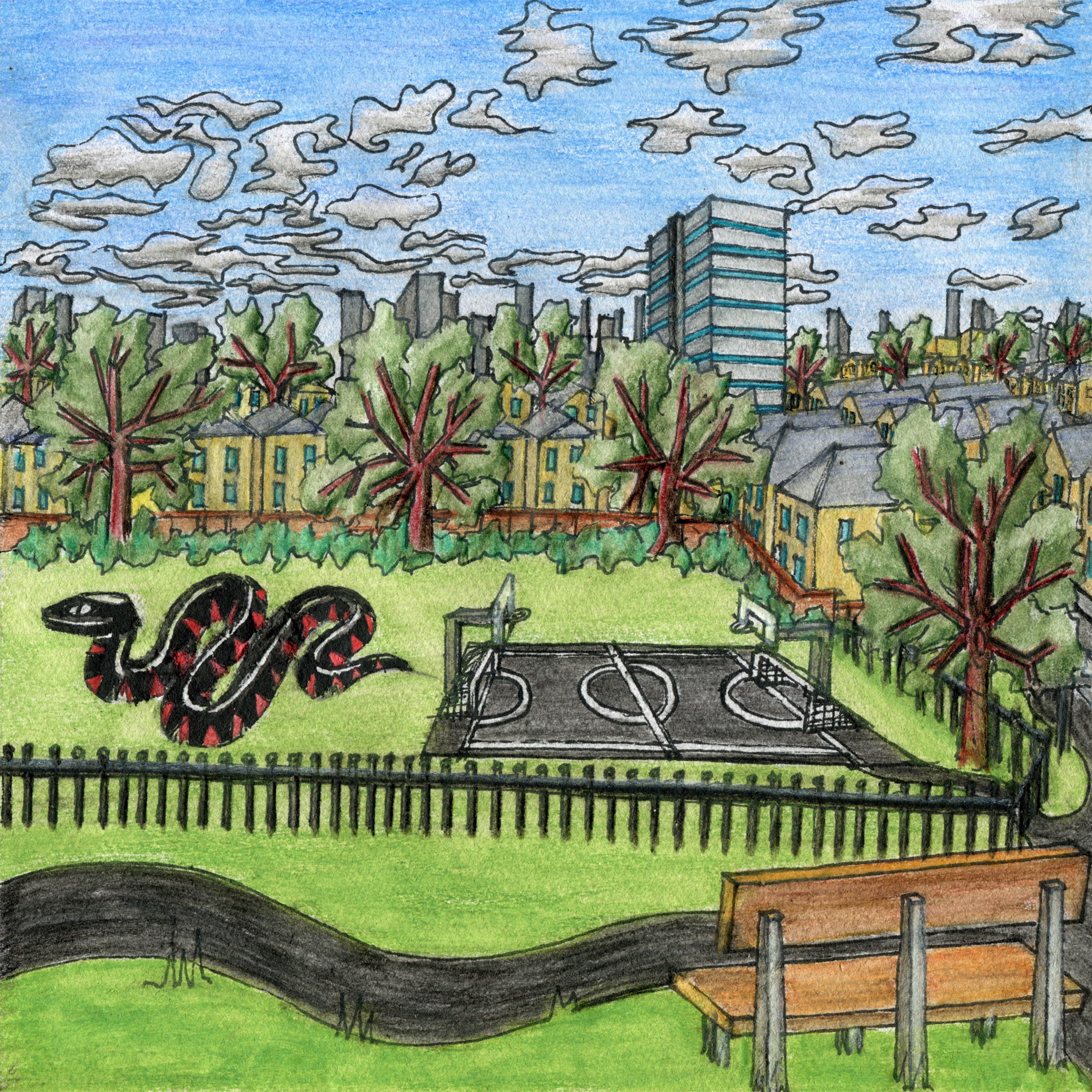
A strain of underground rap lurking mostly between South London and NYC bedrooms runs on one common obsession: the voice sinking beneath the beat instead of over it. The producers pursue obscured clarity, short loops, avoiding catchy spots for beats, and a minute of obscured production over a full arrangement. Jadasea has been hanging out in that same terrain for a long time. On the same side of the isolating and partnering with MIKE on 10k, on the same side of the soundscape that Holly Grove is on, around the same corners that the Surf Gang connects south London to the same underground rap environment of downtown NYC. And he pushes the sunk voice as deep as possible. The mix eats him alive on purpose, his voice arriving out of the bottom of the mix with the bass mishandled; the South London territory is perhaps one of the only aspects he can get clean, Peckham, those streets that he keeps returning to.
The beats keep the bass and sub-bass to the front, whilst letting the top end get all enshrouded and elusive, and the heaviest ones push the weight forward to the point where nothing other than the sound of himself and his bandmates remains in the room. On the record itself, Harrison, who does the majority of the beats, builds “Cobra” as one of these, simple but distinctly pronounced, with the structure of the track framed by a low-end anchor, with the drums bringing more force and more physical impact than anything else around it, and the mix sustained in that underground hum and murk. “Don‘t panic” is the exact opposite, essentially just a wash of low-end and little mid-range pressure devoid of any high-end brightness, contemplative and inward-looking, with everything aggregating inward but nobody venturing out. The strangest mix here is “Mind Game,” wherein low frequencies engulf everything and then thin out suddenly near the end so that the track is contracted inward, as if everything‘s pressed into a tiny tunnel. By “The Wire,” the low-end is so thick that the beat itself sounds like it‘s being driven through a narrow slit, while through this heard constriction Jadasea‘s vocals cut.
His meaning is something you have to work at extracting from the clutter and even when you get it, it comes in bruised bursts more than in sentences. On “SE15,” he outlines the perimeters briskly, sliding pictures, balling a slight kill on the streets, a defense stiffening, split lines rushing over without any one of them settling (“Only one life gotta live it/From the SE15 to the top got schemes for the guap I was dreaming we hit”). “Gambit” maintains the same edgy place, joint finished in the nightfall, dice long since cast, pack of work off his chest before the city gets rolled out.
Weed and lean show up on almost every record, and never as a good time. “Spliff n Yak” turns the smoke into maintenance, a method for managing the paper and not dealing with anyone; the room diminished to a single body talking to himself in the mirror. “Strainz” drags down the strain in its name into his lungs, paper held in his jeans until there is no more, the grind and the smoke smushed into a single exhausted breath. With “Remorse,” the numbing comes with its reason, a loneliness that “was a lot,” and brings him to the kitchen to get high with the stove on the pot. The hook remains in the same battered location, a newly acquired pack on track, the talking that never manages to connect, a final remorse that he cannot burn his way through.
For one bar, the beat admits a breath of fresh air. On “Esc,” the beat grows clear and swift, adding more momentum to the surface than the cuts all around, and Jung juggles it rather than collapses beneath. Still, he cannot escape, reaching past himself and finding nothing, that fresh beat the only sign of a door he can see.
Anysia Kym sings the chorus of “Intrinsic” from inside the same shallow singer tone of the lower register of a second human voice in the gloom—not a shiny feature turn, her line about accepting less said bluntly and surely in the face of Jadassea flaking, MIKE sets “Collateral” so deftly it could be a Jadassea verse, his sour inward voice crying, why do all the ones you‘re supposed to stay with get to leave first and it‘s the hurt that never stops, already the beat was built for. John Glacier hits in an entirely different way. On the long and yammering “Lemon Cherry,” the structurally most unfocused piece here, her chorus rises through the mush where the others drown in it, envy on the dancefloor, the people who hate her and adore her at once, and the plot twist she is still waiting to see. The extra minutes make sense once she‘s in. On “Entrance,” duendita opens there from a more solitary, more bleeding place than the surroundings; well around thirty and aching, wishing the comer‘s eyes shut, sober at a party, reluctant to depart. And when he calls her a surmiser, he claims he glimpsed the candle by the door, a sole morsel of escape over that perpetually downward trail.
Somewhere near the end, grief stops circling and starts to move. On “Intent,” the pulse solidifies beneath him, his voice pushed a little more forward than usual, and the writing shifts from numbness to courage time spent in a hearse, the strain on his shoulder, his eyes brimming with tears, and finally the heartfelt decision to continue on, no matter if there is money and some slight surplus needed, no matter if there’s devils or no devils.
Great (★★★★☆)
Favorite Track(s): “Cobra,” “Mind Game,” “Lemon Cherry”