

Album Review: Hood Poet Black Heart Edition by Polo G
A 40-track deluxe adds 22 new songs to the original Hood Poet album. The “Black Heart” front half finds Polo G still counting funerals, still reaching for God, still describing retaliation as routine.
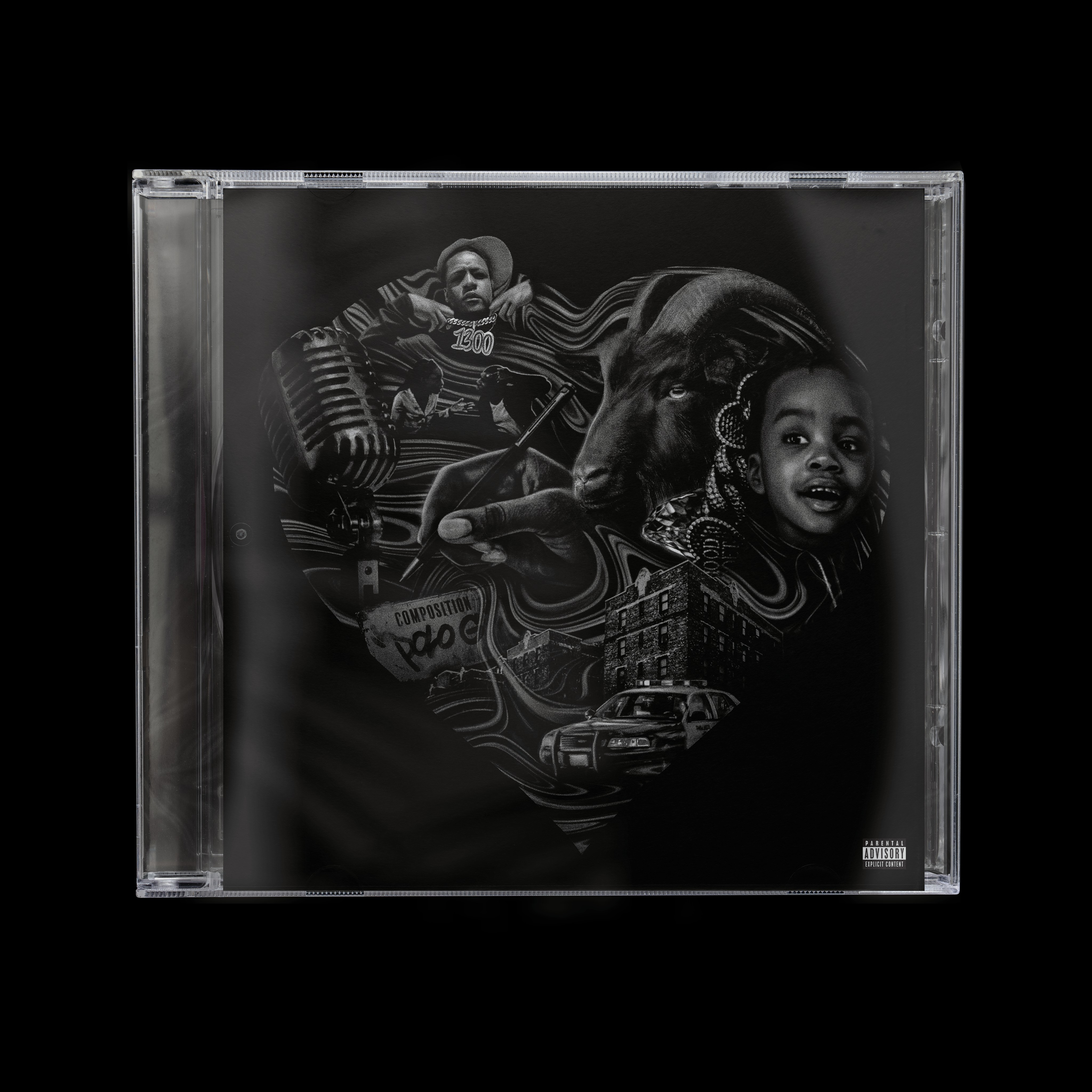
Polo G keeps a running tab of the dead throughout these additional songs to his Hood Poet album. Ed was the man. Tim-Tim was next up. Somebody’s homie got boomed while lackin’. He names them, mourns them, then immediately describes putting somebody else in the same position. On “Hard Body,” he writes “Wish he had a second chance/Fell victim to a .45” in one breath, then in the next verse: “We’ll put this shit right in your face.” On “Crash the Party,” he gives us “funeral lines for beautiful lives,”then, “That’s when you realize it’s set in stone, ain’t no gettin’ revived,” which sounds like grief until the hook drops and he’s describing hundred-shot party crashes. The math never adds up. He keeps attending funerals and planning more of them in the same sixteen bars.
The contradiction runs deeper than street posture. Polo wants credit for spiritual awareness while refusing to let it change anything. “Had to speak to God more,” he writes on “Chinatown Pt. 2,” then follows it with “Always choose gang, I ain’t switching sides, knee deep in our war.” On “Rent Due,” he admits “Sorry God, but these just feel like problems I can’t pray away,” which might be the most honest line on the record. But honesty without follow-through is just confession as content. He knows the pills are killing him slowly. He knows the paranoia is exhausting. He writes “I wanted millions, now I just want peace” on “Insubordinate,” and in the same song promises to torch anybody who steps out of line. Self-awareness never leads anywhere. It just sits there, another piece of emotional furniture between threats.
When Polo actually sits with grief without immediately pivoting to violence, the energy stays consistent. “Ed was the man” on “Hard Body” carries weight because of how small it is. Not a legend, not a fallen soldier, just the man. The short-life refrain works because he keeps it plain. “He was really here for a short time/No, you can’t escape death when it’s your time.” That’s not poetry. That’s resignation, and resignation at least feels lived. On “Boring Soul,” he writes “I wish bro could get high with me, I would’ve told him, ‘Don’t go,’” which captures the specific helplessness of hindsight without dressing it up. “One More Time” has him frustrated with somebody close who can’t see their own situation clearly: “It’s fucked up the way he think he see shit right, but bro so blind.” The question the record never answers is whether Polo recognizes himself in that description.
The problem is how often he uses grief as seasoning between threats. “Crash the Party” has that “beautiful lives” line, but it’s surrounded by so much crash-out language that the mourning feels decorative. “Left to Blame” names Tim-Tim, gives us “it hurt he died,” then moves on to “I hit the booth advance, so honest what them songs gotta be.” The grief gets about eight bars before he’s back to business. Polo treats loss like a credential, proof that he earned the right to describe violence. But the violence descriptions rarely earn their space. They cycle through the same images: switches, Glocks, bouncing out, face shots, ops getting packed. The specific names of the dead give way to interchangeable threats against unnamed enemies.
His self-myth keeps collapsing under its own weight. Polo repeatedly calls himself rich, fearless, chosen, in his prime, destined for greatness. Then he repeatedly admits anxiety, addiction, paranoia, and exhaustion. On “Insubordinate,” he writes “Look in the mirror, I see Polo/But I’m still tryna figure out where Taurus went.” That’s a real admission—the stage name swallowing the person. But on “High Tolerance,” he writes “Fell in love with uppers, now I got a high tolerance” and “Percocets for my trauma, seen things I can’t forget,” then immediately follows it with boilerplate about how his shooters are ranked and his ops’ mothers should know they raised cowards. The vulnerable Polo and the posturing Polo never integrate. They just take turns.
The craft question is specificity. When does a line feel lived, and when could you swap it between any five songs without changing meaning? “Block adopted, they ain’t raise me well” on “Hard Body” has some texture. “We’ll bounce out in Rick and leave a nigga on the canvas” on “Left to Blame” is generic bounce-out language with a brand name attached. “Battlin’ my anxiety, don’t wanna take no photos” on “Boring Soul” feels specific. “Body-for-body, they’ll go tit-for-tat, he thirsty to get a hat” on “High Tolerance” is drill filler. The ratio tilts toward filler across these 22 songs. Polo has the ability to write tight, specific confessions. He just keeps burying them under interchangeable violence language.
On “Move Wrong,” VonOff1700 brings raw, chaotic energy with specifics—“Diamond was lackin’ while it was crackin’ and got boomed on” names a person, describes a moment. Polo’s verses stay in his melodic pocket without matching that detail. He coasts on cadence while VonOff does the work of making the violence feel particular. On “Gangsta Graduation,” G Herbo delivers a countdown verse that shames everything around it. “Twelve years ago, I was masked up, on a drill a day/Eleven years ago, I was fucked up, all the rent was late” and on through the years—baby’s birth, relapse, war, Rolls-Royce, twenty million, drawing board.
That’s lived accounting, year by year, with the ugly and the triumphant mixed honestly. Polo’s verse on the same track talks about graduating from gangster school and getting get-back, but it’s abstract where Herbo’s is dated, general where Herbo’s is specific. King Von’s posthumous verse on “95 Bulls” brings that manic energy from beyond the grave: “Put the gun down/You’ll get gunned down/Need a blunt to calm down/Pop me a pill, finna have me some fun now.” Von’s verse has that reckless honesty—he’s describing his own chaos without moralizing about it. Polo’s hook on the same song, “Hate how I’m feelin’, I’m chasin’ high/If I ain’t off liquor, I might be fried,” sounds measured by comparison. Von’s presence reminds you what unfiltered sounds like.
The uglier moments reveal where Polo’s worldview narrows. On “Chinatown Pt. 2,” he uses homosexuality as an insult: “My opps gotta be gay, way they on my dick, but they won’t come out the closet.” On “95 Bulls,” he jabs at a transgender person as a punchline when questioning someone’s loyalty. These are deliberate writing choices. He wants “hood poet” authority but still reaches for cheap targets when he needs an easy insult. It dates the record and shrinks its intelligence. A poet who can write “I’m still tryna figure out where Taurus went” should be past using gay and trans as slurs. The contradiction isn’t street versus conscious. It’s a writer capable of depth choosing shallowness for easy bars. Polo himself rarely adapts to his guests. He stays in his pocket while they do the adjusting—hard pass.
Subpar (★★☆☆☆)
Favorite Track(s): “Gangsta Graduation,” “Insubordinate”