

Album Review: I Was Told There’d Be Gold by Rashad
After eleven years away from solo records, the Columbus singer-rapper-producer returns with a third album about faith, staying, and the gold that never arrived. He stopped waiting.
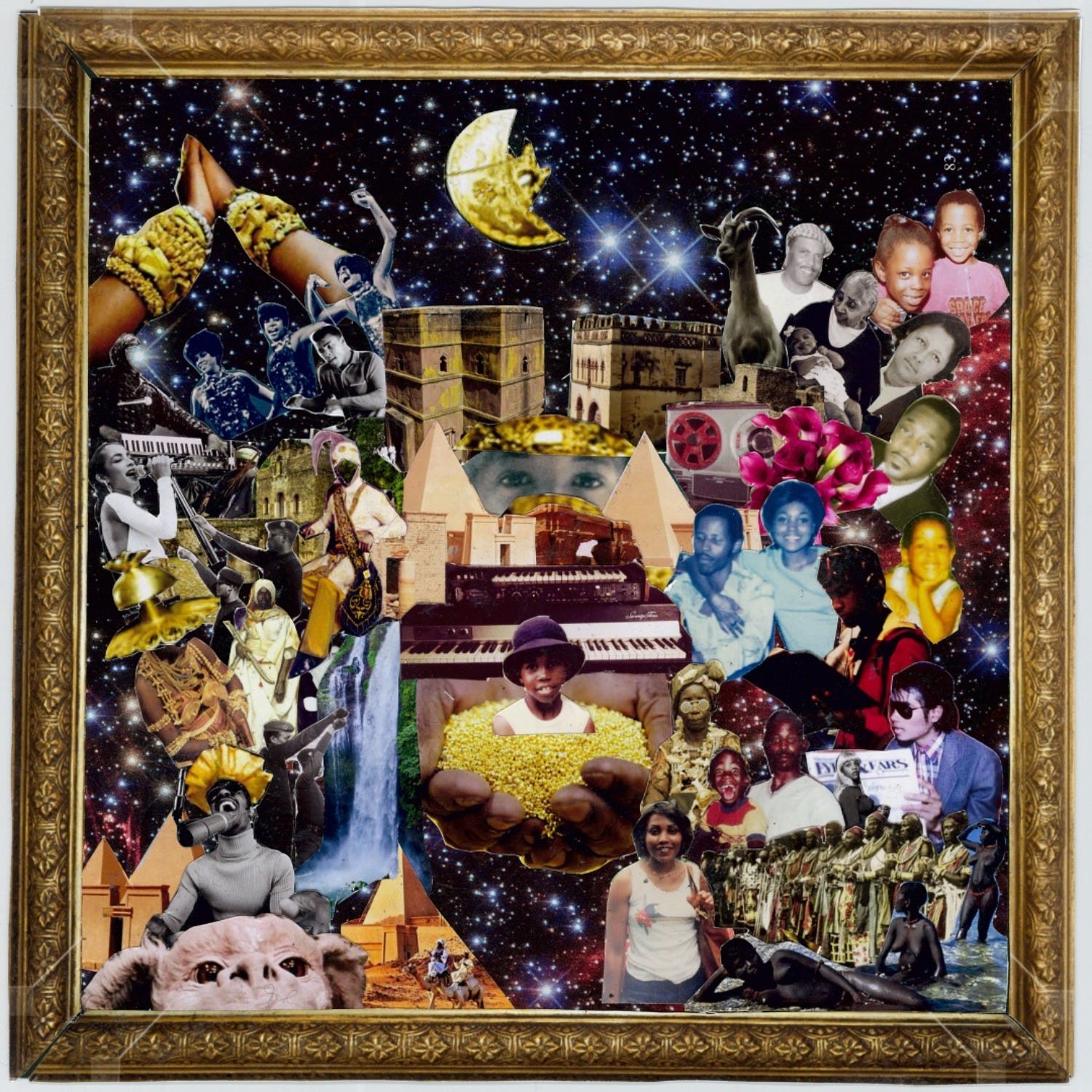
Eleven years between solo albums will do one of two things to an artist. It will calcify the ambition into something stiff and overworked, a record that tries to justify the wait. Or it will strip the pretense down to nothing, leave only the person and whatever they had left to say. I Was Told There’d Be Gold, the third solo album from Columbus singer-rapper-producer Rashad, falls cleanly into the second category. This is a record made by someone who has been through RCA, Columbia, and Universal, signed at thirteen, dropped or shelved every time, and came out the other side still writing, still producing, still singing on his own beats. He spent the gap years producing “Gang Gang Gang” and “It Can’t Be” on Jack Harlow’s Jackman, kept building with The 3rd Power and Elev8tor Music, and never stopped working. But I Was Told There’d Be Gold is entirely him, written, produced, performed, and mixed by Rashad alone, the same way Museum was in 2012 and The Quiet Loud was in 2015. He didn’t come back with features or a new team. He came back the way he left.
Four of these twelve songs argue directly with God, and none of them settle the argument. On “We Expect You,” Rashad sings, “Always think good thoughts, everything must change/We’ll get past this part, we’ll get past this pain,” and then the song drops into a harder question:
“But if God ain’t coming back
I don’t know how we can justify these actions.”
He wants to believe, and he mostly does, but he keeps bumping into the gap between the promise and the proof. “The Craft” pushes the theology further, with Rashad rap-singing, “If divinity’s a concept that’s hard to understand, your mother gave you life, maybe pray to her instead/I’m not one for worship, but I believe in God/And God can mean gods, depending where you are.” He cites Tupac twice in the same verse, once about building a nation and needing to be free, then about building a nation and needing money, and the two invocations pull against each other, the spiritual aim and the material need sitting side by side without a winner. Rashad has been making music for thirty years. Three labels told him his records weren’t ready, or weren’t right, or weren’t what they needed. The spoken word on “Larry’s Lament” lands as plain accounting of what happens when you keep getting pushed back to the only thing you know how to do.
On “Courage,” the spoken outro tells the story of a poet sitting on a plane next to the physicist who discovered the seventh quark: “Don’t nobody know his name, don’t nobody give a damn.” The moral is direct. “You love what you do. None of that other shit matters.” For a man who got his first record deal at thirteen and watched album after album get vaulted by executives chasing a different sound, that line carries a specific weight. The title itself comes from “Larry’s Lament,” with a crazy Earth, Wind & Fire interpolation where Rashad raps, “I won’t fold, I was told there’d be yellow gold, brick roads/Back when pops was hanging with Mike and Dickie/I was making music, you wasn’t with me.” The album is named after a childhood expectation that didn’t come true, and yet the songs don’t carry any bitterness. They carry the calm of a man who kept walking the road anyway.
Half the album is love songs, and every one of them is about a relationship that already survived something. “Feathers” opens with “Give me back my love/Things you say to me sometimes/I’m just tryna get some understanding after all these years” and then admits “My papa told the ones that’s close are guaranteed to hurt you most/Life ain’t fair, neither is love/But we’re still here.” With “Ribbons,” built on a Stevie Wonder “Ribbon in the Sky” sample, strips itself to the plainest possible declaration, “I wanna share my life with you,” and a verse that says “Loyal when I wasn’t winning, day one, but you ain’t forget me, when I was wrong, you forgave me.” “Boom” starts as a love letter and ends with a spoken passage about how women have been “traditionally, historically, tremendously important to any oppressed people, in the sense of making it possible for an oppressed people to survive.” Rashad never separates individual love from collective love, because for him, they’re the same commitment.
“Like We Young” is the loosest track on the record, built around a sampled hook, and the verse is just two people alone after everyone else went home.
“All of my friends, they’re gone
And we’re all alone
Yeah, yeah, let’s crush like we young.”
It could be a throwaway, but it is so heavy with devotion and doubt that a song about nothing except being in a room with somebody right now is the breather the album needs. Then “Make Believe” closes everything out. The chorus says, “Life has no guarantees/So I close my eyes and make believe/It all works out for me.” The title phrase comes back with “I was told there, I was told there, I was told there we go.” The gold he was promised, the payoff, the recognition, the happy ending, might not be real. And the album’s final position is that believing in it anyway is the only option left. Not because the proof arrived, but because the alternative is quitting, and Rashad doesn’t quit. Thirty years of evidence on that count.
Every song here was written, produced, programmed, and mixed by Rashad, and the consistency of that single-hand approach holds the record together. The beats draw from the same well, chopped soul, warm low end, drums that sit right behind the vocal instead of competing with it that we come to know and love, and the similarity becomes a kind of patience rather than monotony, the sound of a man who knows exactly what room he wants to build and isn’t chasing anyone else’s floor plan. On “Courage,” Rashad sings “Lord knows it ain’t easy loving someone/It’s hard enough to love ourselves.” And then the physicist story plays, about a man nobody knows who found something nobody knew was missing, and who isn’t sitting around angry about it. He just loves what he does.
Great (★★★★☆)
Favorite Track(s): “Larry’s Lament,” “The Craft,” “Courage”