

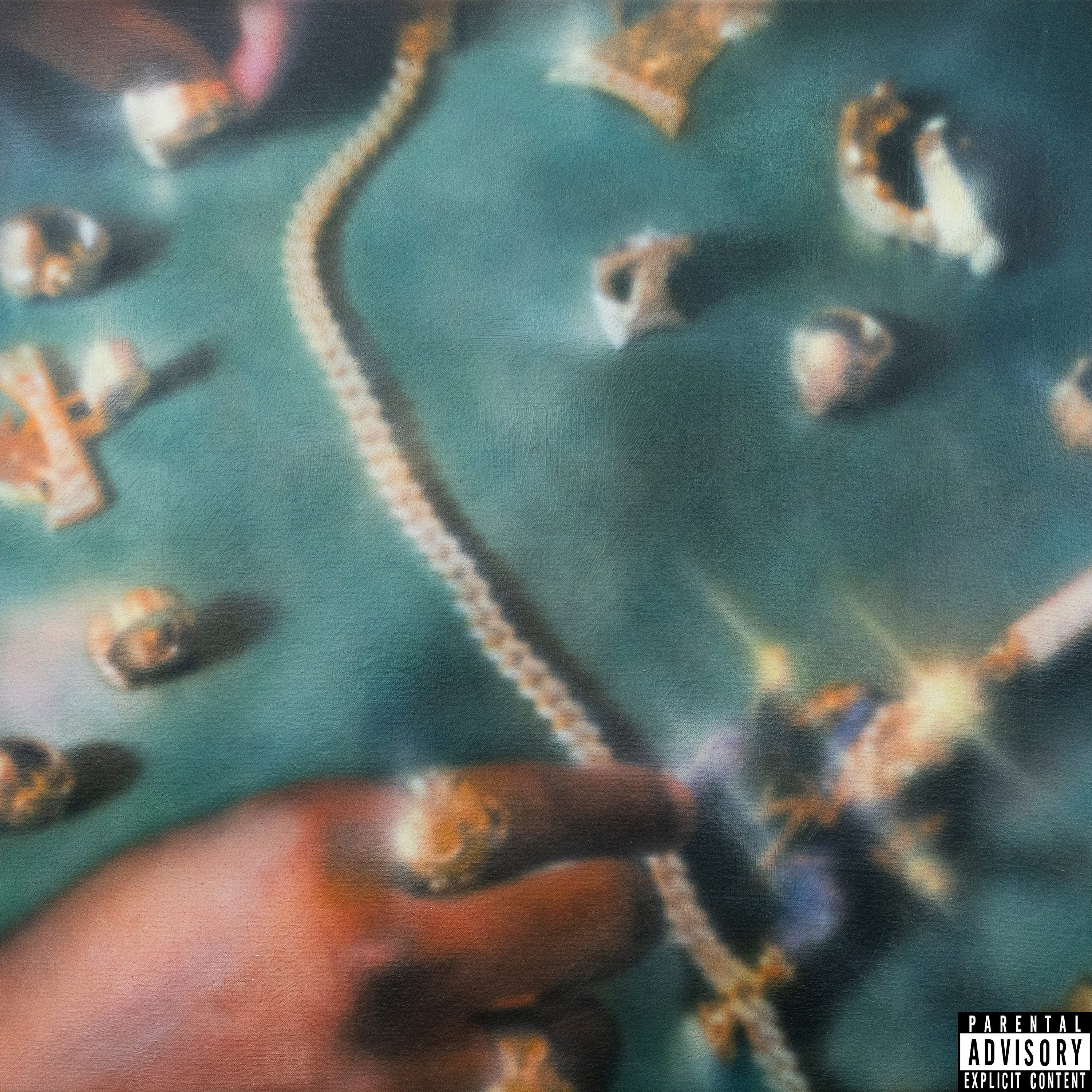
UNLOCKED was recorded over the course of three days in 2020. It took Denzel Curry six years to make its follow-up. The rapper created a band named The Scythe, released an album with them this year, toured with Deftones across the UK and Europe, scheduled concerts with Knocked Loose in the fall, and started talking about turning to hardcore. Kenneth Blume used to be known as Kenny Beats when the two musicians got together on Curry’s YouTube show The Cave. The producer quit his old nickname, switched to making music for rock bands, and released albums with Rico Nasty, Nate Smith, CARRTOONS, and Kiefer, collaborating on projects with Geese, IDLES, and Show Me The Body. The Carol City rapper and the producer, who gained popularity as an internet personality, chose different paths.
The label’s press release discusses disagreements during the production process. Blume’s account is rather honest: according to him, what the two of them create has never been easy, but that’s exactly why it has been so rewarding. They start every project from different ends of the coin and try to meet in the middle. The music from this album represents the growth and struggle equally well. They’ve also swapped their fancy studio setup for an SP-404 beat machine and a cheap microphone as part of a conscious decision to move backward from the tools used for UNLOCKED production. In private, no one knows.
Curry has always been good with bars, and now he uses them to point fingers at people. “GONE FISHING” is about the charlatan, who is not relevant right now, whose resume from his life proves how bad he is at it. Curry creates the gas chamber of a booth and calls himself the gorilla in the mist. This man really wishes he could have been a baller, but he’s an angry fan sitting in the stands, Curry tells him. “COLD NIGHT IN HELL” sounds even harsher: Wu-Tang said it’s yours, people think that they are him because he took them on the tour. The man went from next up to busboy. There was a seat for you at the table, Curry says. He broke bread with you and gave him this warning in case he had to eat him. JPEGMAFIA, appearing on “EVIL GRIN,” goes with the flow: it’s not whipped up to shock; this is gospel, and he thinks about starting a beef with Peter. The targets change, but Curry keeps squeezing the neck of his enemies.
The charlatans and busboys are getting the most of his attention, but Curry spends the same amount of his verses talking to himself. “PRODUCT” starts rather simply: he comes from the hood, and he’s a product. Verses describe the cost of being a product, the recipe of jealousy with salt added out of necessity, the pressure too high, kickbacks from the deals, which he doesn’t want anymore because he doesn’t know who wants to get back at him, and troubles that he can’t solve with drugs. He will probably do it on his own, without contacting his therapist. “BENJAMIN” goes in a different direction with it. He walks around with moxie, speaks with gusto, and holds the titanium mic he received from Magneto, but if it’s all about the Benjamins, it’s not about him. He says that he doesn’t need anyone. Good things take time. He’s after Gouda and Ricotta in the endless pursuit of the dollar, from the morning to the moment when he puts his pajamas on. All of this fits inside a verse about greed.
No surprise that Kenneth Blume shines through the beats. He could go from hard-hitting, gritty beats to masterfully chopping a soulful sample. However, j.robb co-produced “UPS,” and Homer Steinweiss, Leon Michels, Nick Movshon, and Paul Castelluzzo assisted in the production of “EVIL GRIN,” but the overall design was created by Blume, and his task is to leave the verses alone. The wordplay on “UPS” is the reward: Curry appears lower than a handout, trains his thoughts as a locomotive, piles up the metaphors until his enemies know that it’s U-P without the S. The chorus is delivered by the villain himself, a closed casket for all your friends. Second verse appears at the hand that keeps the head underwater, Capone as God for geriatric cats, the body bag of Louis Vuitton shipped over Yosemite.
Westside Gunn on “CROWN” starts with the first bodies and hundred stacks, Eastside Buffalo, counts riches off fiends, prices of plug starting to drop, designer trunks in the bubble bath, jerk shrimp by the sand. His geography includes Buffalo and the Bahamas and the promised land in one breath, and the luxury is detailed in ways, which are not typical for Curry’s own flexing. Curry replies with his version of the track: there are legends, which don’t have trophies, and targeting your audience is obvious marketing. He sells out the shows but never sold out. On “DIFFERENCE,” Yebba sings: “Whiplash in my neck, I caught a glimpse of your regret/But your thinking cap is long lost through the wind.” Her refrain, way below ground zero, fighting everyone you know, wearing thin on your rollercoaster, plays under the verses about giving someone money for a chain but not to buy their masters with it, about winning him at his own game like Ali won Liston.
On “CANDLELIGHT,” Curry says that he has never worked a nine-to-five, but people have the nerve to ask him about what he is working with, and he comes up with a nice line from Eartha Kitt, followed by an immediate R.I.P. to the greatest Catwoman. But the spoken bridge about a car with butterfly doors being a Pegasus seems to wander, and the bounce run in the outro is stapled on. “PRODUCT” has some good moments, the jealousy recipe, the hammer like Judge Joe Brown, the therapist, but the hook takes over. Blume created a floor, Curry stood on it, and the fighting turned into rapping, and rapping into art.
Great (★★★★☆)
Favorite Track(s): “GONE FISHING,” “CROWN,” “DIFFERENCE”