

Album Review: In Moments by Slowe
Slowe’s second album holds Hawes inside one mood across every song. Well-made and small by design.
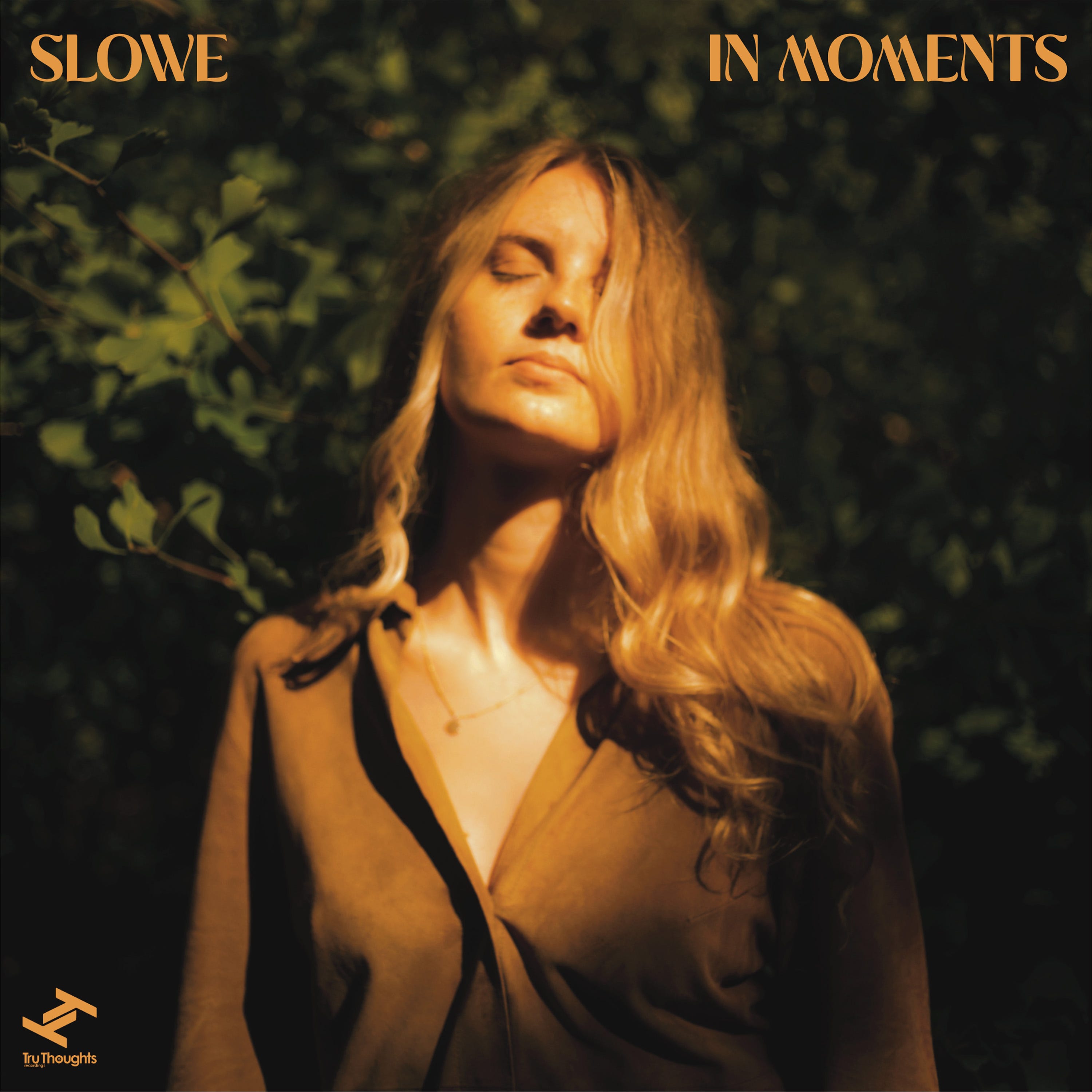
On the opening track of In Moments, soft guitar chords settle in a room, a snare cuts in, and a bassline rolls underneath, and a voice arrives to say, “It’s a familiar feeling, I know it all too well.” Those two lines name the mode Hawes will keep. Sophie Hawes, a Bristol producer and singer who records as Slowe, has already told the listener what this song is. It is a habit she is trying to conceal, a stronger version of herself she will not move toward. Familiar. Hawes returns to that mode through every song. She waits, hides, doubts, expects to lose, and the room never changes. Most of the songs share a single evening, most of the relationships are kept open enough to belong to anyone, and every song asks the same question. The narrowing is the album’s whole product, and the choice keeps the record small.
Where the debut’s title, Where the Mind Wanders, promised motion, Hawes brings stillness this time. In Moments writes one waiting state in many forms and never lets it move. On “What If,” the album’s second track, is a string of unanswered questions, and loses the song with a thirteenth question that quits the others, “What if I just quit all the what ifs for a while?”, without finding an answer. The mood Hawes sets down on the first song will not deepen later; it only finds new instruments. Hawes, who wrote and co-produced every song on both her albums, made this decision, and the decision shrinks the record’s emotional reach to about the size of one room.
Production stays inside a tight set of moves. Rhodes piano, bass-forward grooves, programmed kick under live snare, layered vocal harmonies, and occasional synth circulate from one song to the next, a small handful of moves repeating. Picking an acoustic guitar pattern, “Pen to Paper” sets a singer close enough to a microphone to hear breath at the line ends. On “Mind/Body,” Hawes interlocks bass and drums into a melodic figure; the kit plays a jazz pocket while she sings about choosing flight every time over an even pulse, in a deadpan that locates her at sea level. Level affect. On “What If,” the tempo opens up over a funk-inflected bassline and stacked harmonies, but the lyric, a string of unanswered questions, does heavy work the band carries lightly. Contrast is what Hawes refuses, more than anything. When “Not Asking the Stars” reaches its bridge, Hawes thickens the synth into a slow rise. She layers her own vocal harmonies thick enough that no single line cuts past the others. Slow drums and a single piano figure carry “Puzzle.” Driving bass and syncopated rhythm move “Rhyme or Reason,” but the vocals fold into stacks that smooth the friction the lyric proposes. Twelve songs, one weather; the record would be a stronger album with at least two.
Two features arrive at the album’s end and confirm what the prior songs already said. On “Sundown,” Alamay sings:
“Hard to tell me that it’s over, when I’m still looking up
Patiently, I’m turning over
Feeling ‘round, I’m running out of time.”
Hawes’s only break comes on “Careful Now,” the song where another temperature is allowed in. Through the first verse, a steady drum beat ticks under her vocals while she keeps the lid on, with cracks in the windows, silent smiles, half-closed eyes, an effort to keep the spell intact. Hawes lets the lid slip in the second verse. Hawes sings: “You’ve taken something sacred and you tore it to shreds.” After the second verse, Hawes returns to the album’s standard temperature for the outro. Heat, then ceremony. Inside the same set of moves Hawes has built across the record, “Careful Now” proves another temperature is available. From the album’s first guitar figure, that other temperature has been a fingernail away, and only this song makes it audible. Hawes leaves the heat on the table elsewhere; “Careful Now” is the album’s most argumentative song and the only one that earns its place as music more than mood.
Above Average (★★★☆☆)
Favorite Track(s): “How Hard Can It Be?,” “Careful Now,” “Lifeline”
Thanks so much for the thoughtful review! It was such a pleasure to work with Slowe on the project - she's utterly brilliant, and I suppose I'm a bigger fan of the project as a whole! To me, it's some of the lushest neosoul of the year so far.
I'll just correct that I don't have duet vocals on "lifeline", but am listed as a feature for the underlying production!