

Album Review: It Could Be Worse by Samm Henshaw
On It Could Be Worse, Samm Henshaw keeps asking love to stay while also begging it not to hurt him. The contradiction is the most honest thing here.
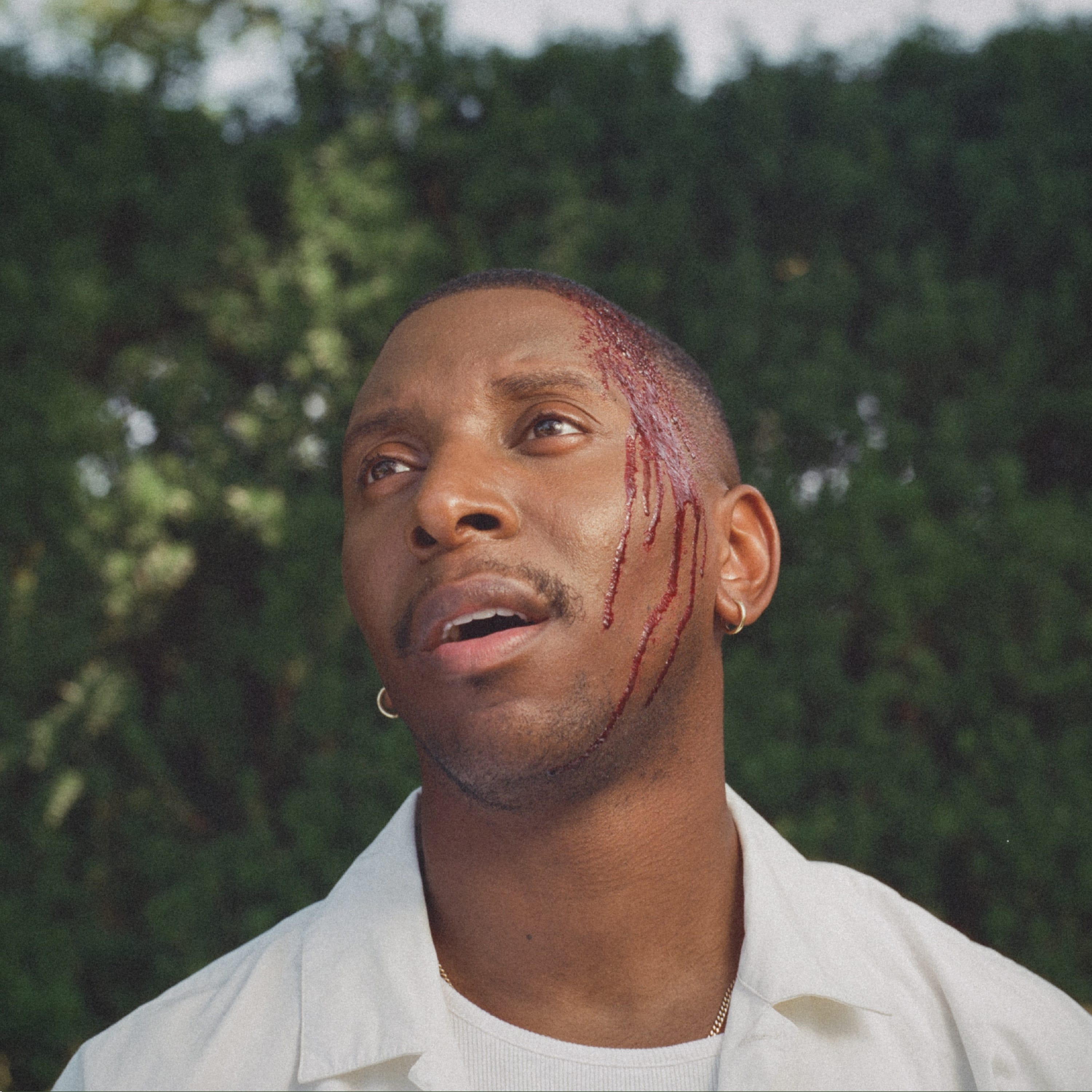
Gospel trains you to smile on Sunday morning regardless of what Saturday night did to you. Samm Henshaw learned that in his father’s South London church, and it saturates It Could Be Worse. The encouragement, the testimony, the insistence that your suffering become useful to someone else in the pews. He released the album on vinyl months, withheld it from streaming until this past week, and recorded the whole thing live in Los Angeles with Josh Grant producing and assists from Solomon Fox, Leven Kali, Anoop D’Souza, and Jesse Singer. His first serious heartbreak, reportedly. The musicians in the room breathe with him. The 2022 underappreciated debut Untidy Soul bounced between moods, bright and charming, never settling long enough to test what it was feeling. This second record is one ache, examined from multiple angles, managed and unmanaged in turn.
“I wish I was closer to you.” Henshaw sings it in “Closer” like a man saying grace over food he knows won’t fill him. “The touch left a stain,” he admits, while recognizing that letting go is too much to ask. He calls his longing another wasted prayer, despite the fact that he keeps praying it. “Float” begs not to be let go because the world looks so much better with someone in it, because there’s so much more they said they’d do. Having someone at their best, he offers, is like the beauty of a sunset. Never know when it’s about to end. Good things vanish while you’re watching them. “Wait Forever” pledges patience but slips in a concession and concedes “there’s a possibility that we might get tired.”
The immediate standout, “Sun and Moon,” tries to draw boundaries. “Remember you are you and I am I,” Henshaw warns himself that he knows rose-tinted glasses wreck judgment, knows love can make you forget your own name, knows you can lose yourself until you don’t know where one person ends and the other begins. He offers a diagnosis.
“Learn love hurts, so you thought that the pain meant the love was real
Now let's be different, with love we hold some distance.”
By the end he’s admitting he’ll lose himself a little more anyway. “Don’t Break My Heart” puts the album’s central anxiety into a direct question. “If I was a promise, would you keep me from the start?” He’s already committed. “You already got me,” he concedes, but he needs to know the terms. He needs to know when the disappointment arrives if it’s coming. “I’m not being callous,” he insists. “It’s just how I feel.”
“Stay on the Move” lets the doubt surface. Henshaw confesses he kept watering the grass hoping it would get greener, wonders if all those seeds he sowed ever grew.
“Was it me all along? Was I scared?
Did I get all up inside my head?
Maybe Heaven never heard my prayers.”
Then the admission: “I can’t do this on my own/There’s some mountains I can’t conquer.” He offers what don’t kill me feeds my soul later, but the admission costs more than the resilience. “Heavy Measures” goes quieter. Goodbyes last forever. It’s heavy on both sides and we’re both empty measures. A memory fades like a daydream. It’s nothing we did wrong, it’s all we left in between. He keeps hoping maybe he’ll find it in the other person. “Get Back” mourns something evergreen now wilting like flowers, something that tasted sweet until all of a sudden it got sour. Dreams flew too close and turned to ash. “Ain’t no balancing the scale,” he admits.
With “Hair Down,” it counsels letting go of what’s outside your control. There are some things you may not understand, ain’t no problem if it’s out your hand. And when you hate the way it feels, child, let Jesus take the wheel. The sentiment evaporates because it could be said to anyone about anything, by dissolving the specific grief into general wisdom. “Don’t Give It Up” spots a tired smile being forced and offers encouragement so general it floats past the particular ache that prompted it. Sure, it’s clichè, but it gets the job done because Samm emotes when he sings. “Tangerines” attempts a rally after Henshaw’s girl met somebody new, and there’s a wry flash. I know he’s six two and fine as hell. But the rest liquefies into uplift. “Save myself the trouble pain and my anxieties burrow deep inside of me,” he admits earlier in the track.
The live recording lets the album sound natural. You hear room and imperfection, warmth that programming would have killed. Henshaw’s voice stays supple throughout, capable of carrying devastation without straining for it, though occasionally he rounds off edges that could have stayed sharp. The best songs let the grief remain fluctuating, even if the absence of “Find My Love” with Tori Kelly would’ve taken things to new heights. Having said that, he lets the coaching fail, let the prayer go unanswered, let the bargain hang open. Henshaw built something tender here, something that occasionally cuts, an album about holding on that understands holding on might not work. His debut charmed without committing, while this one commits.
Great (★★★★☆)
Favorite Track(s): “Float,” “Stay on the Move,” “Heavy Measures”