

Album Review: Joy by MT Jones
After years of busking, gigging, and backing up other people’s ambitions, MT Jones finally wrote his own album. He has melodies built to last and a voice too good to waste on anything safe.
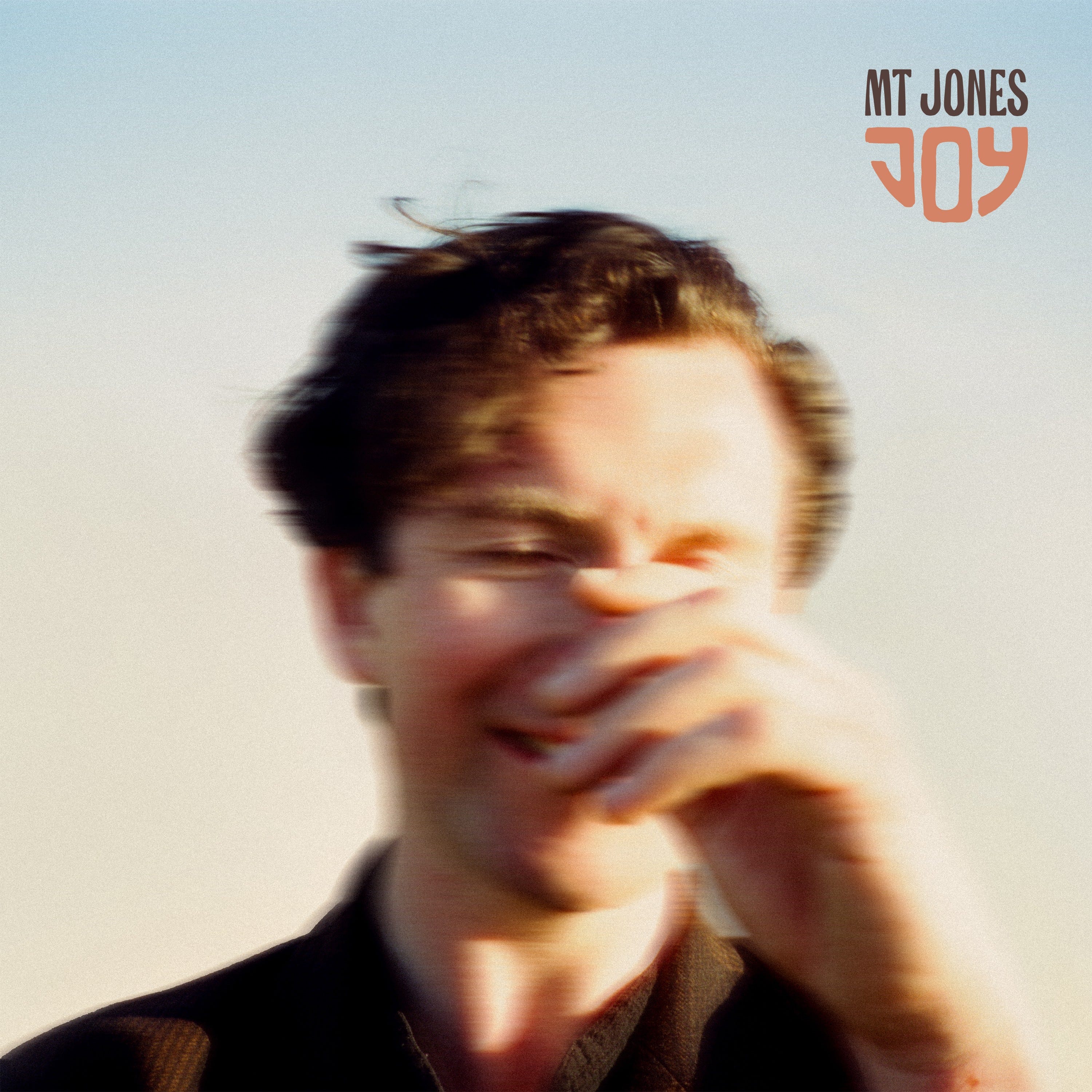
Most musicians who play behind other people for a living learn something about restraint. They figure out when the bass line should stay in its lane, when the piano part should leave a hole for the singer, when the harmony should tuck underneath and disappear. MT Jones spent his twenties doing exactly this, gigging as a bassist and keys player for Jalen Ngonda, touring Europe, supporting Lauryn Hill in Montreal, playing covers on weekends to keep a London flat he could barely afford. He went to LIPA in Liverpool, trained classically by eighteen, studied alongside Ngonda and eventually followed him to London to try to write for a living. The economics fell apart. He moved back to Liverpool. Then lockdown sealed him inside the house he grew up in, and he started recording the songs that nine singles later would become Joy, his debut album, produced entirely by Jonathan Quarmby.
You can hear the sideman’s ear all over this record. The arrangements sit low. Quarmby’s production favors live instrumentation (piano, bass, drums, the occasional horn accent) and rarely asks any single element to shout. The tempos hover in a narrow band, and the harmonic choices borrow openly from Motown and Stax without trying to replicate them note for note. Jones has named Stevie Wonder, Ray Charles, and Donny Hathaway as north stars, and the influence is plain, but Quarmby keeps the recording clean enough that nothing tips into pastiche. What you get instead is a set of cuts that sound like they were tracked quickly, with musicians who trusted the take. For a cut like “Tastes Like You” pushes a springy, uptempo groove and gives Jones’s falsetto room to carry the melody above a spare kit pattern. The restraint suits Jones. His voice, a smooth, full-bodied tenor with an easy upper range, fills every gap the arrangements leave open, and the production knows when to stay out of its way.
Most of Joy lives at the same emotional address. “I Don’t Understand” wants to know why he had to fall in love when life was going fine. “Gentle Reminder” tells his partner he’ll always come back — bus, bike, plane, train. “On Your Own” has her fixing him up like brand new. “Nothing I Can’t Do” finds him declaring that when she’s beside him, everything opens up. “Her Name Is Joy” gives us her lighting up the room like spring. On paper the sentiments overlap, and a lesser singer would lose you by the fifth or sixth devotional. Jones doesn’t, partly because his voice sells conviction without overselling it, and partly because Quarmby keeps finding small production wrinkles (the uptempo spring in “Tastes Like You,” the warm two-step underneath “Changes Like the Weather”) that give each song its own temperature even when the words share a thermostat. He sold his car to buy her pearls on one track. He’s counting the hours till the sun goes down on another. He’s dancing like nobody’s watching on a third. The situations shift; the feeling holds steady, and the album gets away with it more often than not because the melodies are strong enough to carry the weight.
The tracks that step outside this mode give Joy its spine. “So Lost” drops the romance entirely and puts Jones in a town that’s too forgiving, watching pennies turn to pounds, waking up but hardly living. “I’m not that kid in Neverland,” he sings, and the line has a specificity the adoration tracks rarely reach — a guy stuck in a place he’s outgrown, impatient with his own inertia, seeing other people get out. “Easy” works a different angle. He’s thinking about an ex without bitterness, remembering getting messed up in the grass, wondering if he’d still call her babe, hoping she’s taking it easy. The three-sugars-in-her-cup detail is the kind of concrete, throwaway image that separates a good song from a pleasant one, and Jones delivers it with the offhand warmth of a memory he didn’t plan to share. Both prove he can write past the devotional mode when the subject pulls him somewhere less comfortable.
The record’s best song is “Why I Cry,” and the reason has everything to do with accumulation. Jones takes a single emotion, regret over someone lost, and builds it through the irresistable groove that actually earns its weight. The anaphora in the verses (“When I had you I took my life for granted/When I had you love was all around/When I had you I never thought I’d lay it down”) works because each line adds a new specific failure. He took things for granted, stopped counting the hours, assumed the moment would last. When he calls it his Waterloo, you understand the scale of what he’s describing, and the riding hook sits on top of that accumulation without needing to explain itself. “You Don’t Love Me Now” gets at something similar from the opposite direction. The phone is dead, his inspiration has run dry, he didn’t notice how the weather changed and left her hiding in the rain. The details stack up as evidence against himself. “I can blissfully revise priorities to beg your pardon” is a strange, almost bureaucratic confession, and Jones buries it in the third verse as though he knows it sounds like a man who waited too long to figure out what mattered.
Where several of the romantic cuts ask you to feel what Jones feels, “Changes Like the Weather” earns its place by giving him a character to describe instead of a feeling to declare. His partner blows hot and cold, calls him up and has him running home, then says she wants to be alone. He trusts and doubts her, and he couldn’t live without her. The contradiction is specific enough to be interesting, and the warm shuffle underneath gives Jones’s voice room to ride the push and pull of the lyric without overselling it. Joy is the work of a musician who spent years learning how to hold other people’s songs together and then figured out he had plenty of his own. The voice is the real thing. The production is careful and well-judged. The next record could push Jones into less comfortable territory more often, but this one already proves he belongs at the front of the stage.
Great (★★★★☆)
Favorite Track(s):