

Album Review: Just Let It by Jarrod Lawson
Lawson built a beautiful room and invited people who furnished it better than he could. The musicianship is gorgeous, and the writing can’t always keep up, but the vocals always win.
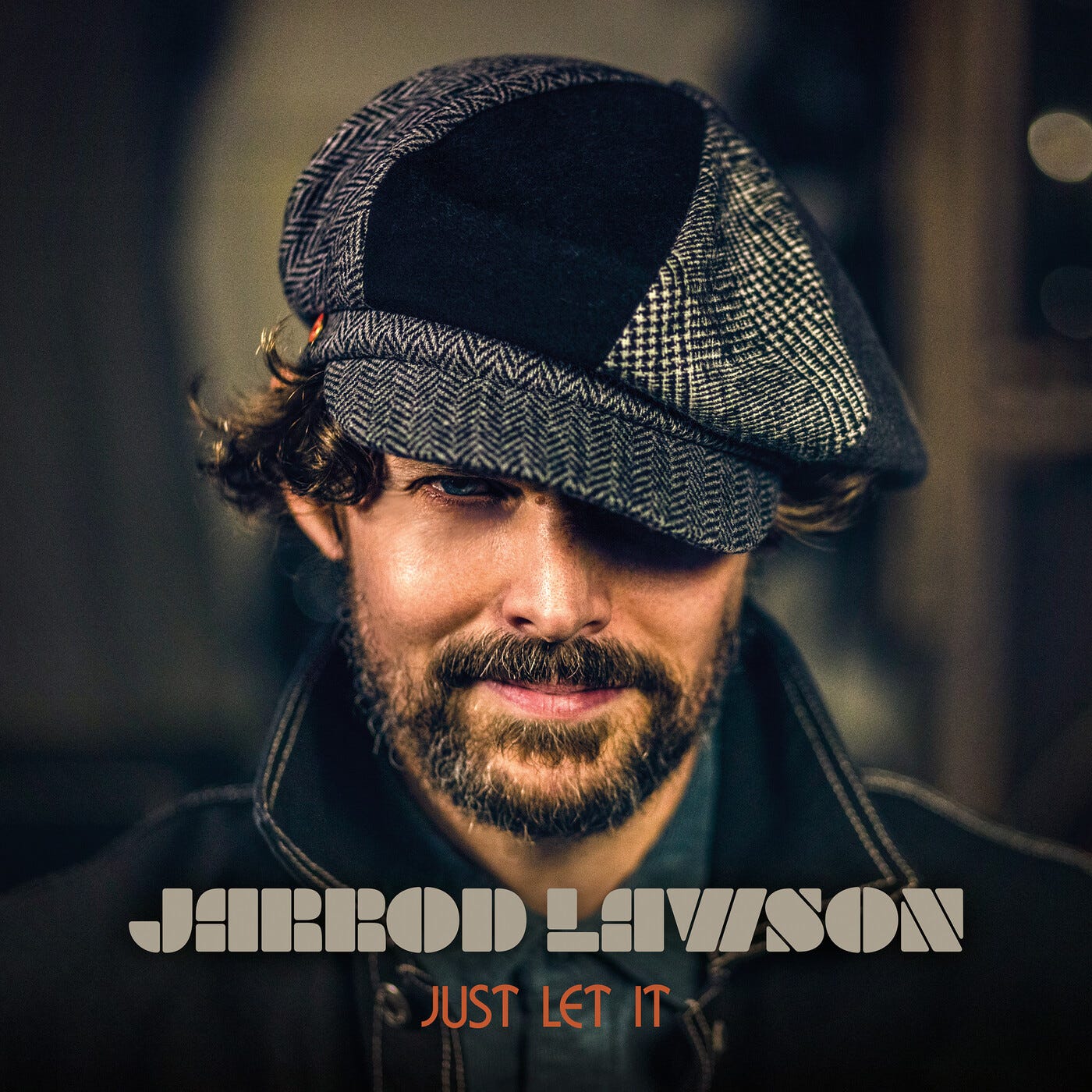
The keyboards on Just Let It sit in your chest. Jarrod Lawson, who debuted at 37 after years of laying stone for a living, produced the whole record himself, and the first thing you notice is how good the band sounds—thick, easy, every chord given time to ring before the next one drops in. His falsetto rides above the arrangements cleanly, and when he stacks his own harmonies three or four voices deep, the blend is so tight you’d swear it was one throat. Lawson plays keys on everything, sings lead and background, and wrote or co-wrote every lyric. Where the playing is precise, the writing is often vague. Full of good intentions and short on the kind of detail that makes a song belong to one person and nobody else.
Except when it isn’t. On “Smoke Me Out,” the bass walks underneath Lawson while he sings about growing up on the south side of a town where ten-year-olds are packing heat and the powers that be pretend they’re cleaning up the streets. He names Mrs. Jones two doors down, whose teenage son was gunned down, and asks how a village can heal when men like him just decide to leave. People keep telling him to get out. He agrees, but he won’t let them smoke him out. Mrs. Jones, the brothers selling in the streets, the mamas and kids: these are the only named characters on a record where most of the cast is “you” and “baby.” The song earns them.
On “There Can Only Be One,” Lawson talks to Allen Stone over a horn section trying to start a parade: “Pacific Northwest grown, just like this other guy that I know,” he sings, “two blue-eyed, curly-haired, soul-singing white boys with something to say.” He accuses Stone of combing through his hometown, pilfering his musicians, recruiting his homies to some Kool-Aid compound. He mentions Bieber thinks Stone is super cool. Stone responds by calling Lawson’s voice “sweeter than a baby’s smile” and saying, “Even Bieber wouldn’t change the dial.” Two white guys from the Pacific Northwest making soul music, each wondering if the world has space for even one of them, and the affection depends on how close the comedy runs to the anxiety.
The rappers on this record write harder than Lawson does, and that’s a compliment to the company he keeps. JSWISS shows up on “Let Your Heart” and raps about playing mental tennis with his own decisions, about how the brain makes the feet move but “the heart make the mouth speak.” On “I’d Do It Again,” he puts in a deposit “two, three times, or whatever that it costed,” and if God granted three more chances he’d do it just to meet her three more times. donSMITH on “Head-On” is better still. He wasted his teens trying to be AI until they changed what it means, he raps, and “You can’t ChatGPT your way to the league.” He learned to turn his problems into furniture. He describes his mother as “mama’s Mona Lisa in Carhartt.” His tailor is Mossi, while his insecurities are what’s curing him.
Lawson married Evalee Gertz in 2022 and has a track named for her on an earlier record. On Just Let It, she’s everywhere and nowhere. “Gentle Soul” has him fumbling through darkness until a fire came through the shadow and a face emerged. “Nothing to Forgive” brings him home to drop his phone and cuddle on the couch because he’s got nothing left to give. “Authentically Me” goes the furthest of the four: he calls himself a scared little boy afraid to be seen, says she taught him to forgive himself for all the thoughtless things he did. His voice on these tracks is what sells them—the falsetto warm, the phrasing gentle enough that you come closer even when the words stay general. The gratitude is real. But four declarations of gratitude without a single scene between them start to blur. He keeps saying she saved him, but never says from what room, on what day, while doing what. The voice carries it in a way that a weaker singer couldn’t.
Two kinds of release show up side by side. “Do Whatchu Gotta” has Lawson telling a partner to leave: “girl, get your fine ass out there and fly.” That line stings because he’s watching her walk and admitting he always knew deep down she needed more. “If We Pretend” is bigger and vaguer, asking why people have a chip on their shoulder and can’t look each other in the eye. One has a person in it. The other has a subject. But both sound gorgeous—Lawson’s piano on “If We Pretend” does half the talking the lyrics won’t.
Eric Roberson is the funniest thing on this LP, and it’s not close. “Laugh at Yourself” has Roberson telling a story: he stubbed his toe, felt bad for himself, and God told him, “Why you trippin’ on that toe? You got nine more.” Lawson cracks up. Roberson says he’s walking with a limp, makes his flaws look good, says even if you’re laughing to keep from crying, keep trying. That exchange between two grown men goofing on each other about humility has more personality than “Just Let It” or “Let Your Heart” or “I Got Your Back,” where the advice is fine and the voice delivering it could belong to anyone. Lawson can sing, and he can play. Chick Corea and Oscar Peterson and Ravel all in his hands, and you hear each of them in the chord changes. The guests brought the words, but Lawson made the room they’re standing in, and the room is why you stay.
Great (★★★★☆)
Favorite Track(s): “There Can Only Be One,” “Head-On,” “Smoke Me Out”