

Album Review: Kill the King by T.I.
On the album he’s calling his last, T.I. turns out to be a better elegist than a king. It’s the most alive he has sounded in years.
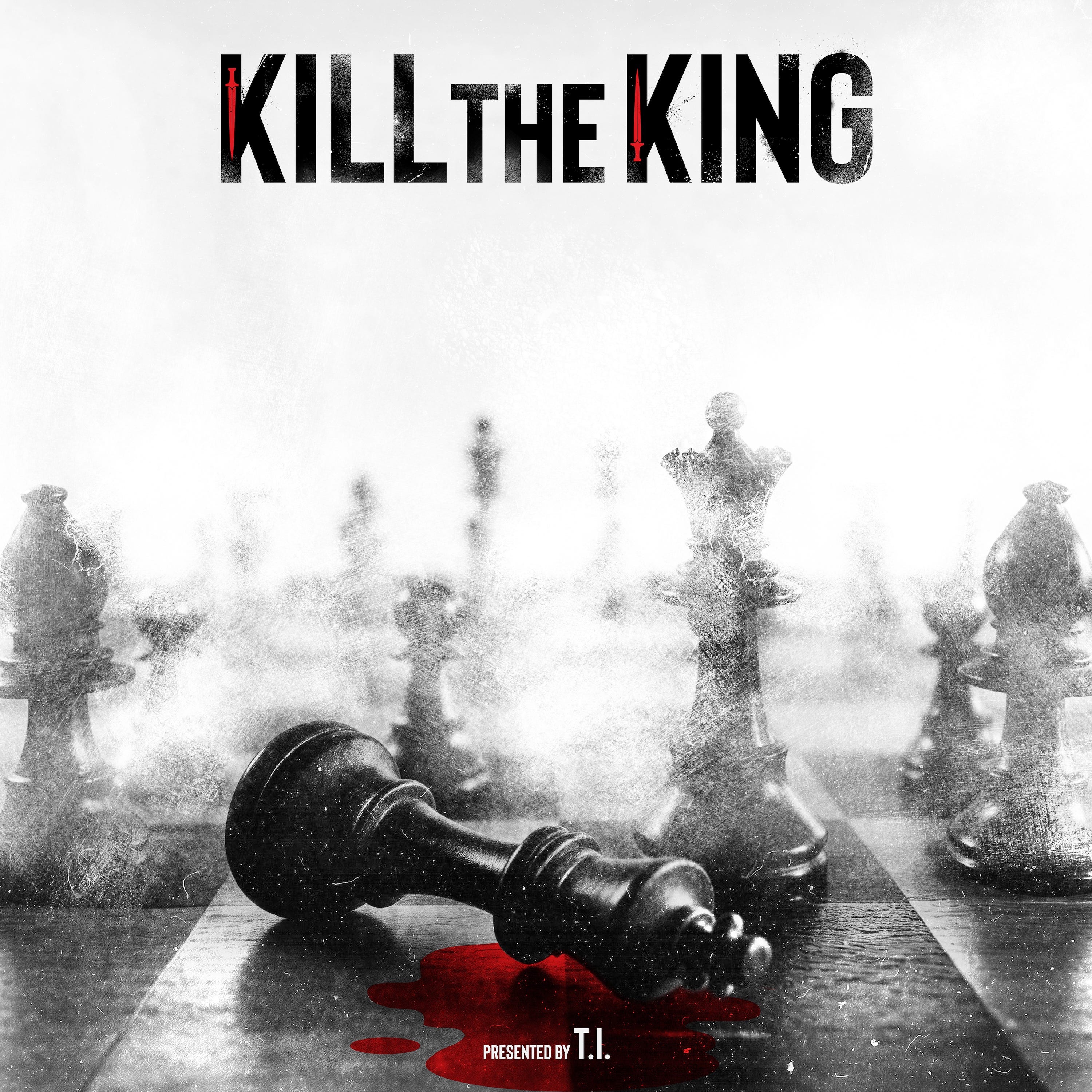
Throughout history, the title of King of the South has only been associated with one person and has always served as a challenge to anyone interested in seizing it. Clifford Harris is the person who has worn it for the longest time and claimed it out of Bankhead a quarter century ago, for he has always been the one to stand for it, no matter the hit records or the federal cases or the long period of time when it was taboo to even spell his name out, let alone to be called a rapper. The claimed title of Kill the King that T.I. gave to his last album is a chess idea transferred to him by Big Boi, as he says. The reference to the crown, which is the king’s seat, draws attention to the fact that this is the primary target, while the ego that has been accumulated around it is the aspect that needs to be eliminated. Heiress, his daughter, is flipping the term “king”. She asks what it could mean. What comes next is T.I., who takes a trip back to his life and checks what he still has.
He has always been a clearly articulate storyteller of his own roots, and the tracks that go back to them are where the line of writing becomes the most compact. He recounts the circumstances in “Where I’m From” that led to his making. He is the product of the cocaine economy, in a place where calling the police is useless and you “buy a gun same place you get your oxtail from.” Anderson .Paak comes in with the hook in a squeaky voice that slices T.I.’s monotonous delivery, talking about bullets that only could hit and wolves that were the ones who raised him, which is the reason that the song doesn’t turn into a hard lecture. The very last picture is the town itself, “the place to be if you’re the exception, the street’s scam,” with wreckage left behind. “See Wh’am Sayin” operates in the same area from the top of the throne instead of the bottom, T.I. saying words ahead of the rhythm as he represents himself as “lil’ bad ass TIP the Bankhead kid, prodigal son” who would “grow to be king from the felonious one.” “Continental” concludes the long walk as a run of distances traveled, from “the Forrest City prison yard” to “the present day Beverly Hills,” from “sellin’ clean at the bus stop” to ten-million-dollar shows.
It’s interesting that even though T.I. chooses to collaborate with an extensive range of producers, he somehow seems to manage to stay a constant source of reference for them all. Pharrell grants him the spare, bouncy, typical records, putting the bounce of “Let ‘Em Know” in the empty space, all rubber and snap under a bright hook, then going cold and spring-loaded on “Mr Him,” and leaving gaps for his vocal jabs. DJ Toomp does a heavy laying of the floor with the song “How It Went” that lets The-Dream stretch a top more melodic and smoother across it, and on “Big Dog” the sound leaves rap almost completely, trading sub-bass for midrange and a loose swing that The-Dream applied. The bottom holds, the voice stays on top, and the song is his, no matter who built the beat.
After the boastful words are done, T.I. practically transforms “LLOGCLAY” into a trap beat-based elegy, and the second verse is the rawest writing here. He is next to a partner dying in hospice, the doctor calling it over, and he gives the response of diagnosis with “fuck your diagnostic.” He converses with the dying man like they are brothers, calling him “this your little brother talking,” and when that doesn’t work, he declares “grieving, drunk, just speedin’ in the fucking rain,” having the thought of what to compare it to, only finding it like this, “Snowfall episode, my uncle Jerome died in real life.” NBA YoungBoy opens the song, strained and volatile, the younger voice T.I. is handing something to. “Represent a Time” carries the same handoff into Organized Noize’s warm Southern pocket, T.I. and Young Dro trading verses about a code “where your word was all you had,” until the song ends on the line that answers the title outside it: “Our kids don’t wanna be king because you let them kill the last one.” “Trauma Bond” arranges everything to an HBCU band, as the Marching Crimson Pipers change “Major is my youngest son” into a processional while T.I. chases the clout-chasers who “traded in your morals for a mention.” The oldest voice on the song still has the most to bury.
With “Gorgeous,” Usher takes the title with the most straightforward crossover and simply walks through a hook on beauty and self-acceptance while T.I. offers, “I can climb a mountain for you,” and expresses his opinion on her hairstyle. Likewise, Summer Walker on “And Won’t” manages to display her emotional distress; the best part of the song is her hurting pre-chorus; his lyrics are a kind of showing off the domestic life, “a Georgia peach, sweet like cobbler,” a castle and a carriage, with a strange, funny ending that talks about the law which is catching up again, “they locked his ass up again,” “he took the damn woman with him too/Tiny.” The weak point is “Pistol on the Dance Floor,” where the hook goes for one image after another and keeps missing; a woman who wants to “hump twice like a camel” and “get that ass wet like a candle.” Beyond the strained writing rests a true line, “My name Clifford, I done always been a big dawg,” the rapper sneaking through the club mannequin. These are fun side trips, but the king is only here for a minute.
Controversy strikes the madness, the depths of disbelief that boasting cannot heal. “Rant” begins with sarcasm, “the most wrong idea about me is that I care,” but in the rest of the lyrics, he does the opposite. He declares himself “still mentally unstable,” confesses “I’m paranoid and need help,” claims he was created this way “since the second grade,” and hangs a God who “told me I’ma live long enough.” Even “Mr Him,” a song created for him to plant his flag, makes room for a partner name Cap, who “got life” and “didn’t beg for a pardon.” For a guy who stomps on all rivals, he has even given numbers of these songs to the things that ate his life.
T.I. is in his element mostly with other people. On “Dope Boys Academy,” he turns the trap into a school and fills the room with the sounds of the artists he grew up with, T-Pain joining the hook together, Jeezy talking about cooking, 2 Chainz lying down “like it’s a lawn chair” and switching a “Monte Carlo” into a “Rolls-Royce.” His own verse makes a toast for the dead, naming money after “Frank Matthew, Rich Porter, and Scooter,” dealers who “would’ve had a bright future if they could’ve quit sooner.” For all the murder of the king, the ego still stays on these songs; at least, it gets to make peace with the ones who brought it that far. The observation about people’s presence and the ego’s identity are the truest things he brings out at a table full of people, those whom he buried, and not at a throne by himself.
Great (★★★★☆)
Favorite Track(s): “Where I’m From,” “LLOGCLAY,” “Trauma Bond”
that's pretty good