

Album Review: Loving This Black Woman by Oriiginelle
An Eswatini rapper courts one Black woman in siSwati and English, then hands the mic to God, to the woman, and to her own anguish.
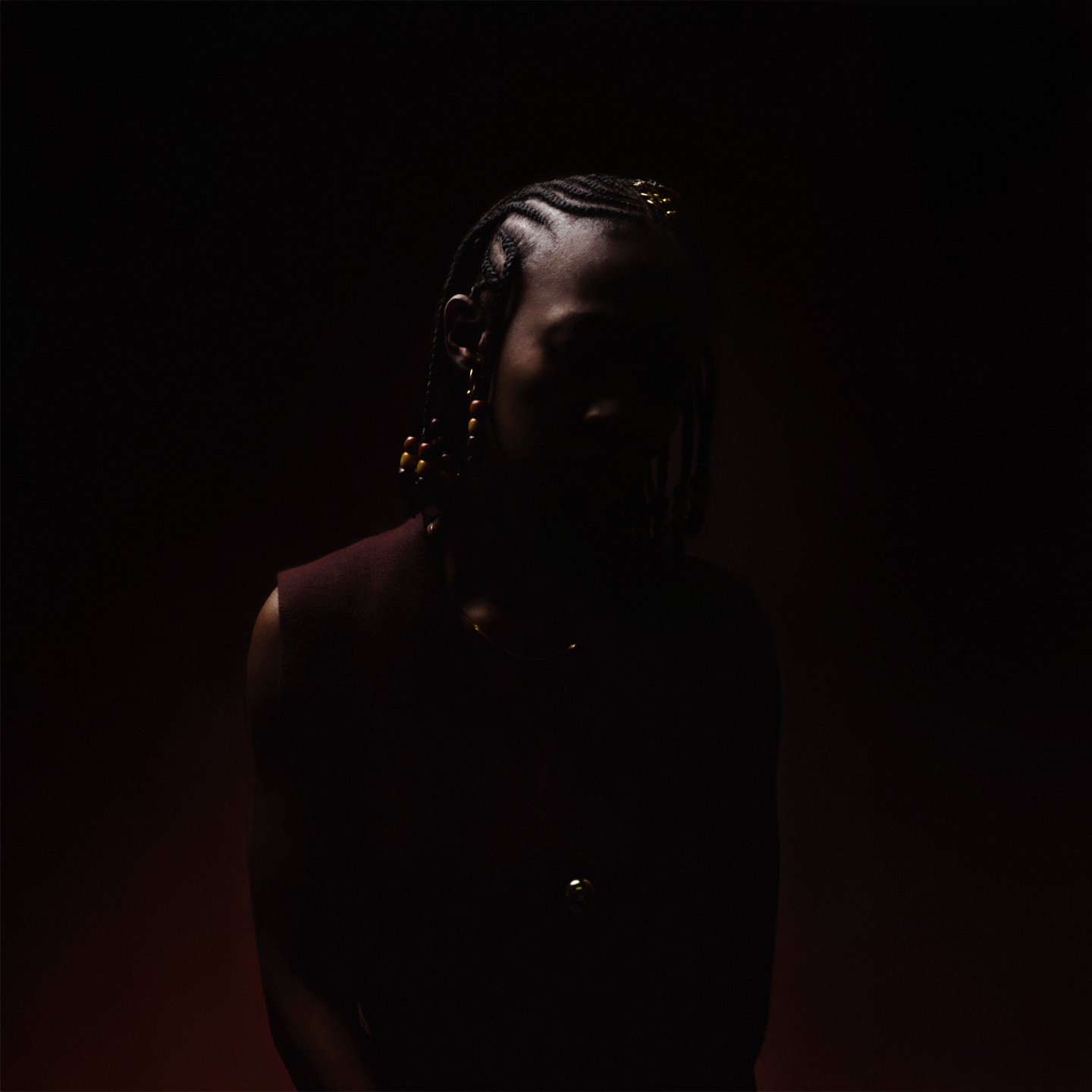
While making Phazed, Oriiginelle revealed to OkayAfrica that barely two years earlier, she couldn’t understand her own native tongue (siSwati), eroded by what she terms Western influence and that she had to wait before relearning who she was. The Mbabane rapper has used both languages successfully ever since. In Loving This Black Woman, she applies them to the oldest purpose possible, which is romance. She raps and sings to one Black woman against R&B chord progressions, and the deeper the songs dig, the more people she allows to comment on the love she receives and gives. A choir from Piggs Peak speaks up. So does her partner, Zinia. So does her late father.
She talks to the woman as if the deal was already done. On “Nguwe,” meaning “It’s you” in siSwati, Oriiginelle tells of the weaknesses and shortcomings in her life, still stands tall and starts enumerating the things the woman deserves: “To book a couple flights and cop designer jeans, Lord/To frame that pretty ass, forget the gas, I got it all.” The groove on the song is pocket drumming in neo-soul beats with the rhythm softened by its melodic structure. Her delivery in the song is conversational, closer to speaking to an individual rather than performing to others. Jay Jody plays his verse reliving a conversation that went on for too long, a simple fellow dancing in her mind and getting lost in a song, leaving the most romantic vow of the pairing: “And if we ever do this in another lifetime, I’ll remind you/I got a feeling I will always find you.” She wants it just as open on “Kutsandvwa Nguwe,” where she stays with siSwati, addressing the woman with as much tenderness as possible, and “The Chase,” where FyLta comes in reserved like the queen, melts at first sight, and prays that all other suitors’ conversations would become awkward.
The dirt is what comes up repeatedly on “Signatures,” as the reason why this love lasts. The encounter is a down-to-earth thing: “Grew through the cracks of the concrete/Who knew this is how we’d meet?” Nyota Parker responds from the same soil, telling the woman “we both came from the dirt” and promising to withstand the pressure until they would turn into pearls. “Ngaze Ngamtfola” places a rose in the jungle, letting it grow bigger thorns than average, size traced by Oriiginelle to “facing all the hazards that follow with our skin pigment,” and while battle wounds are invisible, the woman gleams in her eyes. Saul Madiope makes the singing on that track softer than anything around it. On “Always Returning,” she harvests what she planted: “You water my soil, I eat your fruit at every given chance.” Firdy sings a circular path that goes back to the same door.
Oriiginelle spends “Your(e) Art” narrating the scripts the woman was born with aloud, ring finger twinkle, produce that baby, maybe triple, keep it civil, even if running on empty. She hears the mourning in how the woman leaves angry, writes texts to her at odd hours without prior notice, offering her the brush: “This time you get to paint your type of art.” Then she audits her own house. “My Interlude” is a spoken song about a guest so elegant and serene that she managed to get a seat at the table, ate bread from it daily, touched her wounds. She misnames the tension as growth and the tightness as patience, hosts it with grace as all the women before her generation did until her body refuses to rest anymore, understanding that “letting go had finished arriving.”
When the woman finally responds, on “Zinia’s POV,” she is tired. Zinia sings the fight and lies plainly, “I’m just saying that I ain’t strong enough, and I can’t keep on crying,” names what was left after her, “pieces of every other girl you’ve ever met,” and asks to be released and set free. By “Sweet Love,” she is already living in the aftermath of that request: “Every day good mornings into three dots/Three dots into blank pages.” Oriiginelle admits that she opened doors to be the best but never opened the woman’s doors, that talk of children never scared her, that she searched for herself to feel secure all that time. She falls apart during crucial sessions, mourns amid the faces she grew up loving and gives herself permission to mourn the loss of all the great and sweet love.
She circles her father (who had passed away long before any of the promises were made) on “Carousels,” middle child wrapped in plastic in ‘96, daddy issues until her teens, and ends up at the table of the deceased: “Conversations with my pops, he’s a spirit now.” With 21 Oranges and Ngwato passing the microphone through its section changes, the three of them crowd it, adding voices and switch-ups to the pocket beyond its capacity. She takes the heavy burden upstairs on “Letter to God (Confessions),” Piggs Peak Roman Catholic Choir singing along while she bargains: “Lord, if I confess my sins, will you see me the same?” She was created in God’s image and cannot comprehend that, admitting that she slips back to old habits from time to time, keeping her chair straight, never reclining, holding onto the single thing she believes in: “In your eyes I’m always shining.”
She leaves the summer to do the wooing on “Coast-to-Coast,” full of movement and skin, family around and the business kept strictly between them both. But on the bridge of the song, she brings the trip inside: “I see reflections of the moon when I look straight into you/Hope I see me too someday.” She adds one more wish, “Hope my intentions don’t swallow me up,” a lover wondering if her love has space for her inside. The arrangement gives her enough space there, each line allowed to settle before the next one follows, and she states out loud the wish hiding under all promises in other songs. It is the most straightforward wish Oriiginelle has throughout her wooing, and she sings it like a prayer she has not learned yet.
Great (★★★★☆)
Favorite Track(s): “Nguwe,” “Letter to God (Confessions),” “Always Returning”