

Album Review: Middle of Nowhere by Kacey Musgraves
On her sixth record, Musgraves turns a year without sex into the best comedy writing of her career. Every town she names has a zip code.
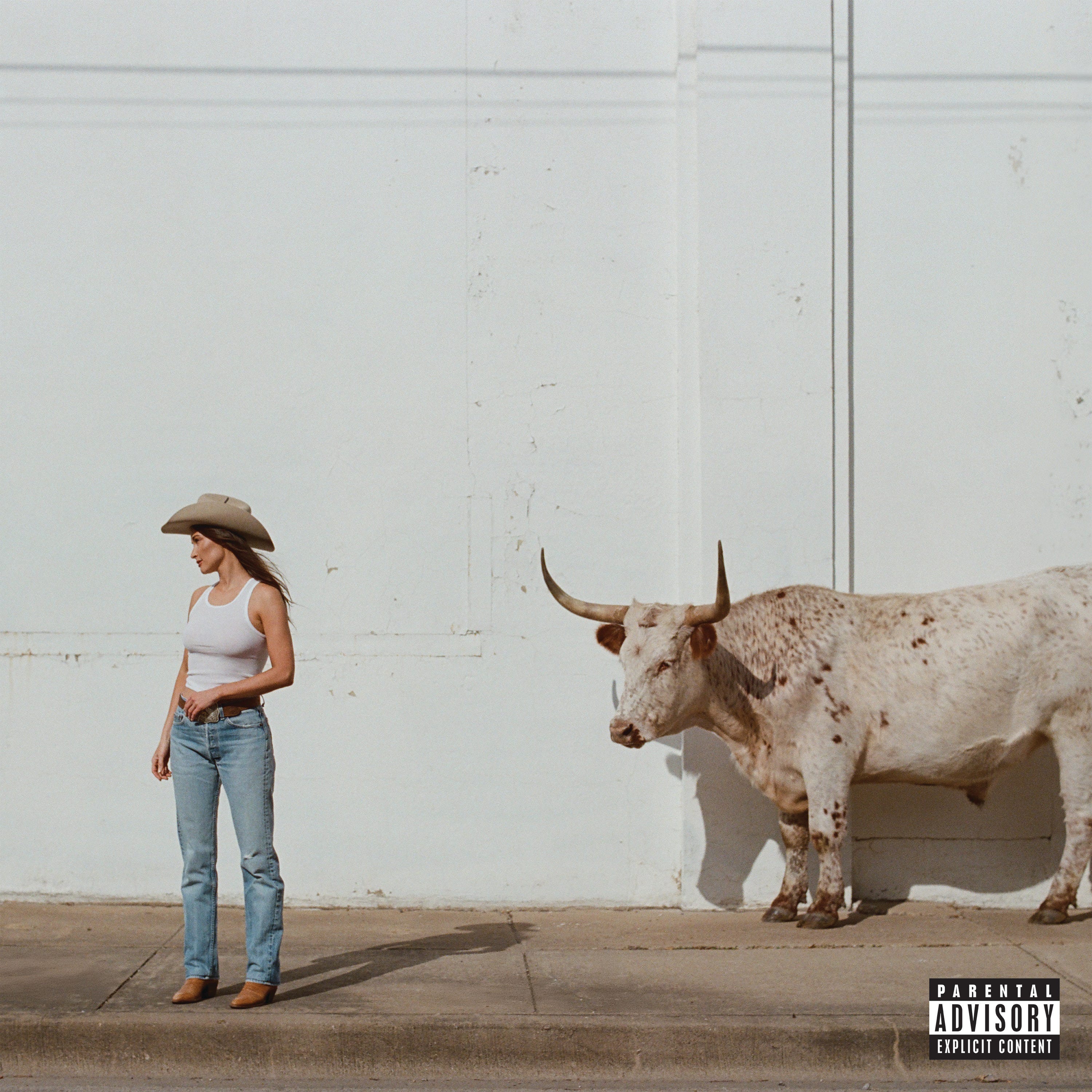
Golden, Texas, is in Wood County, population under two hundred. There’s a sign on the road into town: “Somewhere in the Middle of Nowhere.” The kind of place that introduces itself by confessing it’s barely there. Kacey Musgraves grew up there, started writing songs at eight, learned mandolin before she learned guitar. Her sixth record takes its name from the sign, and the place names on Middle of Nowhere stay this specific: Abilene, Uncertain (a real town, population ninety-four, on Caddo Lake), the Dairy Queen, the county line. Norteño accordion and zydeco rhythms show up because they belong to East Texas and the border region. When she sings “Past the Dairy Queen, the county line,” she means a road she’s driven.
She can go days without seeing anyone, she tells us on “Loneliest Girl.” Won’t deal with anyone’s childhood trauma, won’t pretend she cares about their friends or their mama. “Put me on a poster of somebody who’s living the life,” she sings, and she sounds convinced. But that song also admits “I’m not sure I can stand my heart getting broken again,” and the bravado cracks. The preference for being alone is also a refusal to risk company. Daniel Tashian and Ian Fitchuk, producing with Musgraves for a third straight run, give the song a soft, swaying arrangement where the pedal steel floats under her voice, and the two feelings, contentment and fear, share a key.
Three hundred and thirty-five days. That’s how long it’s been, and “Dry Spell” is the record’s best comedy and its most physically honest song. “Lonely with a capital H, if you know what I mean,” she sings, and then she mentions sitting on the washing machine. “Ain’t nobody’s tool up in my shed, Ain’t nobody’s boots under my bed, Ain’t nobody’s truck up in my drive.” And by the final verse: “Nobody but the chickens are getting laid.” “I got the bacon and no one to bring it home to” is corny and knows it. Luke Laird’s co-production pushes the arrangement toward honky-tonk bounce, pedal steel sliding under each verse, light enough that she can sing about sexual desperation for three minutes and keep it comic.
The men here are defined by what they can’t do, won’t do, or already did. In “Back on the Wagon,” he was out of his mind on the Fourth of July, blew all their money, thought it was funny, got found passed out on the floor at the derby. She takes him back. She says “there’s no more red flags in him.” And you believe her? In “I Believe in Ghosts,” he disappeared, “you didn’t even have the balls to tell me goodbye and look me in the eye.” Exes as apparitions is clear from the title and doesn’t complicate itself, which is the record’s weakest tendency: a few songs state their premise and stay put. In “Coyote,” Gregory Alan Isakov gives the man a verse, and it’s a plea: he just got back in town, he’s over by her house, he can’t defend the way he’s been. He asks to be let in before the light comes. In “Hell on Me,” she tried to change him and it changed her.
The first-person habit breaks on “Abilene.” A woman went out for cigarettes and ended up on a bus, headed anywhere far from home. Her daddy disapproved of the boyfriend, “you couldn’t clean off the dirt even if you hose him down and put him in a collar shirt.” The pills didn’t help. The whole town can only speculate what was in her head when she hit the interstate. Then the outro shifts: the person who stayed behind admits “I probably thought about it but I won’t ever leave Abilene.” Two people, one impulse, different choices, and the best writing here is in giving both of them a turn.
Musgraves co-wrote “Mama’s Broken Heart” with Brandy Clark and Shane McAnally; it was pitched to Miranda Lambert without her consent. “Horses and Divorces” is the only song where both singers are in the same room, both admit fault, and neither one wins. Lambert sings she was on her high horse but Musgraves would still be higher, “and a few years ago, you’d had set me on fire.” They discover common ground: “horses and divorces and we both like to drink.” They can’t believe they don’t share any exes. Neither can I. “We both love Willie, but I mean really, what asshole doesn’t like Willie?” The reconciliation happens inside the song instead of around it.
Gold hoops, cowboy hat, hot pink shorts, bathroom floor. “Mexico Honey” is all scene, and the man in it is the only one here who gets a clean entrance. He goes down smooth; she wants him so bad it isn’t even funny. He tells her he’s always had to be tough but not in front of her. She smiles even though she knows she’ll cry when she has to leave. “Rhinestoned” is after the same company with less to go on: a stranger at a bar who’s been crying, “I got something in my pocket, we could step out back,” and two people holding each other in smoky light.
Willie Nelson shows up on “Uncertain, TX” and mostly cosigns the verdict. The song is named for a real town, barely on the map, where cowboys can’t get off the fence and characters made of straw blow away with the wind. Musgraves asks, “Did you ever love me, baby?” and nobody answers. Nelson gets the last line, a long string of insults stacked into a compound adjective: “nobody ever makes up their dusty ol’ love-bombin’, snake-charmin’, bullshittin’, heart-breakin’, godforsaken dumbass mind.”
Solid (★★★½☆)
Favorite Track(s): “Dry Spell,” “Abilene,” “Mexico Honey”