

Album Review: M$NEY by Asake
On his fourth album, the Nigerian pop star prays for money and prays for forgiveness over the same Magicsticks percussion, never deciding which conversation matters more.
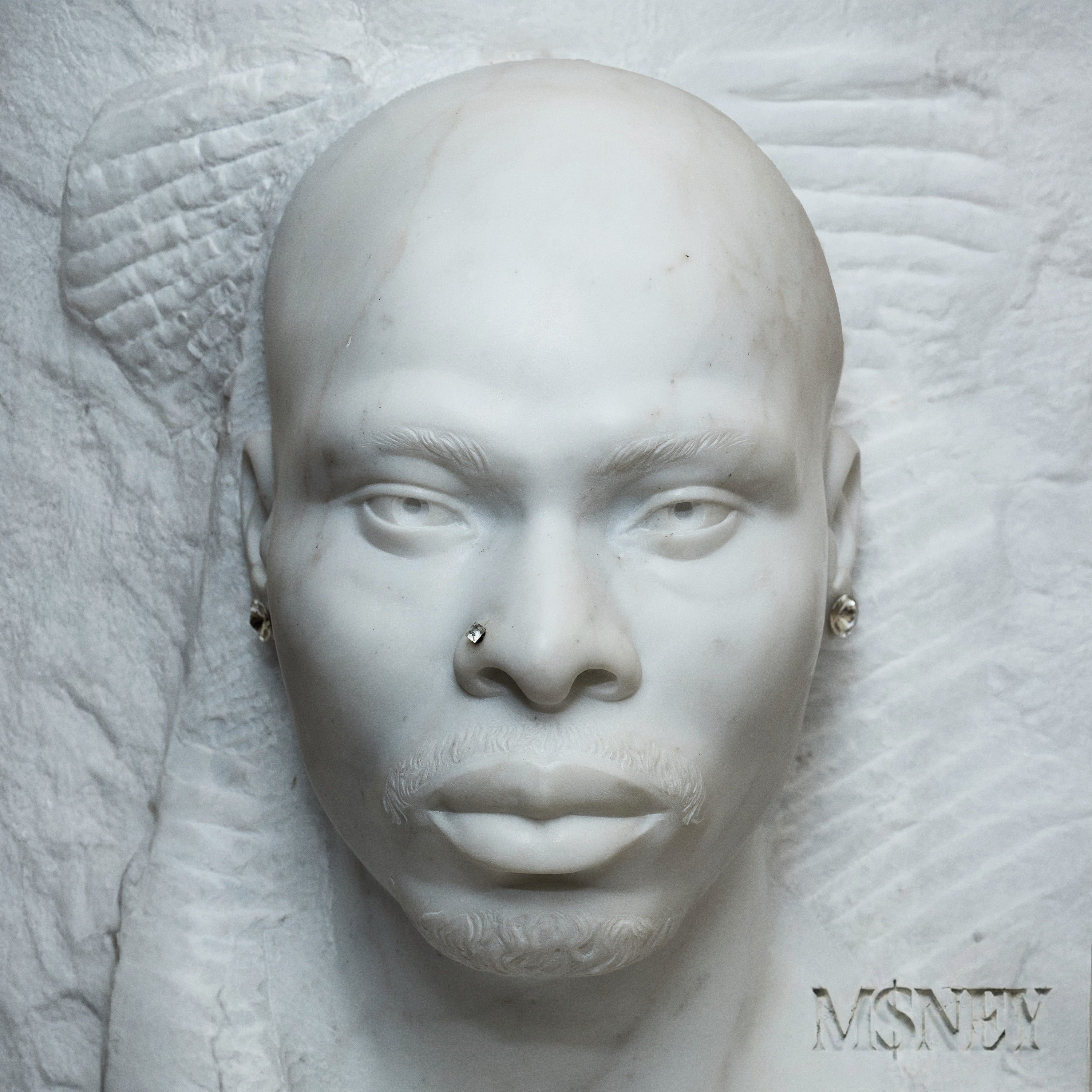
Most people who approach God about money do it alone. They do it in church during Sunday offerings, in mosque during Friday prayers, on their knees at the edge of the bed when the bank balance shows incorrect. The always same request is: bless me, guard what I have, bring more. And the request always has a second weight, a dialogue with the divine that reads, if you step away from it, like a transaction. You are trading faith for provision. Though it’s the most often used prayer worldwide, hardly anyone discusses this; maybe none should since the holy and the financial occupy the same remark. Ahmed Ololade recorded a whole record out of it.
Ololade goes by Asake, and his fourth studio album (and coming off a disappointing EP with Wizkid) opens without him on it at all. A choir sings in isiZulu, voices praising over an arrangement that sits closer to a congregational call than anything in his catalog. There are no drums yet, no producer tags. Just voices. He arrived on Nigerian social media six years ago as a dancer-turned-singer whose freestyle went viral through influencer reposts; signed to Olamide’s YBNL Nation in 2022, debuted at No. 66 on the Billboard 200 that same year, sold out the O2 Arena and Barclays Center the next, earned two Grammy nominations, left YBNL in February 2025 to launch Giran Republic. M$NEY is his first album as an independent artist. He got free and the first thing he wanted to do was pray.
Then the drums arrive. Magicsticks’ tag kicks off “Amen,” and the log drums drop heavy, the kind of bass you feel before you hear. The two have been building this sound since 2019, when they met through the comedian Sydney Talker: fújì rhythm under Amapiano bounce, real choral voices (handpicked by Asake, not synthesized) singing behind him, the kick patterns doing most of the work while melody rides on top. DJ Snake’s production on “Worship” is slicker and wider, Asake chanting “Alhamdulillah” into an EDM-adjacent structure, “Praise be to God, no matter your condition/Stay close to God/It is work, no be luck.” But the better music stays closer to home. On “Gratitude,” the chorus chants behind Asake like a congregation that wandered into a party, and he asks for sevenfold blessings “Mo ṣ’oríre méje-méje”) then says “credit alert,” the notification you get when money enters your account, followed by “gratitude,” as though God and the bank send the same message. “Rora” slows everything down with trumpet and saxophone, Asake singing lower about patience and walking together, the Yoruba proverb (“kárín kápọ̀ ló yẹ ẹni”) folded into a melody that sounds like it found itself by accident.
M$NEY keeps going back to God. Not spiritual gestures, not nods at faith; prayers, the kind with direct address and specific requests. “Amen” opens its chorus with “Help me align with my thoughts/Grant me wisdom/Trust in You, Ya Allah/Jọ̀wọ́, change my world/Prosperity and happiness”; those are supplications, not hooks. “Gratitude” asks for sevenfold blessings and then says “credit alert,” the notification you get when money enters your account, followed by “gratitude,” as though the bank alert and the blessing are the same event. “MCBH” buries a Yoruba phrase in its pre-chorus, “àdúrà ló ń gbà” (prayer is what saves), between lines about ten billion naira and the soft life. The Alhamdulillahs and the Amins pile up until the whole record smells like incense and money.
The confession on “Forgiveness” cuts deeper than anything else here. Asake runs through his sins like a man in a confessional who forgot he’s also famous: “Too many girls wey I fuck up/Too many friends wey I cut off/Just dey smoke, just dey jogo/I dey overtake as a top boy.” The Yoruba lines (“Mo ti gìrán jù, èmi stubborn”) named the flaw in his own language, the one he thinks in, not the one he performs in. He confides in God, not people: “Mo bá’nú sọ, mi ò bá ènìyàn sọ/Ọba Ọlọ́run, ìwọ l’ọ̀rẹ́ mi.” God, you are my friend. The song ends on “Nobody perfect, padi mi,” which could be talking to God or to the listener; it doesn’t pick one.
Nigerian listeners heard a different song on “Amen.” Asake cites President Tinubu’s famous 2022 campaign declaration: “Presido sọ pé, ‘Èmi ló kàn’, ó dẹ̀ win election/Power in the tongue.” The backlash came fast; fans on social media threatened boycotts, called the lyric insensitive given the country’s economic crisis under Tinubu’s government. But the verse is about manifestation, speaking things into existence, divine communication. Tinubu said “It’s my turn” and then won. It uses that as evidence for the power of spoken words, not as a political position.
The album’s other mode is straight boasting, and Asake wears it like the Cleopatra ring he’s been photographed in. “Oba,” king in Yoruba, opens with “O jẹ́ bomb, o jẹ́ bomb, o jẹ́ bomb, motherfucker” and runs through his shoe size, his bling, his birth year as a credential: “Bad since 1995.” He quotes Nas, “The world is yours, good one from Nas,” then says he listens to fújì and writes jazz, a throwaway line that actually describes what Magicsticks’ production does with traditional Nigerian rhythm. Asake moves from one to the other the way you move from the mosque to the club: same person, same night, different rooms.
“Badman Gangsta” samples the intro vocals from Amerie’s 2005 single “1 Thing” and features Tiakola, whose French verse about being a young ambitious Congolese moving between Makala and Marbella makes it genuinely Pan-African in a way the rest of M$NEY doesn’t attempt. “Asambe” with Kabza De Small goes further from home: isiZulu, Amapiano, Casamigos namechecks, a Taribo West reference thrown in for the Nigerian football heads; party music that knows its audience is continental, not national. “Worship” with DJ Snake is the most polished of these, but also the most anonymous, the kind of festival-ready drop structure that could belong to a dozen acts. All three travel well. The rest stays in Asake’s room with Magicsticks, which is where the better music lives.
When Asake talks to women, the writing thins. “Wa” borrows its melody construction from CKay’s “Love Nwantiti,” a choice that seems lifted instead of built, and cycles through “searching for ya.” The love songs that follow share the problem: “My types, perfect size” and “such a bad bitch” and “Body to body, no be bad thing/Turn off the light and bend.” These are the tracks where Asake’s singing is fine and the writing isn’t. The gap between the prayer material and the love material is wide enough to suggest two different records move within the sequence. M$NEY is àdúrà pop: prayer pop, in Yoruba. Asake may not have named it, but he recorded it first. When it works, the credit alert and the blessing are the same notification.
Great (★★★★☆)
Favorite Track(s): “Rora,” “Amen,” “Forgiveness”